


Air Ambulance Services in Bhubaneswar
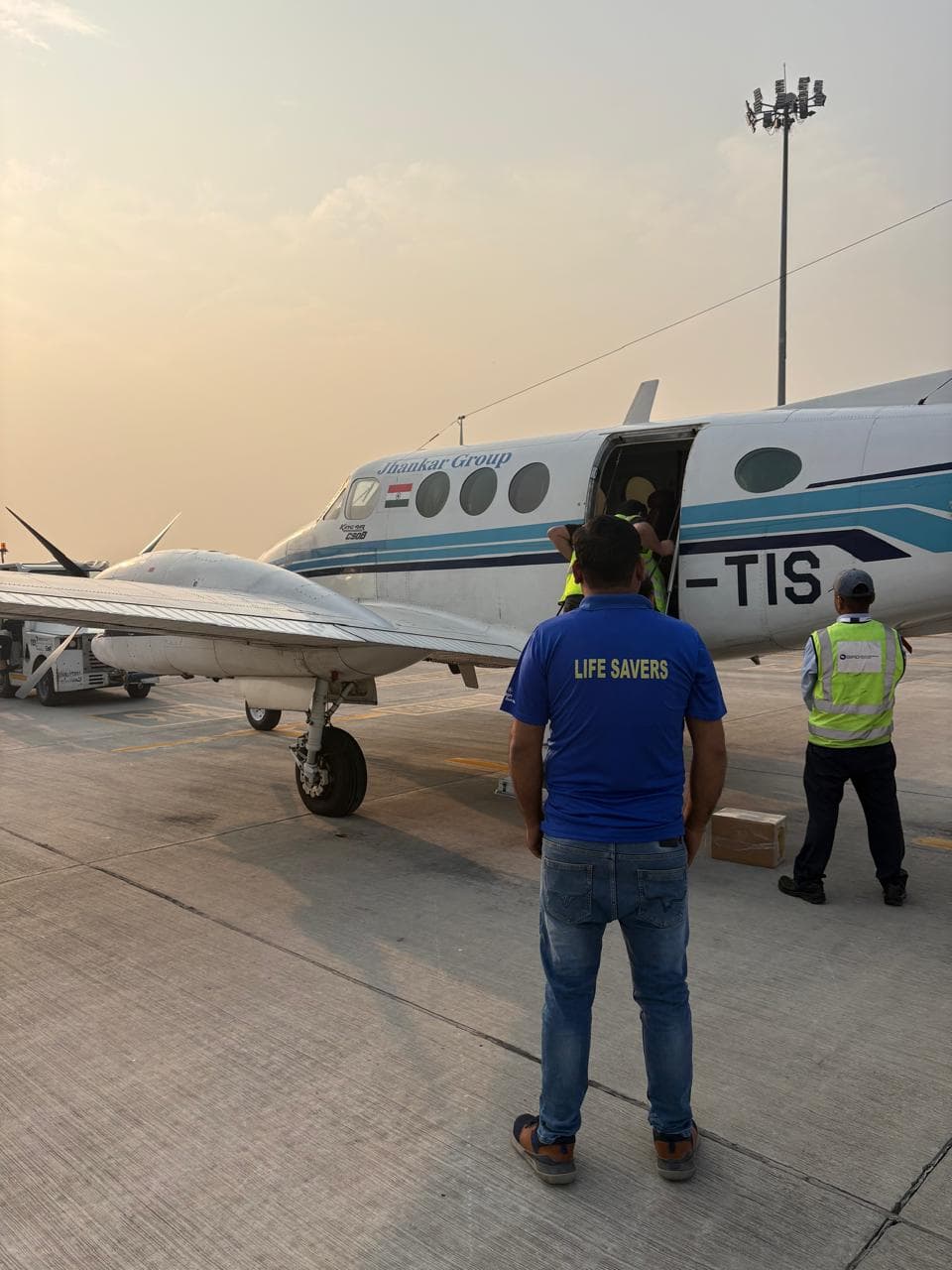
CodBlu Healthcare offers 24/7 medical coordination for patient transfers through Biju Patnaik International Airport (BBI), Bhubaneswar. Transport options include a dedicated medical charter, an approved commercial stretcher or a seated medical escort, depending on the patient’s condition. Rail may be considered for selected patients who can tolerate a longer journey. A pickup in Cuttack, Puri or another Odisha district needs its own road-transfer plan, particularly during heavy rain or cyclone warnings. The first decision is whether the patient can tolerate the journey with the proposed medical support.
Call +91 93108 64489 for 24/7 medical coordination.
Before Leaving Hospital: Confirm the Care the Patient Needs
A transfer should have a clear clinical purpose. Ask the treating doctor what treatment is needed at the destination, how urgent it is and what support must continue while travelling.
For a patient in intensive care, CodBlu needs a recent medical summary and an update on breathing, circulation and any recent deterioration. A transport doctor considers whether the patient can tolerate movement, the aircraft cabin environment and the time away from hospital facilities. Further stabilisation may be necessary before departure. The receiving consultant and appropriate bed should be confirmed before the patient leaves. An aircraft reservation does not secure an ICU admission.
Is Another City Necessary, or Is Suitable Care Available Nearby?
Bhubaneswar and Cuttack have several major referral hospitals. Depending on the diagnosis and available facilities, a road transfer within this area may avoid an unnecessary flight. Moving to another state makes sense when there is a defined treatment need and an accepting clinical team.
For patients travelling into Odisha, the same question applies: which hospital has accepted the patient, and which campus should the ambulance reach?
Bhubaneswar and Cuttack Hospitals: The Exact Campus Matters
Hospital names alone are not enough for a transport plan. The ward, consultant, campus entrance and ambulance access need to be identified.
AIIMS Bhubaneswar, at Sijua near Patrapada, and Manipal Hospitals Bhubaneswar, at Khandagiri, are relevant locations on the south-western side of the city. A patient leaving either hospital needs a pickup plan based on the actual ward and current road conditions.
IMS and SUM Hospital lists campuses at Kalinga Nagar and Phulnakhara. These are different pickup locations. SUM Ultimate Medicare, at Ghatikia in Kalinga Nagar, is a separate hospital and should also be identified precisely in the medical documents.
Kalinga Institute of Medical Sciences (KIMS) is at Patia, while Apollo Hospitals Bhubaneswar is on Sainik School Road. Their airport journeys should be assessed individually rather than given the same city-wide travel estimate.
In Cuttack, SCB Medical College and Hospital and Sardar Vallabhbhai Patel Post Graduate Institute of Paediatrics, commonly known as Sishu Bhawan, are important referral institutions. A patient admitted in Cuttack still needs a medically supported road journey to Bhubaneswar Airport if flying from BBI.
Coastal Odisha Pickups Need More Than a Flight Plan
The airport may be close to central Bhubaneswar, but the patient may be much farther away. That difference changes the medical crew’s preparation.
Puri and coastal pickups: Heavy rain, flooding or cyclone-related disruption can affect road access as well as aviation. For patients in Puri, Jagatsinghpur or Kendrapara, the pickup route and weather warnings need checking before committing to an airport arrival time.
Cuttack and nearby districts: Patients coming from Cuttack, Jajpur or Dhenkanal need an estimate from their actual hospital, not from a district headquarters. Extra time may be needed for loading, clinical preparation and traffic.
More distant Odisha locations: A long road journey to BBI should not be assumed to be the best starting point. The team should assess whether another operational airport or a nearer referral hospital provides a more practical pathway. Aircraft suitability, medical support and receiving care must be checked before selecting an alternative.
Hot conditions also matter during loading and ground travel. Cooling, temperature monitoring where needed and avoiding unnecessary time outside the ambulance are part of preparation, especially for infants and medically fragile patients.
Weather disruption does not automatically make road travel a safe substitute. The medical and aviation teams need an agreed alternative, including continued hospital care if departure must wait.
Bed-to-Bed Coordination: Who Is Responsible Between Hospitals?
CodBlu’s bed-to-bed coordination brings the hospital pickup, ground ambulances, airport arrangements, medical flight and receiving-hospital handover into one transfer plan.
Before movement, the team confirms who will accompany the patient at each stage and how prescribed support will continue during loading and unloading. Medical records, medicines and equipment travel arrangements should be agreed with the sending hospital.
For a district pickup, oxygen and battery reserves must cover the road journey and reasonable delays as well as the flight. At the destination, the ambulance should be suitable for the patient’s condition and the receiving unit should know the expected arrival time.
Using Biju Patnaik International Airport for a Medical Transfer
Biju Patnaik International Airport serves Bhubaneswar under the IATA code BBI. AAI’s aeronautical information places its reference point approximately 3 km from Bhubaneswar Railway Station. This is a geographical reference, not a hospital-to-airport driving distance.
Charter arrangements require confirmation of aircraft suitability, handling, patient loading access and the airport’s current operating conditions. AAI directs operators to current aviation notices for air traffic service hours, so a 24/7 coordination desk should not be confused with unrestricted departure availability.
Scheduled domestic flights provide options for medically suitable passengers, but an ordinary flight listing does not confirm stretcher availability or acceptance of medical equipment.
Dedicated Charter and ICU Air Ambulance From Bhubaneswar
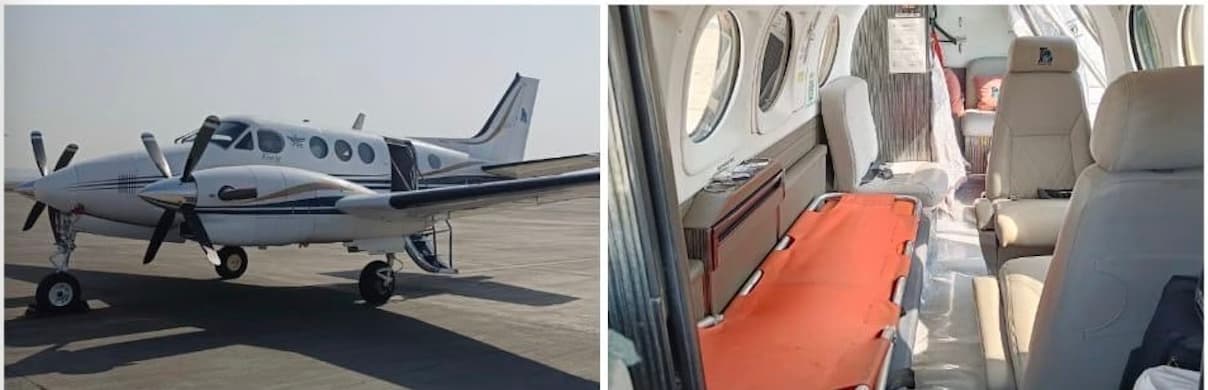
A charter air ambulance may be appropriate when a patient needs a dedicated medical cabin, continuous critical-care support or a journey that a scheduled airline cannot accommodate.
The aircraft and medical crew are selected around the case. A critical transfer may require a critical-care doctor and nurse, a transport ventilator, a compatible oxygen system, continuous monitoring, infusion pumps, suction and emergency airway and resuscitation equipment. The confirmed equipment configuration matters more than a general promise of an “ICU aircraft”.
Ventilator Support Must Continue Before and After Take-off
A ventilator-dependent patient may be considered for air transfer following individual assessment. For a Cuttack or coastal-district pickup, the first ambulance must support the prescribed ventilation and infusions before the aircraft is reached.
The transport team checks airway security, ventilation requirements, oxygen consumption and the power needed for the expected journey. It also plans how to maintain support while the patient is moved between surfaces and vehicles.
A charter can allow a more direct itinerary and reduce changes between aircraft. However, fuel stops, operating restrictions or weather may still require an intermediate stop. The operator should confirm the actual route before a departure plan is agreed.
Newborn and Paediatric Transfers From Odisha
Neonatal and paediatric transport requires equipment and clinical experience suited to the child’s needs.
For a newborn, the plan may include a transport incubator, temperature management, neonatal ventilation or CPAP where indicated, appropriate oxygen delivery, cardiorespiratory monitoring, syringe pumps, suction and neonatal emergency medicines. A professional competent in neonatal transport should accompany a baby who requires this level of care.
A newborn coming from Puri or another district should receive the required support from the first road leg. An incubator waiting at the airport does not address the care needed before arrival there.
For an older child, age, weight, diagnosis and respiratory or circulatory support determine the equipment and team. Adult-sized airway equipment or standard adult medication arrangements cannot simply be substituted. Acceptance by the destination neonatal or paediatric unit should be established before movement.
Commercial Stretcher or Seated Medical Escort From BBI
A commercial medical transfer can reduce expenditure because the family is using a scheduled airline rather than hiring an entire aircraft. It is an option only when the patient can tolerate the proposed itinerary and the airline approves the arrangements.
Seated medical escort: A patient able to sit safely through take-off, landing and the required journey may travel with a doctor or nurse according to assessed needs. Wheelchair assistance can reduce walking, while the medical escort provides the agreed clinical supervision. A wheelchair booking alone does not provide medical care.
Commercial stretcher: A patient who must remain lying down may qualify on an airline and aircraft that accept stretcher cases. Medical clearance, cabin preparation and suitable escort arrangements are required. IndiGo currently states that its stretcher service is available on A320 and A321 aircraft and is not available on connecting flights.
Oxygen and equipment: The treating doctor’s MEDIF or fit-to-fly documentation must describe the actual needs. Oxygen provision and portable oxygen concentrators are subject to the specific airline’s rules. IndiGo does not permit oxygen cylinders on board; any proposed alternative must be approved and meet the patient’s clinical requirement.
Connections can add substantial time and another boarding process. They should be assessed explicitly, rather than treated as equivalent to a direct flight.

Routes to Discuss With the Treating and Receiving Teams
The following are referral destinations to evaluate, not recommendations to leave Odisha for treatment that is already available locally. Scheduled-flight benchmarks describe ordinary airline journeys. They exclude mobilisation, medical clearance, hospital preparation and ground transport. Charter flying time is confirmed separately for the selected aircraft.
Bhubaneswar to Kolkata Air Ambulance
Kolkata may be considered when a particular consultant or specialist unit has accepted the patient. IndiGo publishes an ordinary flight benchmark of around one hour on this route. For a stable patient, a direct scheduled flight with appropriate assistance may be practical; a critical patient needs a transport arrangement that can maintain the required care despite the short flying sector.
Bhubaneswar to Hyderabad Air Ambulance
Hyderabad can be considered for an accepted specialist referral or continued treatment with an existing clinical team. Scheduled flights are offered on this route, but the actual direct itinerary and duration should be checked for the travel date. A medically suitable seated passenger may use an escort, while stretcher acceptance and a critical-care charter require separate confirmation.
Bhubaneswar to Chennai Air Ambulance
Chennai may be relevant when the receiving specialist has agreed a treatment plan that requires transfer. Airlines offer this city pair, but advertised itineraries can include connections, so the proposed flight must be checked before choosing commercial travel. A charter may avoid a connection when clinically and operationally appropriate; it should not be assumed to have the same duration as an airline itinerary.
Bhubaneswar to Delhi Air Ambulance
Delhi and the wider NCR may be considered for a confirmed specialist referral. Published airline benchmarks place a direct scheduled journey at approximately 2 hours 15 minutes to 2 hours 30 minutes, depending on the service. A commercial escort or stretcher depends on case acceptance, and the destination ambulance journey must be planned to the actual hospital rather than simply to “Delhi”.
Bhubaneswar to Bengaluru Air Ambulance
Bengaluru may be appropriate for an accepted referral, rehabilitation pathway or return to an established treating team. Air India Express publishes a direct scheduled-flight benchmark of approximately two hours. Commercial travel needs airline medical approval where applicable; for a charter, the medical configuration and the onward journey from Bengaluru Airport both need to be confirmed.
Bhubaneswar to Mumbai Air Ambulance
Mumbai may be selected for a defined specialist treatment need or continued care with an accepting consultant. Airline-published direct-flight benchmarks are approximately 2 hours 15 minutes to 2 hours 35 minutes, depending on the service. The receiving hospital’s location is important because the road journey after landing can add considerable time; that stage remains relevant for both charter and commercial transfers.
Add CodBlu Healthcare as a Preferred Source

What Is the Cost of an Air Ambulance From Bhubaneswar?
The following estimates provide a starting budget for a dedicated charter departing from Bhubaneswar. The appropriate transport option is selected after assessing the patient’s condition and the care needed during the journey.
Indicative Charter Air Ambulance Costs
| Route | Indicative Charter Cost |
|---|---|
| Bhubaneswar to Kolkata | ₹4–7 lakh |
| Bhubaneswar to Hyderabad | ₹8–10 lakh |
| Bhubaneswar to Chennai | ₹8–10 lakh |
| Bhubaneswar to Bengaluru | ₹8–10 lakh |
| Bhubaneswar to Delhi | ₹8–10 lakh |
| Bhubaneswar to Mumbai | ₹10–14 lakh |
These provisional planning estimates assume a medically suitable aircraft is already available in Bhubaneswar and remain subject to aircraft and crew availability. Aircraft positioning from another base may increase the cost beyond these ranges. Final pricing and inclusions will be confirmed in writing.
These are CodBlu-supplied indicative private-market planning estimates, not fixed tariffs or confirmed quotations for an individual transfer.
The final quotation depends on the aircraft category, fuel and operating costs, medical crew, oxygen or ventilator requirements, specialist equipment and ground ambulances. Landing and departure-related charges, handling, parking and navigation charges are assessed for the actual aircraft and airports used.
Commercial Stretcher and Seated Medical Escort Costs
For medically suitable patients, scheduled airline travel may offer a lower-cost alternative to charter.
| Commercial transport arrangement | Indicative Domestic Planning Cost |
|---|---|
| Commercial airline stretcher | ₹3.5–5 lakh |
| Seated medical escort with wheelchair assistance | ₹40,000–60,000 |
These commercial benchmarks apply to selected domestic arrangements. They are not universal airline tariffs. The seated-transfer estimate covers a medical-travel arrangement rather than a wheelchair assistance fee. The local-aircraft availability condition applies to charter estimates, not commercial airline travel.
Before payment, confirm patient and attendant tickets, medical escort, equipment, oxygen arrangements where permitted, ground transfers, applicable taxes, waiting charges and cancellation terms in the written quotation. IndiGo’s commercial stretcher charges depend on prevailing fares for the required blocked seats and handling, so the planning band is not a fixed IndiGo price.
Rail Ambulance From Bhubaneswar: A Longer-Journey Option
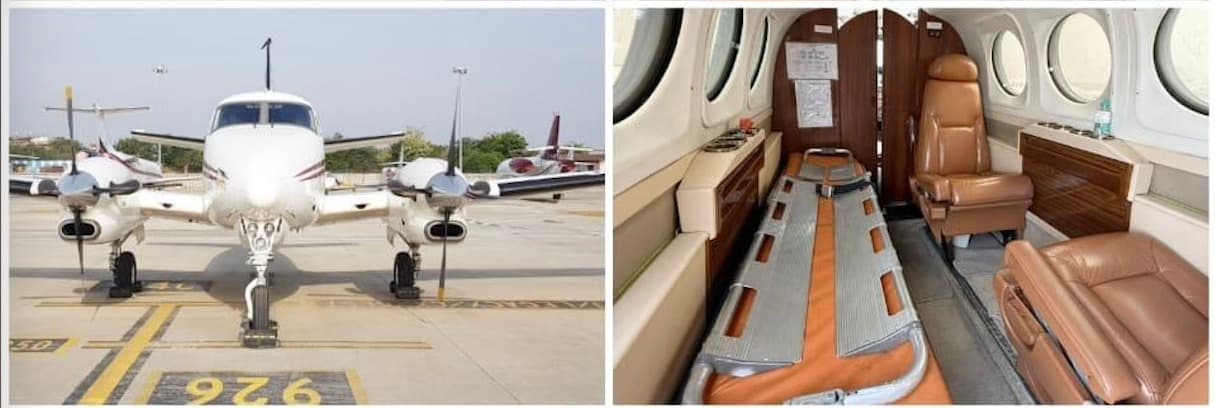
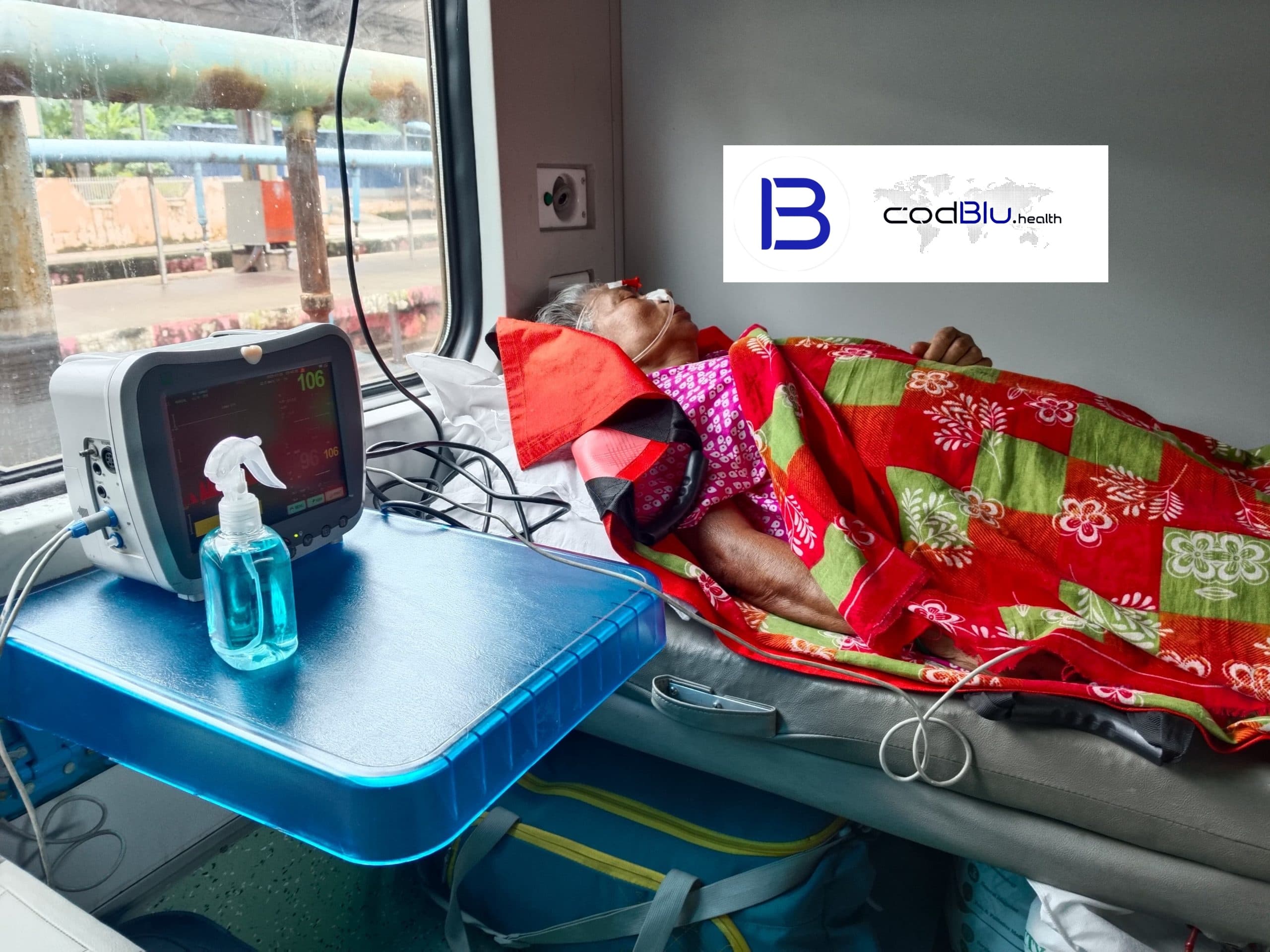
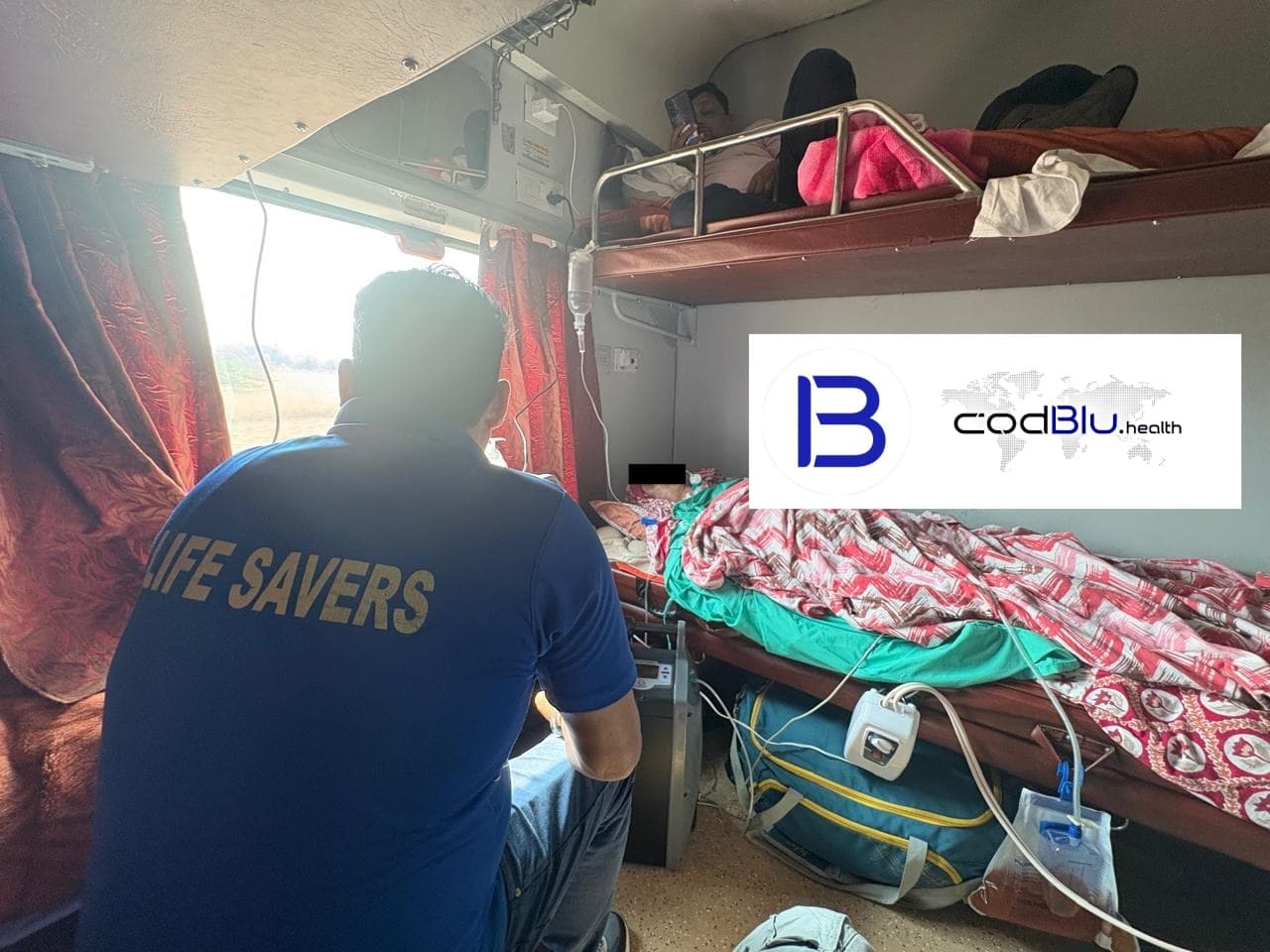
Bhubaneswar Railway Station, code BBS, provides a practical starting point for assessing rail ambulance arrangements on an available long-distance train.
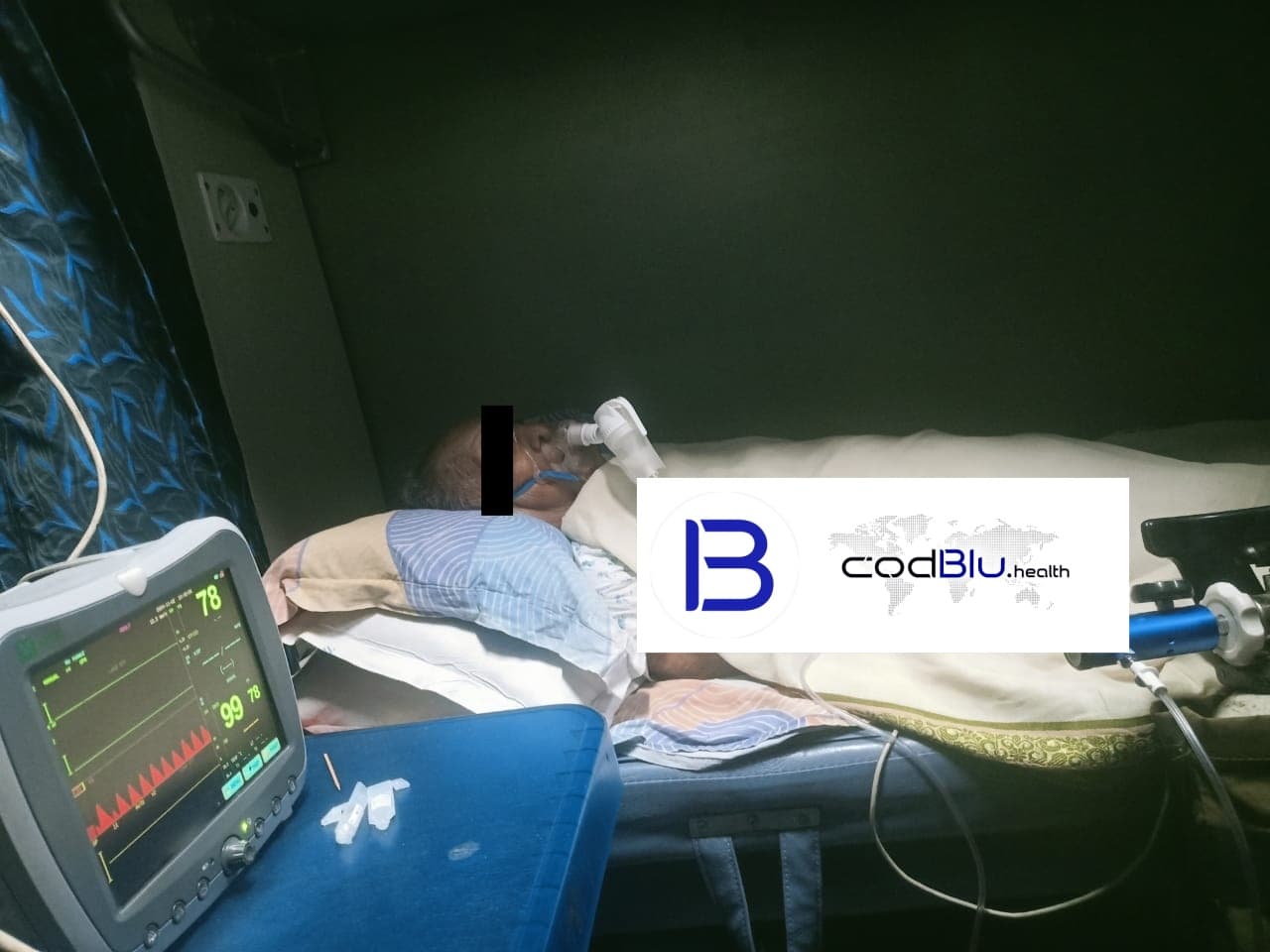
Rail may be considered when the patient can tolerate the total journey and the required care can be maintained in the proposed accommodation. The team must check train timings, berth or compartment availability, boarding access, equipment permissions and the destination arrangements before confirming travel.
A train transfer can offer a different budget option, but it should not be chosen solely because an aircraft is expensive. A patient at significant risk of deterioration may need a shorter journey or a different level of access to care. Carrying a ventilator does not by itself make a rail arrangement suitable.
International Medical Repatriation Through Bhubaneswar
International medical repatriation can be assessed for patients returning to Odisha or travelling abroad for an agreed care plan.
The suitable itinerary may use BBI or connect through a larger gateway such as Delhi, Kolkata or Mumbai. An international route being sold from Bhubaneswar does not mean it is non-stop or accepts a stretcher.
Clinical acceptance, airline approval, passport and entry requirements, transit conditions and overseas ambulance arrangements need to be checked together. A critically ill patient may require a dedicated international charter rather than a commercial connection.
Questions Families Ask About Bhubaneswar Patient Transfers
Provisional charter estimates are ₹4–7 lakh to Kolkata, ₹8–10 lakh to Hyderabad, Chennai, Bengaluru or Delhi, and ₹10–14 lakh to Mumbai. These assume a suitable aircraft is available locally; positioning and the final medical requirements can change the quotation.
Aircraft location, aircraft category and included medical care can make a substantial difference. Check whether both offers cover the same crew, oxygen, ground transport, airport costs and taxes.
It may reduce positioning costs, but suitability and availability still need checking. A local aircraft cannot be selected purely because it is cheaper.
No. It is a planning benchmark supplied by CodBlu for selected seated medical-travel arrangements. Wheelchair assistance and medical escort services are different provisions.
No. The ₹3.5–5 lakh band is a planning reference, not a universal airline tariff. IndiGo’s published stretcher policy links charges to nine seats at prevailing fares plus handling.
Some ventilator-dependent patients can be transferred after clinical assessment. The transport configuration must support the prescribed care and have adequate oxygen and power for the planned journey and delays.
A departure time can be confirmed only after the patient, receiving unit, crew, aircraft and airport arrangements are ready. A coordination call or ordinary flight duration does not establish the mobilisation time.
Biju Patnaik International Airport, code BBI, is the city’s principal airport. The operator must confirm the required operation and patient-loading arrangements for the mission.
Yes. Provide the exact hospital, ward and current support requirements. The Cuttack-to-BBI road leg needs its own ambulance and timing assessment.
Yes. Kalinga Nagar and Phulnakhara are different locations, and SUM Ultimate Medicare is a separate hospital. Use the campus name shown on the patient’s records.
A transfer may be assessed once the baby’s condition and receiving neonatal unit are known. Required neonatal support must be arranged from the pickup hospital, including the road journey to the airport.
No. The child’s size, diagnosis and support requirements determine the equipment and team. A neonatal incubator is not the default arrangement for every paediatric patient.
Yes. Warnings and associated weather can affect airport operations and road access. Continued treatment and a revised transfer plan may be necessary until movement is appropriate.
Usually a road transfer is the practical option between the two cities. The appropriate ambulance support depends on the patient’s condition and the accepting hospital.
IndiGo currently states that its stretcher service is not available on connecting flights. Any alternative airline itinerary needs separate confirmation of medical acceptance on every sector.
No. The airline may require MEDIF review and approval of equipment, seating or stretcher arrangements. Medical acceptance can also be reconsidered if the patient’s condition changes.
Airline rules differ, and IndiGo does not permit oxygen cylinders on board. The proposed oxygen arrangement must be accepted by the airline and clinically adequate before travel is confirmed.
No. Hospital preparation, ground transport, airport procedures and the destination handover all add time. The flight benchmark describes only the scheduled airline sector.
Yes, for a patient whose condition permits the longer journey and whose care can be supported in the available train accommodation. Train availability and the complete clinical plan need review first.
Often this can be assessed, but space is determined by the aircraft configuration, medical equipment and crew. Commercial attendant tickets and seating also need confirmation.
Yes, a return transfer can be assessed after the treating team confirms the patient’s condition. Share the discharge plan, current support requirements and the intended receiving hospital or home-care arrangements.
Send the latest medical summary, exact current hospital location and intended destination. Add current oxygen, ventilation and infusion details so the transport team can assess the care required.
Request a Bhubaneswar Transfer Assessment
Share the current hospital and exact campus, city or district, diagnosis, recent medical summary and intended destination. Include the patient’s age and weight, current oxygen requirement, ventilator settings where applicable and ongoing infusions. If a receiving hospital has accepted the patient, provide its consultant and unit details.
For a child, add gestational age where relevant and the current neonatal or paediatric support. For commercial travel, explain whether the patient can sit safely or must remain lying down.
Contact CodBlu Healthcare to discuss the medical needs, feasible journey and quotation. Coordination is available around the clock; departure can be confirmed only after the required clinical and operational arrangements are in place.