

Air Ambulance Services in Myanmar
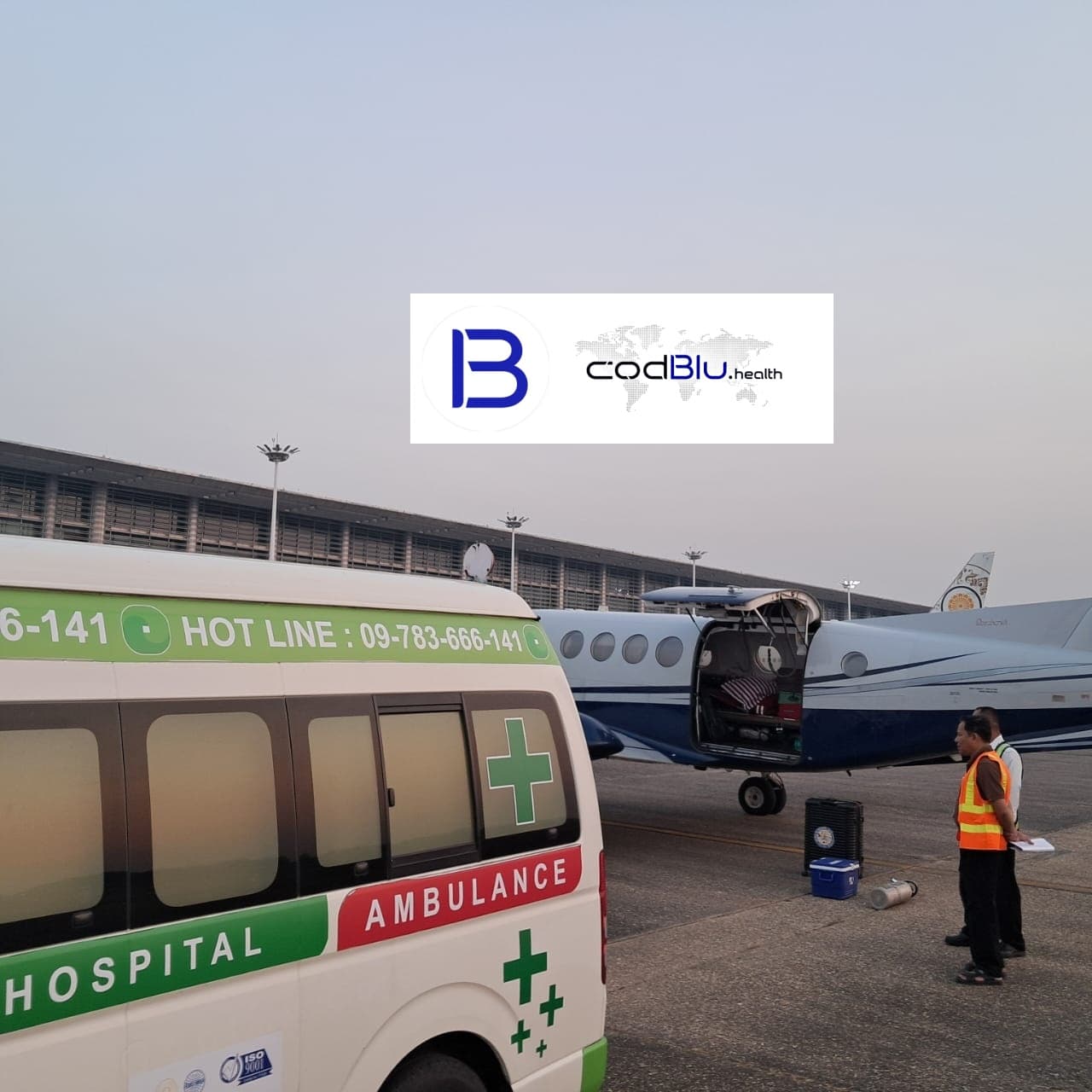
CodBlu Healthcare provides 24/7 medical coordination for Myanmar–India patient transfers, with assessment for departures from Yangon International Airport (RGN) and Mandalay International Airport (MDL). Yangon offers scheduled international options for selected patients; a Mandalay transfer needs its own flight and ground plan, rather than an automatic journey to Yangon. MDL lies about 35 km south of Mandalay in Tada-U Township. Charter air ambulance, airline stretcher and medical escort options depend on the patient’s condition, confirmed carrier or aircraft acceptance, entry documents and an agreed receiving hospital.
Call +91 93108 64489 for 24/7 medical coordination.
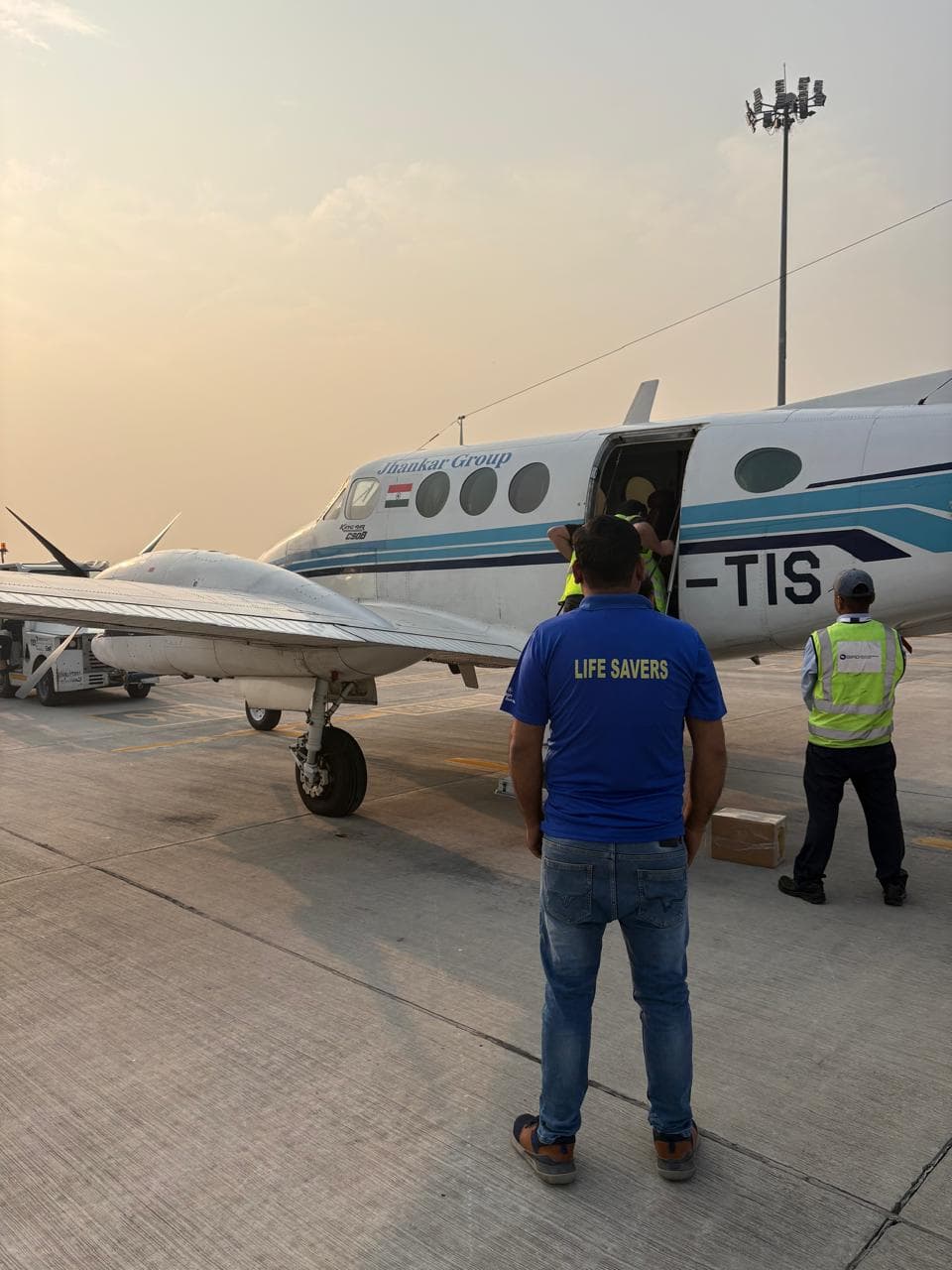
A Referral Needs a Destination and a Transport Assessment
A recommendation for treatment in India answers where a patient may receive further care. A transport assessment answers how the patient can get there while receiving the support they need. Both decisions must be settled together.
Share the latest clinical record from the Myanmar hospital, including the reason for referral and any recent deterioration. The medical team needs to understand whether the patient can remain seated, requires a stretcher, depends on oxygen or ventilation, or needs medicines through continuous infusions. A patient who was comfortable on a ward yesterday may need a different plan after a change in breathing or consciousness.
If immediate stabilisation or treatment is necessary, the referring team should address that locally while transport planning proceeds. An aircraft booking cannot replace urgent bedside care. Confirm the proposed Indian hospital’s acceptance, appropriate unit and admission arrangements before committing to international movement.
Yangon: Plan Around the Hospital Campus and RGN Departure
Yangon medical transfers can begin in a central hospital, a northern suburb or the Hlaing Tharyar area. These origins create different road journeys to Yangon International Airport. The pickup address, ward and loading arrangements are more useful than a general instruction to collect the patient “from Yangon”.
A scheduled international itinerary may be suitable for a stable patient after airline assessment. For someone requiring a medical charter, RGN handling must instead be agreed with the aircraft operator and local ground team. Passenger-terminal procedures and charter access are not assumed to be identical.
Yangon Hospitals Relevant to Referral and Discharge Coordination
Yangon General Hospital: This public teaching hospital is on Bogyoke Aung San Road in Lanmadaw Township. For an onward referral, identify the treating department and the clinician responsible for the latest medical summary. An international transfer request needs a clear handover from that department, including investigations and the reason continued care is sought elsewhere.
Pun Hlaing Hospital, Hlaing Tharyar: The flagship campus is in Pun Hlaing Estate, Hlaing Tharyar Township. Its hospital group publishes an International Patient Centre with insurer liaison and ambulance-transfer coordination. Specify this campus when arranging collection; “Pun Hlaing” alone can refer to another hospital or clinic. Ground-route planning should account for the actual approach from Hlaing Tharyar to RGN.
Grand Hantha International Hospital: Located in Kamaryut Township, the hospital lists ICU, CCU and HDU facilities, alongside an international-patient and medical-records contact pathway. A transfer request should identify the current care unit and obtain the relevant records through the hospital team. The patient’s support at discharge determines the ambulance and flight configuration.
Victoria Hospital: Its Taw Win Road campus is in the 9 Mile area of Mayangone Township. The hospital advertises emergency and ambulance services. For patients leaving after an emergency admission, clarify whether the treating team recommends a seated journey, supported stretcher travel or continuing critical care during transfer. A northern Yangon location does not remove the need to confirm airport access and boarding support.
Asia Royal Hospital: The Baho Road facility in Sanchaung Township publishes ICU and CCU services. For a patient referred after cardiac, neurological or other inpatient care, send the relevant specialist assessment along with current observations and medicines. The receiving team needs usable clinical information, rather than only an appointment confirmation.
Before Leaving a Yangon Hospital
Keep hospital discharge linked to confirmed medical acceptance and departure arrangements. Establish who will provide the Myanmar ambulance, who will maintain care while airport formalities are completed, and where the patient will remain if departure changes.
Rain, traffic and restrictions can affect the road stage. Oxygen and equipment reserves should cover the planned journey with a clinically appropriate allowance for delays. Ordinary airport wheelchair assistance does not provide the treatment a patient may require during that period.
Mandalay: Assess a Direct Medical Departure Before Adding a Yangon Transfer
Mandalay deserves a separate assessment because moving a patient to Yangon introduces another transport stage. A charter from MDL may avoid that additional journey when an appropriate aircraft, handling and permissions can be secured. A commercial itinerary may involve a connection, but each flight and the intervening wait must be acceptable for the patient.
Mandalay International Airport is in Tada-U Township, about 35 km south of the city. This ground leg belongs in the clinical plan. A patient leaving an ICU needs suitable support from the hospital bedside, including during the drive and aircraft loading.
Mandalay Hospitals to Identify Precisely
Mandalay General Hospital: The main public hospital is on 30th Street, between 74th and 77th Streets. Obtain the exact department, treating doctor and discharge contact for the patient. For complex referrals, arrange a clinician-to-clinician discussion so the receiving hospital understands what has already been treated and what further care is required.
Mingalar Hospital: Located on 58th Street, between 42nd and 43rd Streets, in Mahar Aung Myae Township, Mingalar publishes emergency, ICU and HDU services. Its critical-care information describes ventilator support and monitoring. For an air ambulance enquiry, the latest respiratory support, infusion details and clinical trend are essential to matching the transport setup to the patient.
Mandalar Hospital: This is a different hospital, on 33rd Street between 68th and 69th Streets. Its published facilities include emergency care, imaging and haemodialysis. Confirm the name and address carefully when sharing records or instructing an ambulance. Patients needing ongoing renal care also require a treatment schedule agreed with the referring and receiving teams.
Pun Hlaing Hospital, Mandalay: The campus is at No. 97, at the corner of 73rd Street and 31/A Street, in Chanayethazan Township. The hospital lists intensive care, emergency services and multidisciplinary treatment. Specify the Mandalay campus on the referral documents and transport request, particularly when the family also has contact with the group’s Yangon facilities.
City Hospital Mandalay: Located on Theikpan Street between 65th and 66th Streets, this private hospital is another relevant starting point for an onward medical journey. Ask the hospital team to confirm the current unit, available discharge records and the support required until the transport team assumes care.
Mingalar and Mandalar Are Not Interchangeable Names
Use the hospital’s exact spelling and street address on the clinical summary, quotation and pickup instruction. These similar names refer to different facilities. Resolving that detail early helps the transport team contact the correct clinician and arrive at the intended bedside.
MDL Terminal Arrangements Need Current Confirmation
Mandalay airport’s notice dated 4 September 2026 states that the second-floor passenger terminal is open for domestic and international departures. For a patient on a stretcher, confirm the accessible route, loading equipment and approved handling point with the airline or charter team. A general passenger-terminal announcement does not establish a particular medical flight’s acceptance.
Patients coming towards Mandalay from areas such as Sagaing or Pyin Oo Lwin need a separate assessment of the feeder journey. Current road access, restrictions and available clinical support must be checked locally. Do not send a critically ill patient on a long road transfer merely because a flight enquiry has begun.
Charter Air Ambulance for Patients Who Need Continuing Critical Care
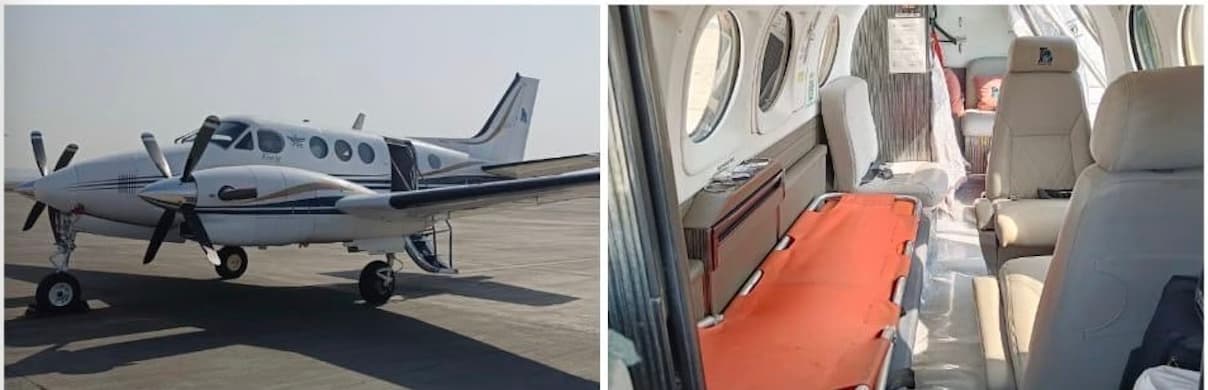
A Myanmar charter air ambulance can be assessed when the required care exceeds what an available passenger airline can accommodate, or when connections would add an unacceptable clinical burden.
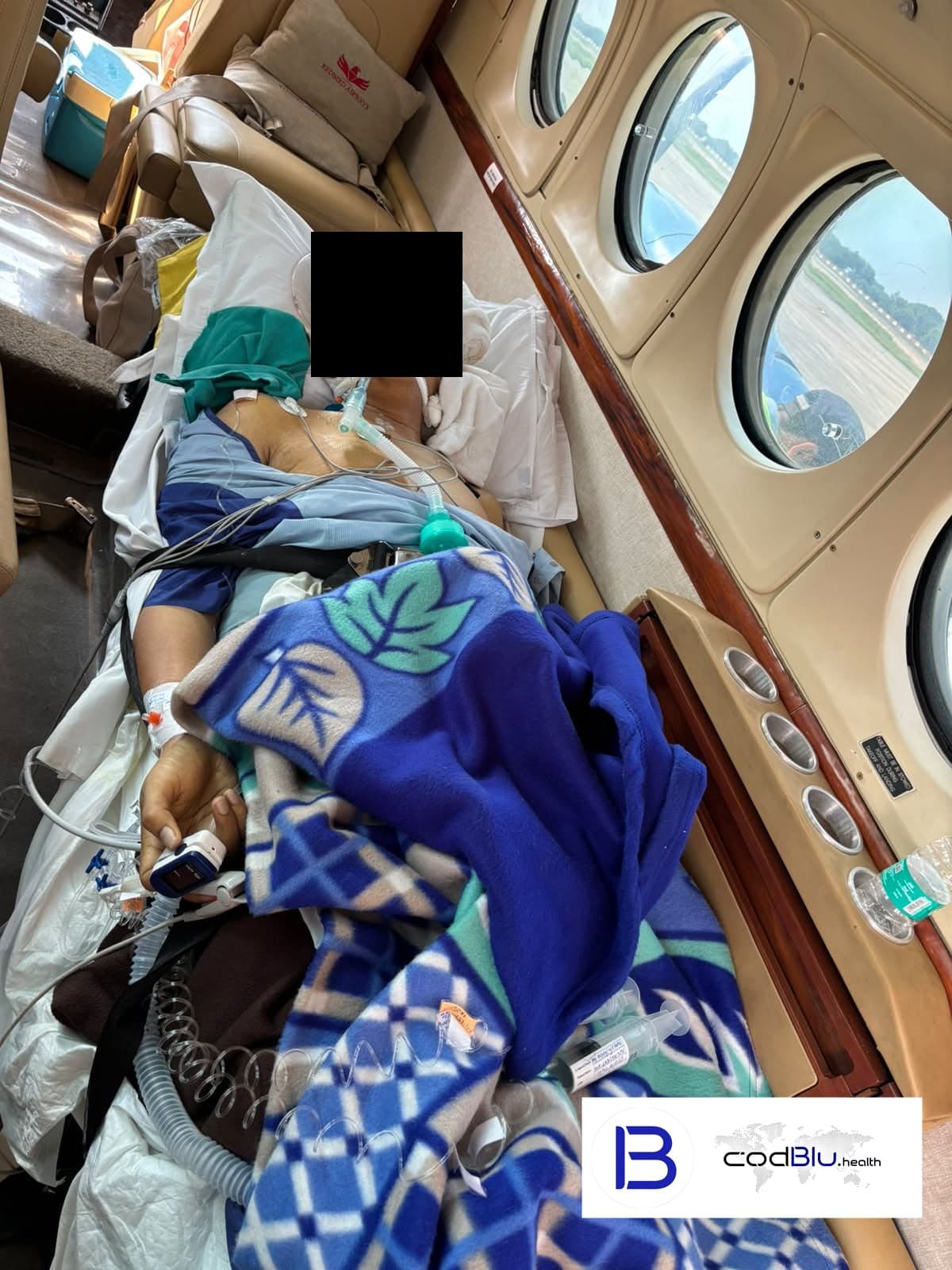
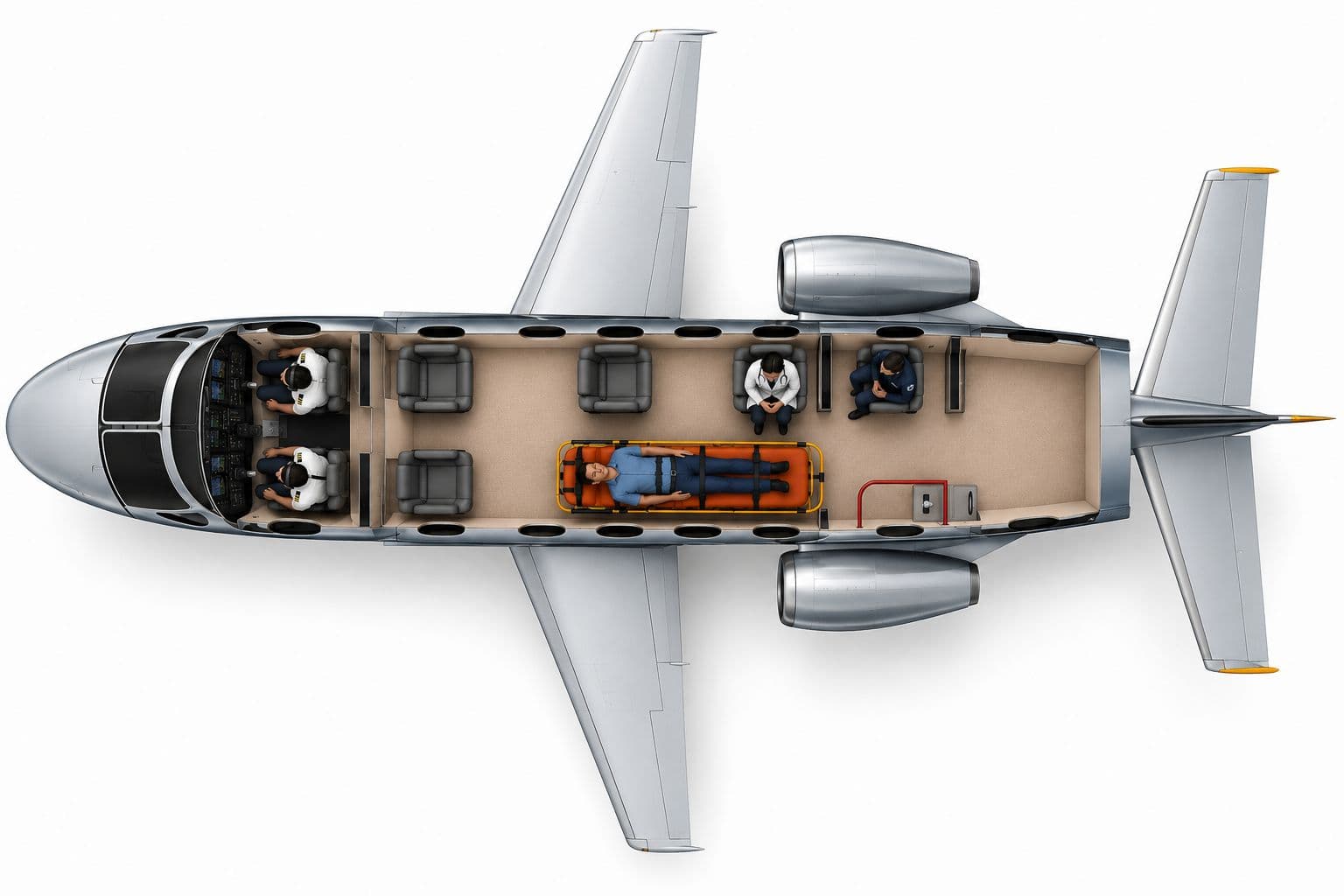
For a ventilated patient, the transport team needs the current ventilator settings, oxygen requirement, airway details and response to recent treatment. For a patient receiving blood-pressure support, the medicine, dose, infusion access and stability during movement matter. These details determine the clinical staffing, working space, oxygen supply, pumps and monitoring required.
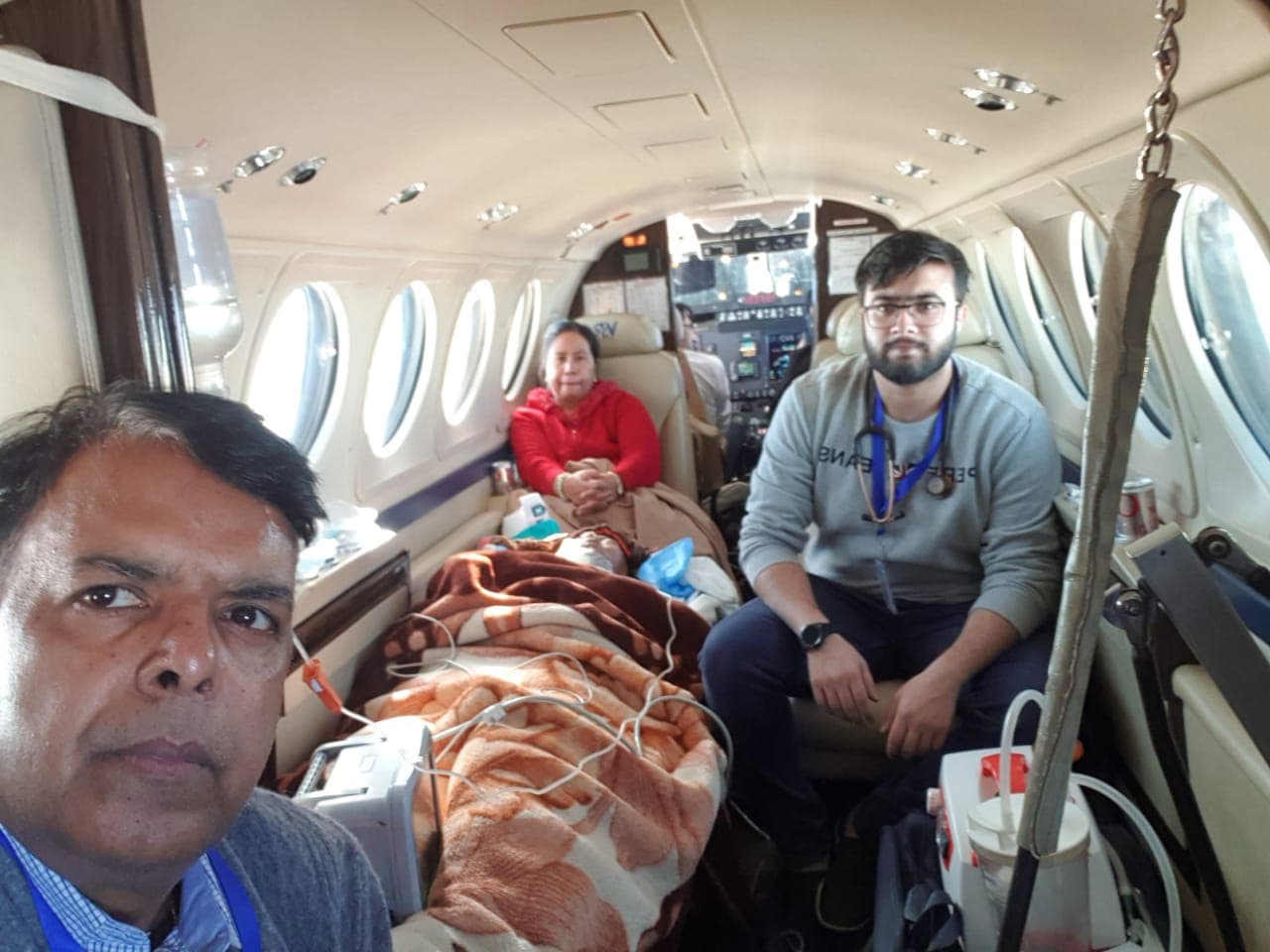
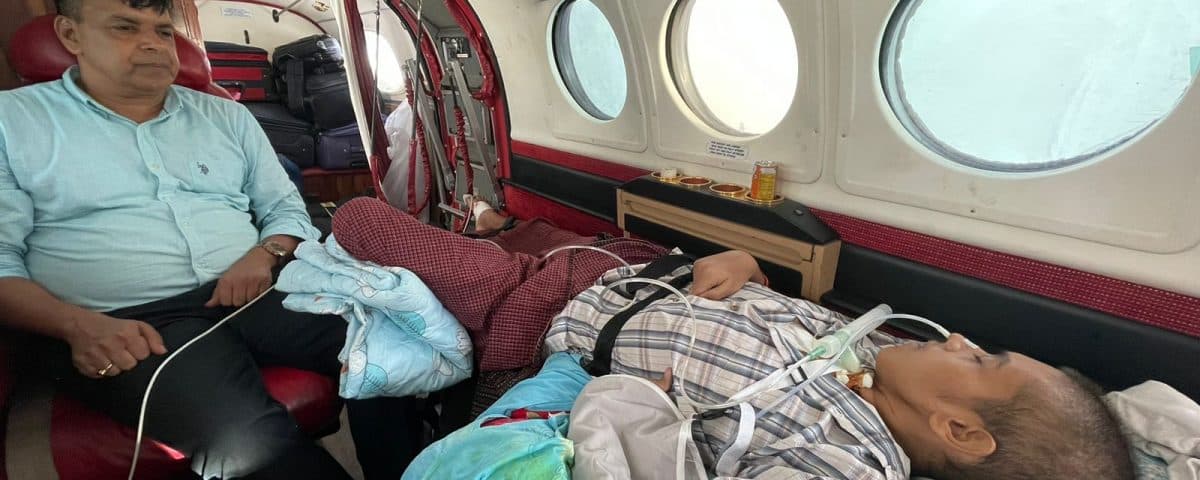
The medical aircraft configuration must be suitable for the whole case. Equipment needs secure installation and adequate power; the patient needs an appropriate stretcher and restraint arrangement. The team must be able to reach the airway and essential devices during care. An aircraft’s passenger capacity alone does not demonstrate medical suitability.
Departing from Yangon or Mandalay may allow routing towards the intended Indian hospital’s arrival airport. Whether the flight can operate without a fuel stop depends on the aircraft, payload, route and operating conditions. Establish the actual routing before estimating the clinical journey time.
The aviation provider must confirm aircraft positioning, landing and departure permissions, ground handling, fuel, crew requirements and current airport restrictions. CodBlu Healthcare’s coordination role should be distinguished from the aircraft operator’s responsibilities. Ask who operates the aircraft, who supplies the medical team and who arranges the Myanmar ambulance.
Commercial Medical Travel: Confirm the Care, Then the Carrier
Commercial air ambulance arrangements use scheduled passenger flights. They can be more economical for selected patients, but a flight sold on a route is not automatically available for a medical transfer.
Seated medical escort: A doctor or nurse may accompany a patient who can tolerate the required seating position and needs clinical assistance. The assessment includes mobility, medicines, oxygen needs and the ability to cope with airport waiting.
Business-class medical escort: Additional space may help some patients. Confirm the actual seat and required position during taxi, take-off and landing. A reclining seat does not provide an installed medical stretcher or critical-care workspace.
Commercial airline stretcher: This may be considered for a patient who must lie down and meets the carrier’s conditions. Approval depends on the specific airline, aircraft, installation, escort, medical documents and ground handling. An ordinary ticket should not be purchased as proof of stretcher acceptance.
Myanmar Airways International: Oxygen and Boarding Arrangements
Myanmar Airways International (MAI) publishes advance arrangements for wheelchair assistance and notes that a hi-lift may be needed when boarding uses stairs. Confirm its availability and any station charges for the intended flight.
MAI’s published oxygen policy says passengers cannot bring or use their own personal oxygen units. It describes airline-provided therapeutic oxygen for use during the flight, with an accompanying qualified doctor or nurse trained in that equipment. Ask MAI to confirm the prescribed oxygen delivery, equipment and approvals for the individual request. Ground and boarding oxygen need separate provision.
Its general assistance information should not be treated as confirmation of stretcher, ventilator or incubator acceptance. Obtain a case-specific decision for those needs.
Air India: Route Availability and Medical Approval Are Separate
For an Air India-operated flight, relevant medical requests require its clearance process. The published requirements include a physician-certified MEDIF, a recent medical report and additional information for oxygen, equipment or stretcher cases. Stretcher bookings require medical approval and are accepted on Air India-operated sectors.
Air India states that critically ill patients are generally not accepted on commercial aircraft, with exceptional cases subject to additional clearances. A family should therefore avoid assuming that a ventilator patient can use a scheduled Yangon–Delhi flight simply because tickets are available.
For a connecting itinerary, verify every operating carrier, including domestic feeder flights. Approval for one segment does not settle the others. Request a plan for care between flights, equipment compatibility and what happens if the connection is missed.
Matching Myanmar Departures to Treatment in India
The receiving specialist, available bed and required level of care should guide destination selection. Families may already have a treating relationship in India; confirm the hospital campus and acceptance before selecting the arrival airport.
Yangon to Delhi Air Ambulance and Medical Escort
Yangon–Delhi is a relevant scheduled-flight corridor as well as a route for charter assessment. Air India’s route page publishes approximately 3 hours 50 minutes for a direct passenger flight; use this only as a schedule benchmark and reconfirm the flight for the intended date. For Delhi NCR admissions, identify the exact hospital in Delhi, Gurugram or Noida because the ground journey continues after landing.
Yangon to Kolkata Medical Transfer
Kolkata can be considered when the accepting hospital is there. Yangon airport’s published timetable includes Kolkata services, but the actual operating flight, medical approval and equipment arrangements need confirmation. Avoid choosing an arrival city solely because its air sector is shorter if the patient then needs another transfer for treatment.
Yangon to Chennai Patient Transfer
Chennai is another India destination shown in MAI’s published network and Yangon airport’s timetable. Where a suitable flight operates, an escorted seat or stretcher request still needs separate carrier assessment. If a particular specialist unit is accepting the patient, coordinate the admission and airport ambulance around that facility’s location and care requirements.
Mandalay to Delhi, Chennai or Hyderabad by Medical Charter
For a patient admitted in Mandalay, compare a charter assessment from MDL with the clinical burden of a connecting passenger itinerary. A direct medical routing towards Delhi, Chennai or Hyderabad may be considered when the receiving hospital, aircraft range and permissions support it. These are case-specific routing options, not claims of scheduled non-stop flights from Mandalay or guaranteed charter availability.
Return journeys from India to Yangon or Mandalay can also be assessed after treatment. A patient ready to leave an Indian hospital may still need an escort, oxygen or stretcher support, and the destination team must know what care is required on arrival.
Newborn and Child Transfers Require a Different Setup
For a neonatal air ambulance enquiry from Myanmar, supply the baby’s gestational age, current age, weight and recent clinical summary. Explain respiratory support, temperature needs, feeding, infusions and any episodes of instability. The receiving neonatal unit should confirm acceptance before departure planning is finalised.
An incubator journey requires compatible equipment and loading across the hospital, Myanmar ambulance, aircraft and receiving ambulance. Power and oxygen planning must include the MDL or RGN ground stage and possible waiting, rather than only the flight. The assigned clinician and equipment must be appropriate for the baby’s needs.
For older children, age and weight influence airway equipment, monitoring and medicine preparation. A parent’s ability to accompany the child depends on approved seating and documents. Commercial airline rules for an unwell child must be checked separately from routine infant or child-ticket conditions.
Documents and Communication for a Myanmar–India Referral
Prepare a referral pack that the receiving hospital and transport team can both use:
- A current medical summary stating the diagnosis, reason for transfer and recent clinical course.
- Relevant imaging, investigation results, procedure notes and medicine details.
- Current respiratory support, infusion requirements and clinical observations.
- The patient’s identity and travel documents, alongside those of accompanying relatives.
- Receiving-hospital acceptance and admission details.
- Airline forms and medical-equipment permissions when using scheduled flights.
Where records are in Burmese, arrange a clinically accurate English summary or translation for the teams who need it. Preserve original reports and clarify medicine names and doses directly with the treating clinician. Interpretation should support family consent as well as medical handover.
Myanmar nationals travelling for treatment in India need the appropriate entry permission. Medical and medical-attendant visa pathways depend on eligibility and current rules. India’s e-Medical process requests a letter from the Indian hospital; urgent cases should seek advice from the relevant Indian mission about the applicable process. A referral letter or charter reservation does not waive immigration requirements.
Contact an insurer or assistance company before incurring transport charges. Confirm whether it covers this transfer, whether it requires its own provider and whether written payment authorisation is available. Check exclusions relevant to the location and circumstances. Self-funded families should settle hospital admission deposits separately from the transport agreement.
Add CodBlu Healthcare as a Preferred Source

What Does an Air Ambulance from Myanmar to India Cost?
CodBlu Healthcare’s indicative end-to-end charter air ambulance cost from Yangon to Delhi or Mandalay to Delhi is ₹27–30 lakh. Charter transfers to other destinations require a separate quotation. The indicative commercial airline stretcher cost is ₹8–10 lakh, with the applicable route and package confirmed in the written quotation.
| Transport option | Indicative end-to-end cost | Approximate USD equivalent |
|---|---|---|
| Commercial airline stretcher | ₹8–10 lakh | USD 8,300–10,400 |
| Charter air ambulance: Yangon to Delhi or Mandalay to Delhi | ₹27–30 lakh | USD 28,000–31,200 |
The USD amounts are rounded equivalents using approximately ₹96.3 per US dollar, checked on 2 October 2026. They are reference figures, not fixed USD tariffs. The written quotation will confirm the applicable exchange rate, settlement currency and payment terms.
Commercial stretcher transport requires individual medical assessment and acceptance by the operating airline. For a patient who needs care beyond the airline’s approved arrangements, a medical charter may be more appropriate.
For charter transfers, aircraft positioning, aircraft type, routing, fuel stops, permissions and ground handling can affect the price. Clinical staffing, oxygen or ventilator requirements and additional equipment also influence the confirmed package. The ₹27–30 lakh range applies specifically to the stated Delhi routes; each patient’s departure and care arrangements still require confirmation.
Request a written end-to-end quotation identifying the medical team, equipment, airline or aircraft arrangements, and both ground ambulance legs. It should also state taxes, accompanying relatives, any exclusions and cancellation or rescheduling terms. Hospital treatment charges are separate unless expressly included.
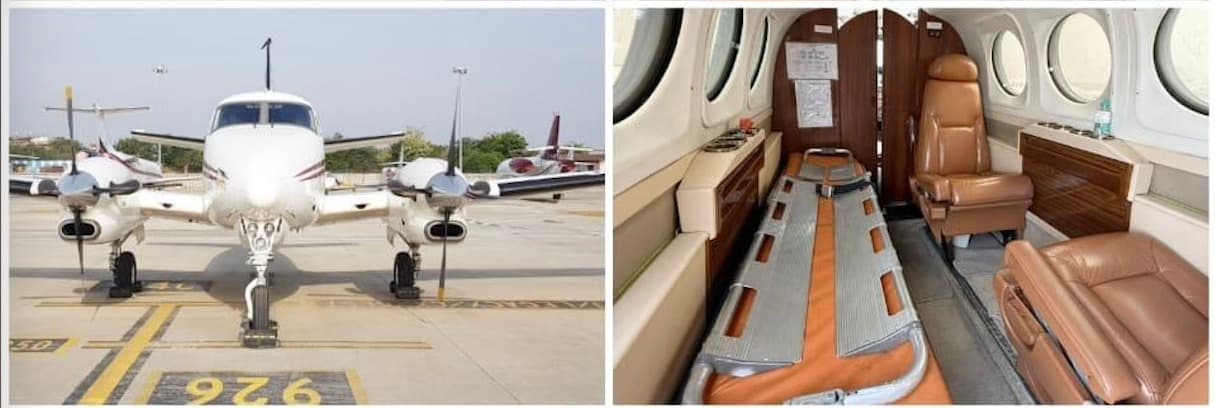
One Coordinated Handover from the Myanmar Ward to the Receiving Team
A confirmed bed-to-bed transfer links the referring clinician, transport medical team, local ambulance, aviation provider and receiving unit. Before discharge, agree where clinical responsibility changes and who can authorise a revised plan.
The transport team receives the patient and current records at the hospital, maintains the agreed support through airport processing and flight, and hands over to the receiving hospital after the arrival ambulance journey. Medication records, device settings and any clinical changes should accompany that handover.
If departure is delayed or the condition changes, reassess the plan with the referring team. The patient may need to remain in hospital until transport can proceed. Families should have one nominated coordination contact and an agreed method for updates. For international medical repatriation, the same single-plan approach applies to the return journey.
Myanmar Transfer Questions
A medical charter from MDL can be assessed. It requires an appropriate aircraft, accepted medical configuration and operating permissions. Compare it with the complete alternative journey, including a feeder flight or road transfer, rather than comparing flight fares alone.
No. Mingalar is on 58th Street between 42nd and 43rd Streets. Mandalar is on 33rd Street between 68th and 69th Streets. Give the exact name, address and treating department when requesting collection.
State the actual hospital and city. The Hlaing Tharyar flagship in Yangon and the Mandalay hospital have different pickup locations. A clinic name or the group name alone is insufficient for an inpatient collection plan.
A transfer request can be assessed from either hospital. Provide the treating department, current clinical summary and discharge contact. Confirm hospital release, transport suitability and receiving acceptance before arranging movement.
Its 4 September 2026 notice says the second-floor passenger terminal is open for departures. Check the latest instructions for the travel date and obtain separate confirmation of the patient’s accessible route and medical handling arrangements.
MAI’s published policy prohibits passengers’ own personal oxygen units and describes airline-provided inflight therapeutic oxygen. Discuss the precise requirement with MAI in advance. Arrange the road, waiting and boarding stages separately.
It can help with records, appointments and coordination, but the transport medical team and airline or aircraft provider must assess their respective requirements. A hospital appointment or visa-support letter does not establish flight acceptance.
Only after individual assessment and explicit carrier acceptance. Air India generally excludes critically ill cases, with exceptional requests subject to additional clearances. Patients needing unsupported continuous care may require charter assessment instead.
Keep the patient in an appropriate care setting until the movement plan is confirmed. Airport assistance cannot be assumed to provide the ongoing treatment available in the hospital.
Share the exact location and local clinical contact. First establish an accessible route and suitable support to a departure point. Conditions in feeder areas can change; a city-level coverage statement is not proof that a particular road or airport is usable.
Keep the originals and provide an accurate English clinical summary where needed by the receiving or transport team. Important medicines, doses, findings and recent changes should be verified with the treating clinician.
Each traveller needs appropriate documents. A patient’s medical visa does not automatically authorise accompanying relatives. Check the applicable medical-attendant or other visa route with the issuing authority.
Confirm this with the actual operator. Available seating, patient-care space, payload and travel documents determine the approved arrangement. Include accompanying people in the quotation and flight plan from the start.
The return needs a fresh assessment of the patient’s condition and destination care. The hospital in India should provide updated records, and any escort, oxygen, stretcher or receiving ambulance must be confirmed for that journey.
Start with the Referring Doctor’s Information
For a Myanmar air ambulance enquiry, contact CodBlu Healthcare with the hospital name and address, whether the patient is in Yangon or Mandalay, and the proposed receiving hospital in India. Include a recent medical summary and a contact for the treating clinician.
The team can then review the required care, investigate appropriate transport options and identify the documents and operational confirmations still needed. Request a written plan and a current quotation for the agreed journey.
24/7 medical coordination: +91 93108 64489