
Charter Air Ambulance Services in India
A charter air ambulance provides a dedicated aircraft with medical personnel and equipment matched to the patient’s needs. CodBlu’s indicative domestic planning budgets range from ₹4–14 lakh or more, depending on distance, aircraft positioning and clinical requirements. These budgets allow for typical positioning, medical crew and both ground ambulances within the agreed bed-to-bed package. Call +91 93108 64489 for 24/7 medical coordination. A doctor reviews the patient before aircraft selection. Departure is confirmed after medical readiness, aircraft availability, airport permissions, weather and receiving arrangements are established.

Doctor-Led Experience in Medical Evacuation
CodBlu Healthcare has coordinated more than 4,000 air evacuations, supported by two generations of doctor-led critical-care experience.
Dr. Deepshikhar Gupta or Dr. Pradeep Gupta personally undertakes the pre-transfer clinical assessment before the transport mode and medical team are finalised.
That assessment connects the patient’s treatment requirements with the practical arrangements: aircraft configuration, medical personnel, oxygen, equipment, ground ambulances and receiving care.
When a Dedicated Medical Aircraft May Help
For a family arranging an ICU transfer, the important question is whether the patient’s treatment can continue throughout the journey.
A charter provides greater flexibility over cabin configuration, patient access and departure planning than a scheduled passenger flight. It may also avoid a commercial connection and the additional boarding, waiting and handovers involved.
A private aircraft needs an appropriate medical configuration before it can support an ICU transfer. Cabin space, stretcher access, oxygen, power and the accompanying team must match the patient’s requirements.
Charter does not automatically mean non-stop. Aircraft range, fuel requirements, weather and operational permissions may require an intermediate landing.
Add CodBlu Healthcare as a Preferred Source

Clinical Assessment Before Aircraft Selection
The transport assessment considers breathing, circulation, consciousness, recent procedures, current treatment and the risk of deterioration during movement. Recent observations matter alongside the discharge summary.
The referring clinician’s advice and receiving hospital’s requirements are included in the plan.
Who May Need a Charter Air Ambulance?
Charter transport may be appropriate for:
- Patients requiring mechanical ventilation or respiratory support beyond a scheduled airline’s accepted arrangements.
- Patients receiving continuous infusions who need close observation or intervention.
- Cardiac, neurological, trauma or postoperative patients requiring a medically supported referral.
- Newborns and children needing specialist transport conditions.
- Patients facing medically difficult commercial connections or prolonged surface travel.
- Patients requiring a planned private transfer for continuing care or repatriation.
The diagnosis alone does not determine the transport mode. Two patients with the same illness may need different arrangements.
When Movement May Need to Wait
An unsecured airway, uncontrolled bleeding, worsening oxygenation or circulation, or an untreated pneumothorax may require treatment before movement.
Sometimes an urgent transfer remains necessary despite significant risk. The treating, transport and receiving teams must assess that balance and explain it to the patient or representative.
Aircraft availability does not replace medical readiness.
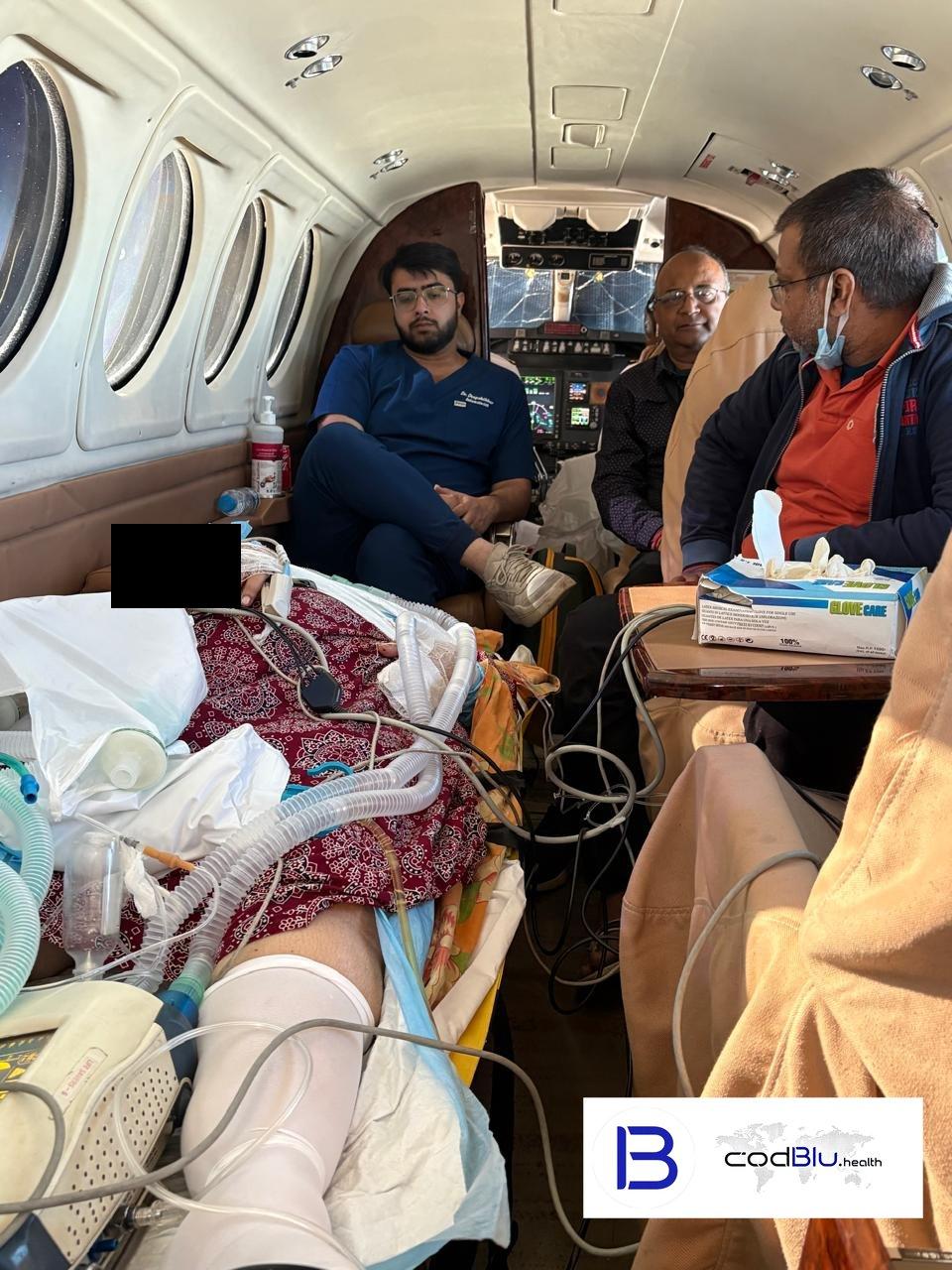
ICU and Ventilator Support During Charter Flights
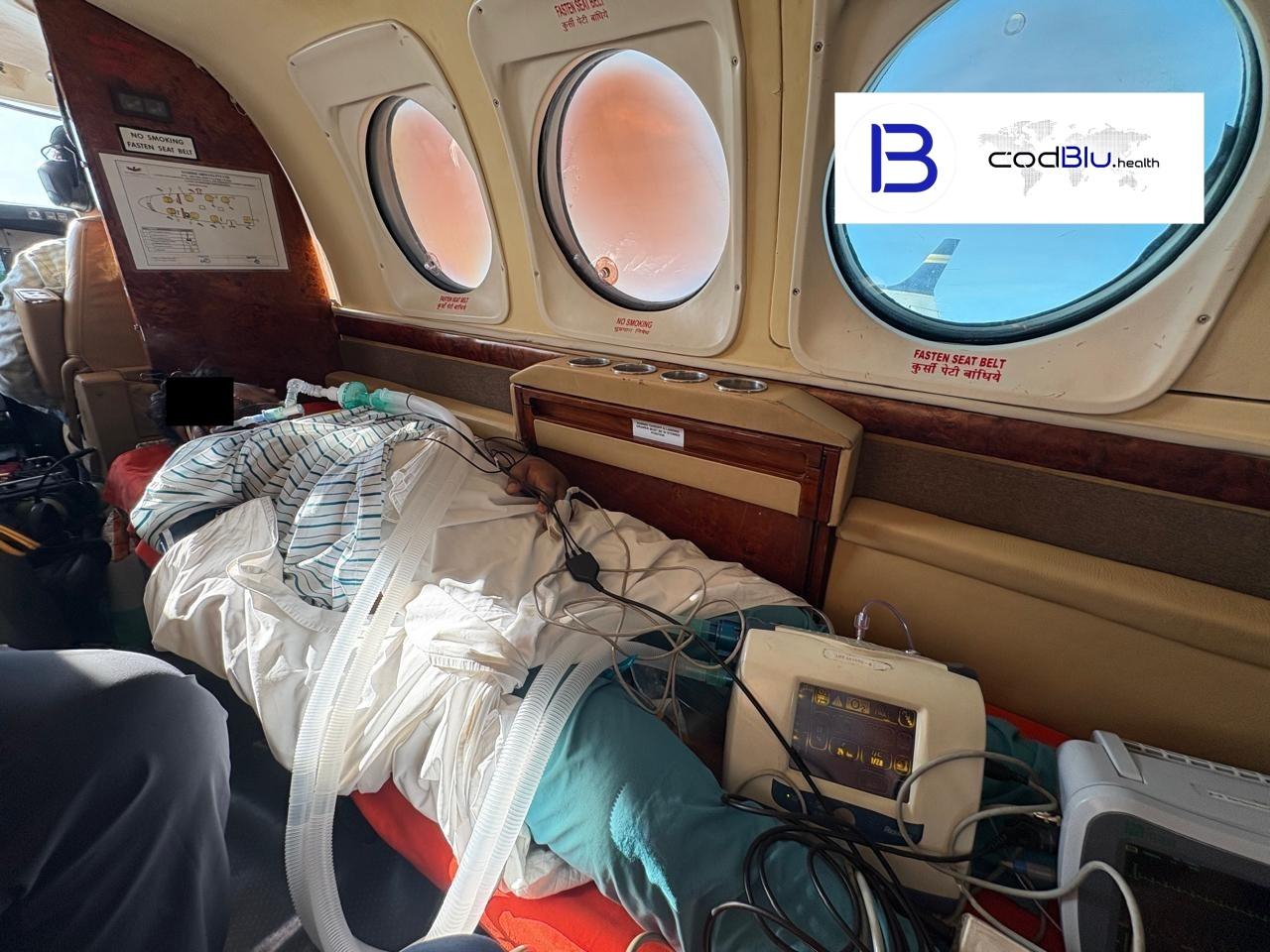
An ICU air ambulance must support the patient’s treatment within the practical limits of the aircraft cabin.
| Clinical requirement | What the transfer plan must address |
|---|---|
| Airway and breathing | A suitable transport ventilator where required, airway access, suction and emergency ventilation arrangements |
| Oxygen | The prescribed delivery method, calculated consumption and contingency reserve |
| Monitoring | Observation of heart rhythm, blood pressure, oxygenation and ventilation according to clinical need |
| Continuous medicines | Appropriate infusion or syringe pumps, secure access and sufficient medication |
| Equipment operation | Secure installation, aircraft compatibility, batteries and backup power arrangements |
| Clinical deterioration | Medical personnel, emergency equipment and medicines appropriate to the anticipated risks |
Oxygen planning covers the ambulance journey, airport waiting, flight and destination transfer. A portable oxygen concentrator may not meet the requirements of a ventilated or critically ill patient.
Pulse-dose settings and continuous oxygen flow are different. The actual oxygen system is selected after reviewing the patient’s needs and equipment compatibility.
Cabin pressure can also affect certain medical conditions. Any special pressure requirement must be agreed with the aircraft operator before the mission is accepted.

Aircraft Used for Charter Air Ambulance Transfers
CodBlu Healthcare arranges medical transfers using King Air C90 and B200 turboprops, Learjet aircraft, Citation XL and Gulfstream aircraft, through aviation operators.
Aircraft selection follows the clinical plan and considers the route, availability and airport requirements.
| Aircraft family or type | Role in medical-transfer planning |
|---|---|
| King Air C90 and B200 | Domestic and regional transfers where aircraft performance, cabin configuration and airport access suit the mission |
| Learjet | Domestic and international journeys where the available model’s speed, range and medical configuration meet the requirements |
| Citation XL | Intercity and international transfers where cabin space, patient access and the proposed routing support its selection |
| Gulfstream | Longer-distance international transfers where the specific model’s range, cabin configuration and medical setup are appropriate |
Each mission requires confirmation of stretcher installation, patient loading, medical-team access, oxygen capacity, equipment power and payload.
Range varies between models within an aircraft family. A Learjet or Gulfstream designation alone does not establish non-stop capability for a particular route. Fuel stops, weather, permissions and crew limits remain part of planning.
Who Operates the Flight?
CodBlu coordinates the clinical and logistical arrangements. The named aviation operator conducts the flight and is responsible for aircraft operation.
For domestic charter operations, the aviation operator must hold the applicable DGCA authorisation for non-scheduled air transport. The operator, aircraft and relevant permit details should be identified in the written flight confirmation before departure.
Aircraft availability is confirmed for the individual booking. The aircraft listed here are arranged through aviation operators and are not permanently based in every pickup city.

Neonatal and Paediatric Charter Air Ambulance
A newborn’s transfer requires a separate clinical plan. Depending on the baby’s condition, support may include:
- Transport incubator and temperature management.
- Neonatal ventilation or CPAP.
- Cardiorespiratory monitoring.
- Syringe pumps and neonatal medicines.
- Suction and age-appropriate airway equipment.
- An appropriately experienced neonatal professional.
For older children, age, weight, diagnosis and respiratory or circulatory support determine the equipment and accompanying personnel.
The first road journey is equally important. A baby travelling from a district hospital needs suitable support before reaching the aircraft, not only during the flight.
Read more about CodBlu’s neonatal and paediatric transport services.

What Is the Cost of a Charter Air Ambulance in India?
Domestic charter costs depend on the patient’s flight distance, the aircraft’s location and the medical support required. The following bands provide an initial budgeting framework.
| Tier | Approximate patient-flight distance | Example routes | CodBlu planning estimate, October 2026 |
|---|---|---|---|
| Short | Under approximately 700 km | Delhi–Lucknow; Bengaluru–Chennai; Bhubaneswar–Kolkata | ₹4–7 lakh |
| Standard | Approximately 700–1,300 km | Delhi–Patna; Delhi–Mumbai; Bhubaneswar–Delhi | ₹8–10 lakh |
| Long | Over approximately 1,300 km | Delhi–Kolkata; Delhi–Bengaluru; Delhi–Chennai | ₹10–14 lakh or more |
These indicative planning estimates allow for typical aircraft positioning, medical crew and both ground ambulances within the agreed bed-to-bed package. They are not fixed CodBlu Healthcare tariffs, and some transfers will exceed these bands.
Patient-flight distance means the approximate straight-line distance between the departure and destination airports. Actual routing can be longer. The distance band helps organise the budget; it does not determine the quotation by itself.
An aircraft already near the pickup airport may lower the price. An aircraft arriving from a distant base may raise it substantially.
Why a Short Flight Can Still Be Expensive
The patient’s flight is only part of the aircraft’s movement. Before collection, the aircraft may need to fly from another base. The operator may also need to account for onward or return positioning.
Landing, handling, parking and any permitted airport-hours extension vary between airports. Aircraft type, fuel and operating costs, medical staffing, oxygen consumption, specialist equipment and ground transfers also influence the total.
What Should the Quotation Explain?
Compare quotations for the same scope. Check whether each includes:
- Aircraft sectors, including positioning and planned stops.
- Medical personnel, equipment, oxygen and medicines.
- Ground ambulances at the pickup and destination.
- Airport handling, applicable permissions and taxes.
- Waiting, overnight arrangements and itinerary changes.
- Attendant travel, baggage limits and cancellation terms.
Hospital treatment is separate unless expressly included.
International Charter Costs
International charters require route-specific pricing. A nearby cross-border transfer and a long-distance evacuation involve different aircraft, permissions and operating costs.
For a published CodBlu example, charter transfers from Yangon to Delhi or Mandalay to Delhi have an indicative end-to-end planning range of ₹27–30 lakh. The confirmed price depends on the patient’s requirements, aircraft availability and agreed package.
See Myanmar-to-India air ambulance arrangements for those route details.
Other international departures, including Dubai and Thailand, require a current quotation. The Myanmar estimate should not be applied to another country or destination.
How Quickly Can a Charter Air Ambulance Depart?
For Delhi departures, CodBlu’s typical published window is 1–2 hours once the patient is medically ready and receiving arrangements are confirmed. This depends on a suitable aircraft and crew being available, airport permissions and weather.
This Delhi experience is not a nationwide departure promise. Other pickup cities, distant aircraft positioning, international permissions or specialist medical configurations can require longer.
The coordination team confirms the expected departure for the individual mission. Aircraft positioning time, patient-flight duration and total bed-to-bed transfer time are separate.

Bed-to-Bed Coordination
A bed-to-bed transfer connects the referring hospital, ground ambulance, departure airport, medical flight, destination ambulance and receiving team.
The transitions need particular attention. Moving between a hospital bed, ambulance stretcher and aircraft may involve changing oxygen connections, power sources or monitoring equipment. These changes must be prepared so essential treatment continues.
For a patient starting far from the airport, the first road leg can determine the required oxygen, medication and battery reserves. At the destination, the appropriate receiving bed and clinical team should be ready before departure is agreed.
Confirm whether the quotation covers the complete journey or only the airport-to-airport flight.
Airports for Charter Air Ambulance Transfers Across India
CodBlu Healthcare assesses charter enquiries from major cities and regional centres across India. Airport selection follows a review of the patient’s condition, current hospital, ground journey and aircraft requirements.
The following airports are planning reference points, not permanent aircraft bases. A listing does not establish immediate availability or acceptance of every medical charter. Operational feasibility must be confirmed for the proposed aircraft and date.
Showing 12 airports in North India
North India
| City or pickup area | Airport | IATA code | Regional transfer considerations |
|---|---|---|---|
| Delhi NCR | Indira Gandhi International Airport | DEL | Assess the hospital’s exact NCR location and ground journey before planning departure. |
| Ghaziabad and eastern NCR | Hindon Airport | HDO | Charter use requires separate confirmation of aircraft acceptance, handling and patient access. |
| Greater Noida, Jewar and western Uttar Pradesh | Noida International Airport, Jewar | DXN | Non-scheduled operations require airport approval and handling coordination. Compare the complete journey with IGI. |
| Srinagar | Sheikh ul-Alam International Airport | SXR | District pickups, snowfall and low visibility can affect the transfer plan. |
| Jammu | Jammu Airport | IXJ | Regional hospital pickups need assessment of road access and continuing medical support. |
| Leh | Kushok Bakula Rimpochee Airport | IXL | High altitude, oxygen requirements and aircraft performance require particular attention. |
| Chandigarh, Mohali and Panchkula | Shaheed Bhagat Singh International Airport | IXC | Plan around the actual hospital location across the Tricity area. |
| Amritsar | Sri Guru Ram Dass Jee International Airport | ATQ | Pickups from surrounding Punjab districts need coordinated ground and flight arrangements. |
| Dehradun | Dehradun Airport, Jolly Grant | DED | Patients from hill locations may need substantial road travel before reaching the airport. |
| Lucknow | Chaudhary Charan Singh International Airport | LKO | Transfers may begin in city hospitals or with a road journey from another district. |
| Varanasi | Lal Bahadur Shastri International Airport | VNS | Establish the referring hospital and full ground journey from surrounding areas. |
| Jaipur | Jaipur International Airport | JAI | Compare charter with supported road transport for nearer destinations. |
West India
| City or pickup area | Airport | IATA code | Regional transfer considerations |
|---|---|---|---|
| Mumbai | Chhatrapati Shivaji Maharaj International Airport | BOM | Hospital location and metropolitan traffic can materially affect the ground stage. |
| Navi Mumbai, Panvel and adjoining areas | Navi Mumbai International Airport | NMI | Consider where confirmed handling and hospital access make it practical; slots, parking and patient loading need confirmation. |
| Pune | Pune Airport, Lohegaon | PNQ | Confirm aircraft handling, patient loading and airport access for the proposed departure. |
| Ahmedabad | Sardar Vallabhbhai Patel International Airport | AMD | Assess the hospital connection alongside aircraft and receiving arrangements. |
| Surat | Surat Airport | STV | Patients from south Gujarat may require a regional road pickup before the flight. |
| Vadodara | Vadodara Airport | BDQ | Choose the departure point using the patient’s location and confirmed aircraft feasibility. |
| North Goa | Manohar International Airport, Mopa | GOX | Compare access with Dabolim according to the referring hospital’s location. |
| Central and South Goa | Goa International Airport, Dabolim | GOI | Ground distance and operating arrangements determine whether Dabolim is appropriate. |
Central India
| City or pickup area | Airport | IATA code | Regional transfer considerations |
|---|---|---|---|
| Nagpur | Dr. Babasaheb Ambedkar International Airport | NAG | A possible departure point for Nagpur and surrounding Vidarbha districts. |
| Raipur | Swami Vivekananda Airport | RPR | Patients from other parts of Chhattisgarh may need prolonged ground support before arrival. |
| Bhopal | Raja Bhoj Airport | BHO | Assess the referring facility, medical requirements and destination before choosing the aircraft. |
| Indore | Devi Ahilya Bai Holkar Airport | IDR | Regional pickups need realistic airport arrival planning and adequate treatment reserves. |
| Jabalpur | Jabalpur Airport, Dumna | JLR | Assess aircraft positioning and the hospital-to-airport journey together. |
East India
| City or pickup area | Airport | IATA code | Regional transfer considerations |
|---|---|---|---|
| Kolkata | Netaji Subhas Chandra Bose International Airport | CCU | Allow for the actual road journey from hospitals across the metropolitan area. |
| Durgapur and Asansol | Kazi Nazrul Islam Airport, Andal | RDP | Assess whether an Andal departure avoids unnecessary ground travel towards Kolkata. |
| Siliguri and surrounding hill regions | Bagdogra Airport | IXB | Patients from Darjeeling, Kalimpong or Sikkim may first need a supported hill-road journey. |
| Ranchi | Birsa Munda Airport | IXR | District pickups require a separate road-stage assessment before the flight. |
| Bhubaneswar | Biju Patnaik International Airport | BBI | Patients may already be in the city or arriving from other Odisha districts. |
| Jharsuguda | Veer Surendra Sai Airport | JRG | A potential departure point for western Odisha, subject to operational confirmation. |
| Patna | Jay Prakash Narayan Airport | PAT | Regional patients may need an additional ground journey before departure. |
| Gaya | Gaya Airport | GAY | Compare local charter feasibility with the medical implications of reaching another airport. |
North East India
| City or pickup area | Airport | IATA code | Regional transfer considerations |
|---|---|---|---|
| Guwahati | Lokpriya Gopinath Bordoloi International Airport | GAU | Regional referrals may involve long roads, river crossings and monsoon disruption. |
| Dibrugarh | Dibrugarh Airport, Mohanbari | DIB | Assess local departure before assuming a road transfer to Guwahati is necessary. |
| Silchar | Silchar Airport, Kumbhirgram | IXS | Barak Valley transfers require confirmation of ground access and aircraft arrangements. |
| Jorhat | Jorhat Airport, Rowriah | JRH | Support must cover hospital pickup and possible airport waiting. |
| Agartala | Maharaja Bir Bikram Airport | IXA | Patients from elsewhere in Tripura need support during the first road journey. |
| Imphal | Imphal International Airport | IMF | Assess current ground access and the patient’s ability to tolerate movement. |
| Dimapur | Dimapur Airport | DMU | Patients arriving from Kohima or other hill locations may need substantial ground preparation. |
| Aizawl | Lengpui Airport | AJL | Hill-road access and weather belong in the transfer timeline. |
| Itanagar and surrounding areas | Donyi Polo Airport, Hollongi | HGI | Confirm the journey from the current facility and suitability of the proposed aircraft. |
South India
| City or pickup area | Airport | IATA code | Regional transfer considerations |
|---|---|---|---|
| Bengaluru | Kempegowda International Airport | BLR | Hospital-to-airport travel can be substantial and needs its own support plan. |
| Hyderabad | Rajiv Gandhi International Airport, Shamshabad | HYD | Road travel varies considerably between Hyderabad and Secunderabad hospitals. |
| Chennai | Chennai International Airport | MAA | Assess traffic, seasonal rain and any onward journey beyond Chennai. |
| Coimbatore | Coimbatore International Airport | CJB | A possible departure point for western Tamil Nadu, depending on location and aircraft arrangements. |
| Madurai | Madurai Airport | IXM | Referrals from southern districts may require additional ground travel. |
| Tiruchirappalli | Tiruchirappalli International Airport | TRZ | Compare local departure feasibility with the burden of reaching another airport. |
| Kochi | Cochin International Airport, Nedumbassery | COK | Hospital location and regional road access determine the ground stages. |
| Thiruvananthapuram | Thiruvananthapuram International Airport | TRV | Coordinate pickup from the actual referring facility in southern Kerala or adjoining areas. |
| Kozhikode | Calicut International Airport, Karipur | CCJ | Patients may need regional road travel from Kozhikode, Malappuram or surrounding areas. |
| Mangaluru | Mangaluru International Airport | IXE | Coastal and inland pickups require assessment of the complete road connection. |
| Visakhapatnam | Visakhapatnam Airport | VTZ | Confirm patient handling and aircraft arrangements before leaving hospital. |
| Vijayawada | Vijayawada Airport, Gannavaram | VGA | Airport choice should reflect the hospital location, including the Vijayawada–Guntur area. |
| Tirupati | Tirupati Airport, Renigunta | TIR | Compare the flight with other medically appropriate options for the receiving destination. |
Andaman and Nicobar Islands
| City or pickup area | Airport | IATA code | Regional transfer considerations |
|---|---|---|---|
| Sri Vijaya Puram, formerly Port Blair | Veer Savarkar International Airport | IXZ | Patients from other islands may need an additional local transfer before reaching the mainland-bound aircraft. |
Other airports and regional airfields can be considered on request. Scheduled passenger operations do not automatically establish acceptance of a proposed medical charter.

International Charter Air Ambulance and Repatriation
An international transfer adds travel documents, entry or transit requirements, flight permissions and overseas handling to the clinical plan.
The referring team supplies current medical information, while the receiving hospital confirms the required care arrangements. Aircraft range and permissions determine whether the journey needs an intermediate stop.
CodBlu’s international medical repatriation service provides further guidance on cross-border patient movement.
ECMO or other highly specialised support requires a separate feasibility assessment covering the specialist team, device, oxygen, power, aircraft compatibility, ground vehicles and receiving centre. Availability is confirmed for the individual case.
Published CodBlu Medical Flight Cases
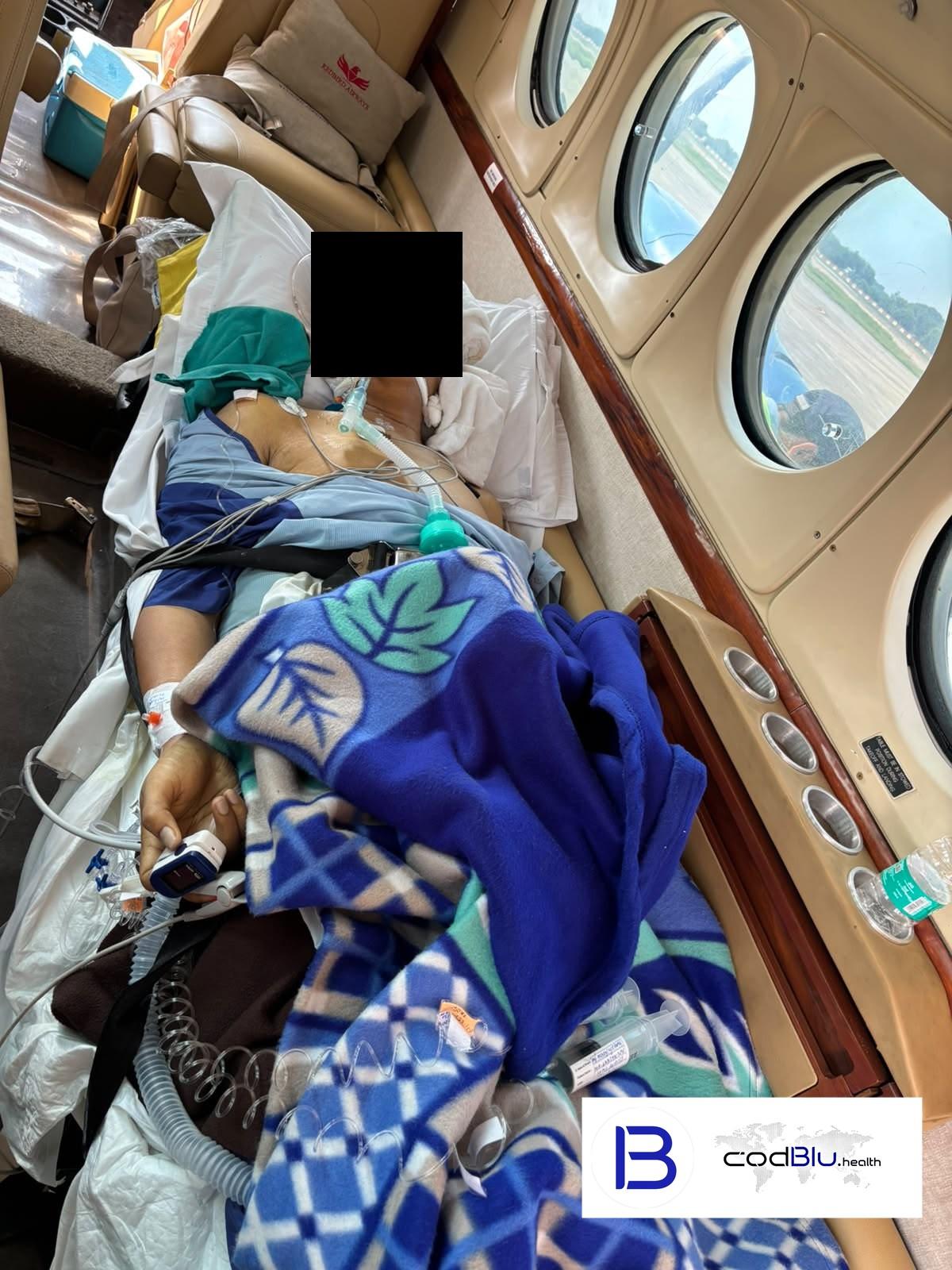
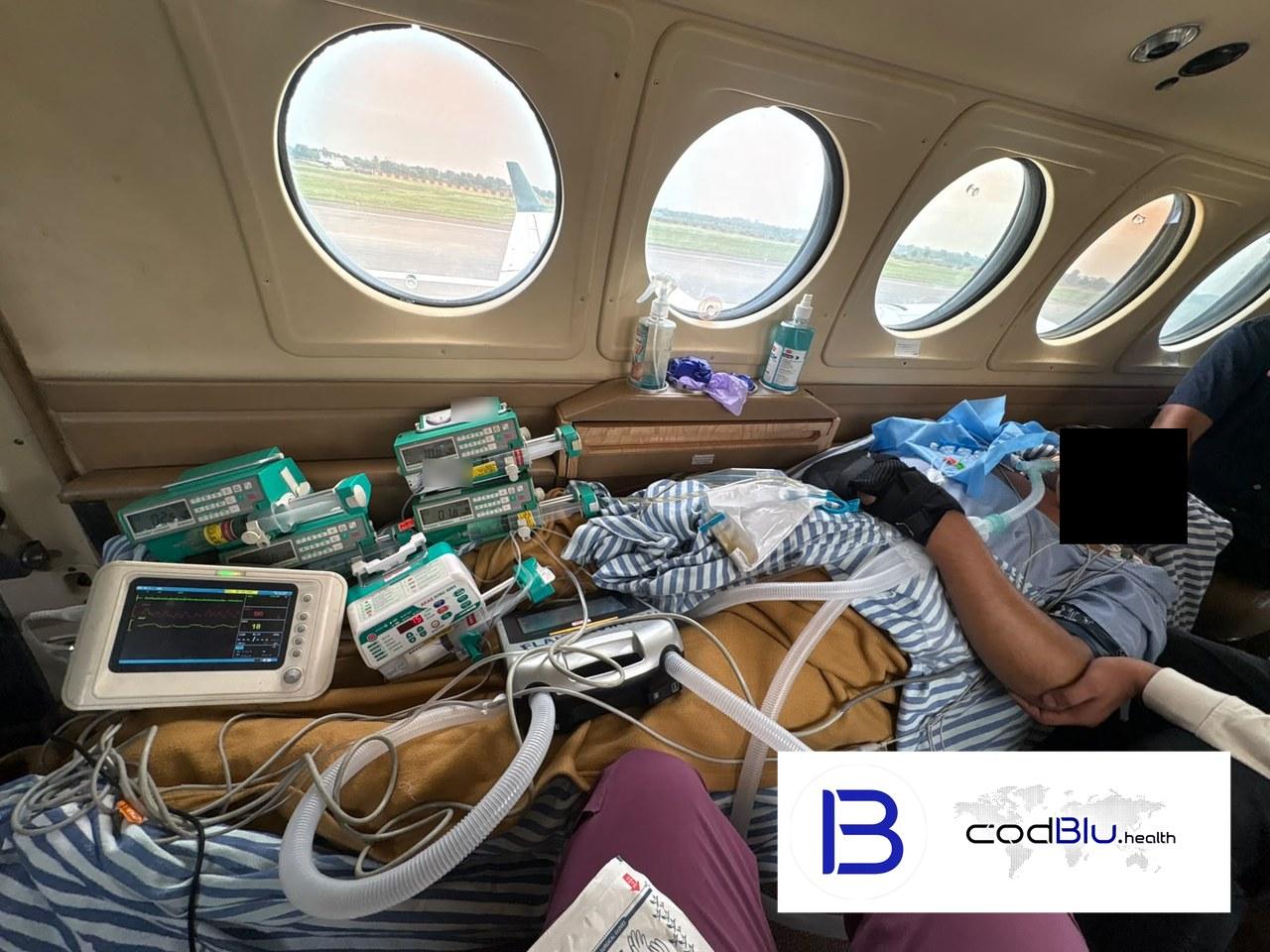
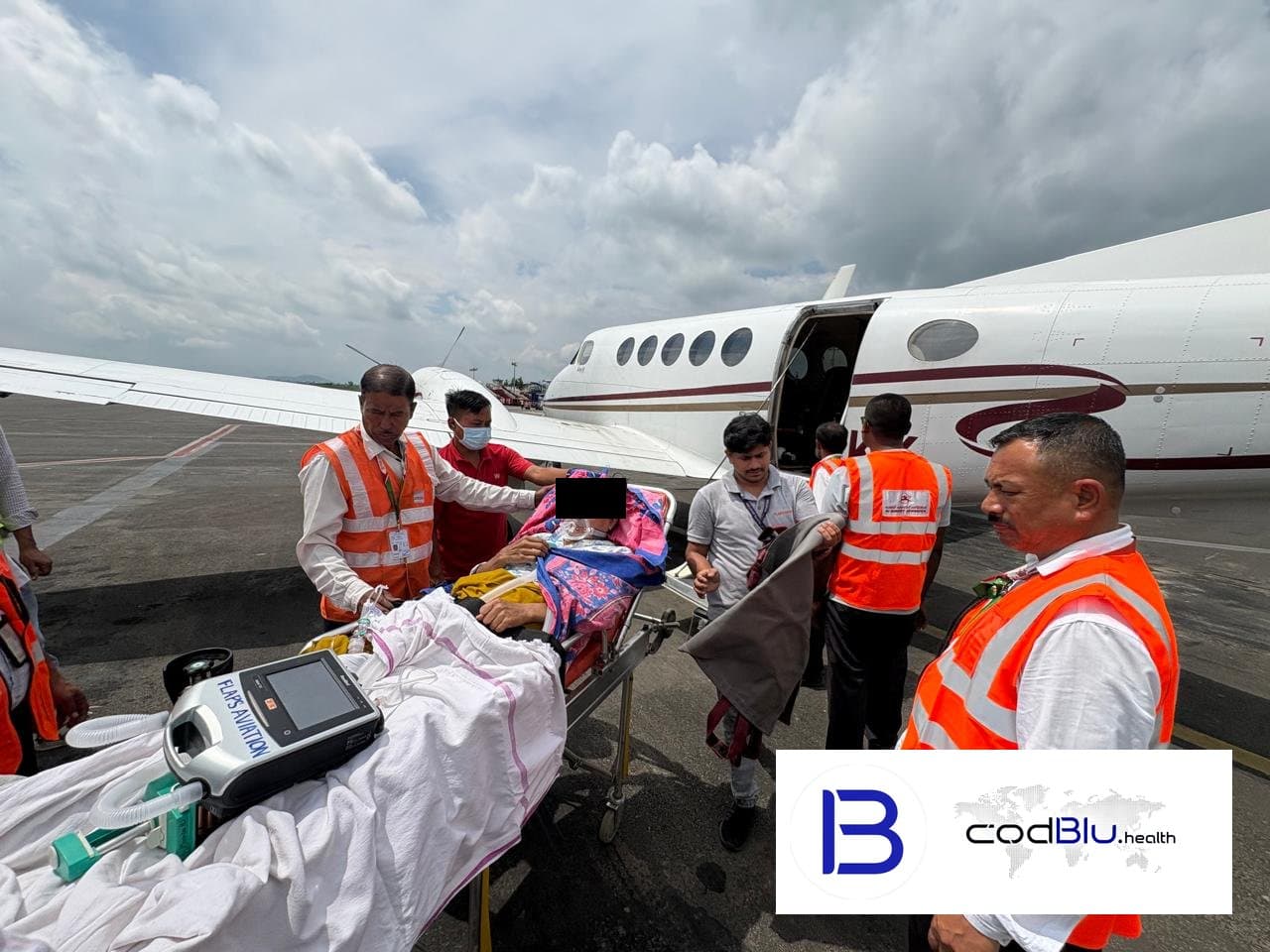
These published stories illustrate different medical requirements during air transfers. The dates shown are publication dates rather than independently verified transport dates.
| Published case | Publication date | Medical support described |
|---|---|---|
| Delhi to Dubai: transfer following brain haemorrhage and craniotomy | October 2025 | Mechanical ventilation and continuous inotropic infusion |
| Guwahati to Delhi: premature baby with congenital heart disease | October 2025 | Transport incubator, neonatal ventilation, airway suction and infusion pumps |
| Varanasi to Delhi: patient with multiple traumatic injuries | March 2026 | Monitoring, oxygen and airway support, immobilisation and medical management |
| Kathmandu to Amrita Hospital, Delhi NCR: neonatal transfer | March 2026 | Ventilator support, monitoring, medicines and neonatal handover |
Each story describes an individual medical flight. Another patient with a similar diagnosis may need a different configuration or transport mode.




When Another Transport Option May Be More Appropriate
A charter is not necessary for every patient.
A medically stable patient may qualify for a commercial airline stretcher or medical escort, subject to airline approval. This can avoid hiring an entire aircraft.
For shorter hospital-to-hospital journeys, a suitable ground ambulance may reduce loading and airport waiting. Patients who can tolerate a longer journey may also be considered for rail ambulance transport.
The appropriate choice depends on clinical requirements, urgency and the complete journey.

How to Book a Charter Air Ambulance
Call +91 93108 64489 and share:
- Current hospital, city and pickup location.
- Destination and receiving hospital, if identified.
- Recent medical summary and treating team’s contact details.
- Current oxygen requirement or ventilator settings.
- Continuous infusions and other treatment requirements.
- Age and weight for a baby or child.
- Nationality and travel documents for international transfers.
Clinical assessment guides the proposed aircraft, crew and medical setup. Operational arrangements and the written quotation are then confirmed for the agreed scope.
Ask for a departure estimate that explains its starting point and whether aircraft positioning is included. Inform the team about any deterioration or treatment change while planning is underway.
Cancellation and Rescheduling
25% of the total booking cost is non-refundable.
Additional cancellation charges may apply under the agreed aircraft operator’s terms, particularly once aircraft positioning, crew mobilisation or airport arrangements have begun.
Before payment, the written agreement should explain:
- Charges before and after aircraft positioning begins.
- Treatment of medical postponement or cancellation.
- Costs arising from a destination or timing change.
- Arrangements if weather, permissions or operational restrictions prevent departure.
- Any refundable balance and the applicable refund process.
A change in the patient’s condition requires immediate clinical reassessment. Any financial consequences are determined separately under the agreed booking terms.
Frequently Asked Questions About Charter Air Ambulance
CodBlu’s indicative domestic planning budgets are ₹4–7 lakh for shorter flights, ₹8–10 lakh for standard-distance flights and ₹10–14 lakh or more for longer transfers. The distance bands appear in the pricing section. Aircraft positioning, medical support and airport arrangements determine the final quotation.
A per-kilometre or hourly figure alone does not show the complete transfer cost. The quotation may include minimum flying hours, aircraft positioning, medical personnel, equipment, airport handling and ground ambulances. Ask for the total price and included aircraft sectors before comparing providers.
The written quotation defines the package. CodBlu’s planning bands allow for typical positioning, medical crew and both ground ambulances within the agreed bed-to-bed arrangement. Confirm oxygen, equipment, airport fees, taxes, attendant travel, waiting charges and any exclusions before payment.
Call CodBlu Healthcare on +91 93108 64489 for 24/7 medical coordination. Send the patient’s current hospital, destination, recent medical summary and oxygen or ventilator requirements. A doctor reviews the case before the aircraft, medical team, quotation and departure arrangements are finalised.
For Delhi, CodBlu’s typical published departure window is 1–2 hours after the patient is medically ready and receiving arrangements are confirmed, subject to aircraft, crew, permissions and weather. Other locations require an individual estimate, especially when an aircraft must arrive from a distant base.
Start with patient identification, a recent medical summary and current treatment details. Investigations, consent, treating-doctor contact details and receiving-hospital confirmation may also be required. International journeys additionally need applicable passports, visas and entry or transit documentation.
A charter may be appropriate when the required care cannot be accommodated on a suitable scheduled flight. Ventilation, substantial respiratory support, continuous infusions, frequent intervention or medically difficult connections can influence the decision. The patient’s current condition determines the recommendation.
Yes, ventilator-dependent patients can travel when the proposed medical setup can support them throughout the journey. The team reviews airway security, ventilator settings, oxygen consumption, circulation and the risk of deterioration. Support must cover ground travel and airport waiting as well as the flight.
Safety depends on the patient’s condition, preparation and the support available during transport. The treating and transport clinicians weigh the risks of movement against the need for care elsewhere. Further stabilisation or a different transfer plan may be necessary before departure.
A doctor accompanies ICU charter transfers, with supporting personnel chosen for the patient’s needs. The team may also include a paramedic, nurse or relevant specialist. Confirm the crew’s roles and the planned level of care before booking.
Yes, with a neonatal or paediatric transport configuration appropriate to their condition. Premature babies may require an incubator, temperature control and specialised respiratory support. Age, weight, diagnosis and treatment determine the equipment and team, including support during the first road journey.
The confirmed aircraft configuration determines the attendant allowance. Medical-team seating, access to the patient, equipment weight, fuel and available seats all matter. Ask how many relatives can travel and what baggage is permitted before making arrangements.
Charter uses a dedicated aircraft; commercial medical transport uses a scheduled passenger flight. Commercial options may include a seated medical escort or an airline-approved stretcher. They can cost less for suitable patients, but airline medical acceptance, permitted equipment and flight schedules apply.
An agreed bed-to-bed package includes the ground connections specified in the quotation. Confirm collection from the referring hospital, the destination ambulance and the required medical support during both journeys. Airport-to-airport service has a different scope.
CodBlu arranges transfers using King Air C90 and B200, Learjet, Citation XL and Gulfstream aircraft through aviation operators. The specific aircraft depends on clinical requirements, distance, airport suitability and availability. The model, operator and proposed itinerary are confirmed for the booking.
Yes, international enquiries are reviewed for clinical and operational feasibility. Planning includes the aircraft, flight permissions, travel documents, overseas handling, ground ambulances and receiving care. Costs are route-specific; domestic price bands do not apply to international charters.
Some policies cover air ambulance transport, subject to their limits and conditions. Ask the insurer about medical necessity, prior authorisation, permitted providers and reimbursement documents before booking. CodBlu bills the patient or representative directly, and reimbursement should not be assumed.
25% of the total booking cost is non-refundable. Additional cancellation charges may apply under the agreed operator terms, particularly once aircraft positioning, crew mobilisation or airport arrangements have begun. The applicable cancellation, rescheduling and refund terms are provided in writing before payment.
Arrange a Charter Air Ambulance Assessment
Call +91 93108 64489 for 24/7 medical coordination.
Share the patient’s current location, medical summary and intended destination. CodBlu Healthcare can review the proposed journey and explain the medical support, aircraft arrangements, estimated costs and requirements for that transfer.

