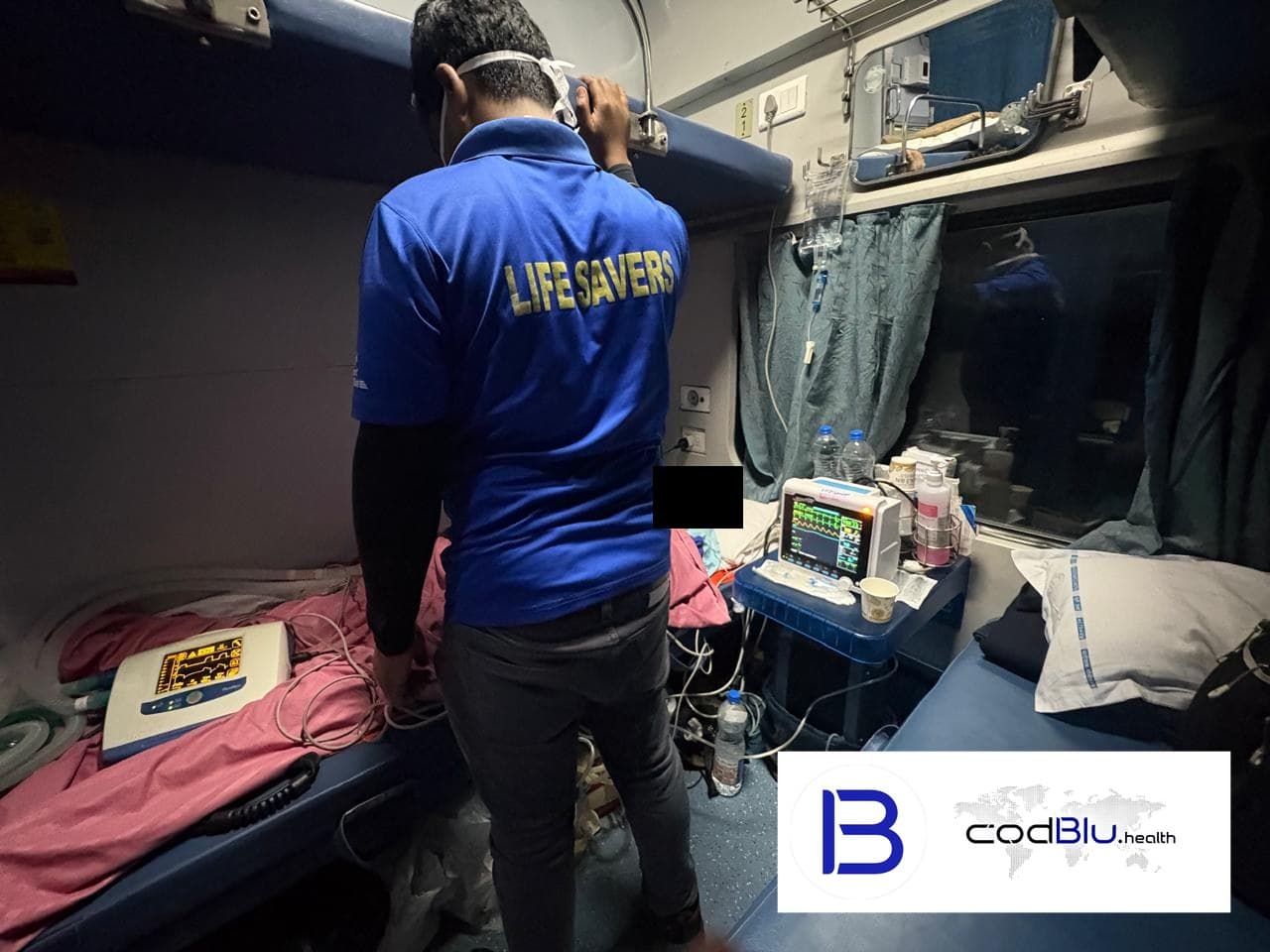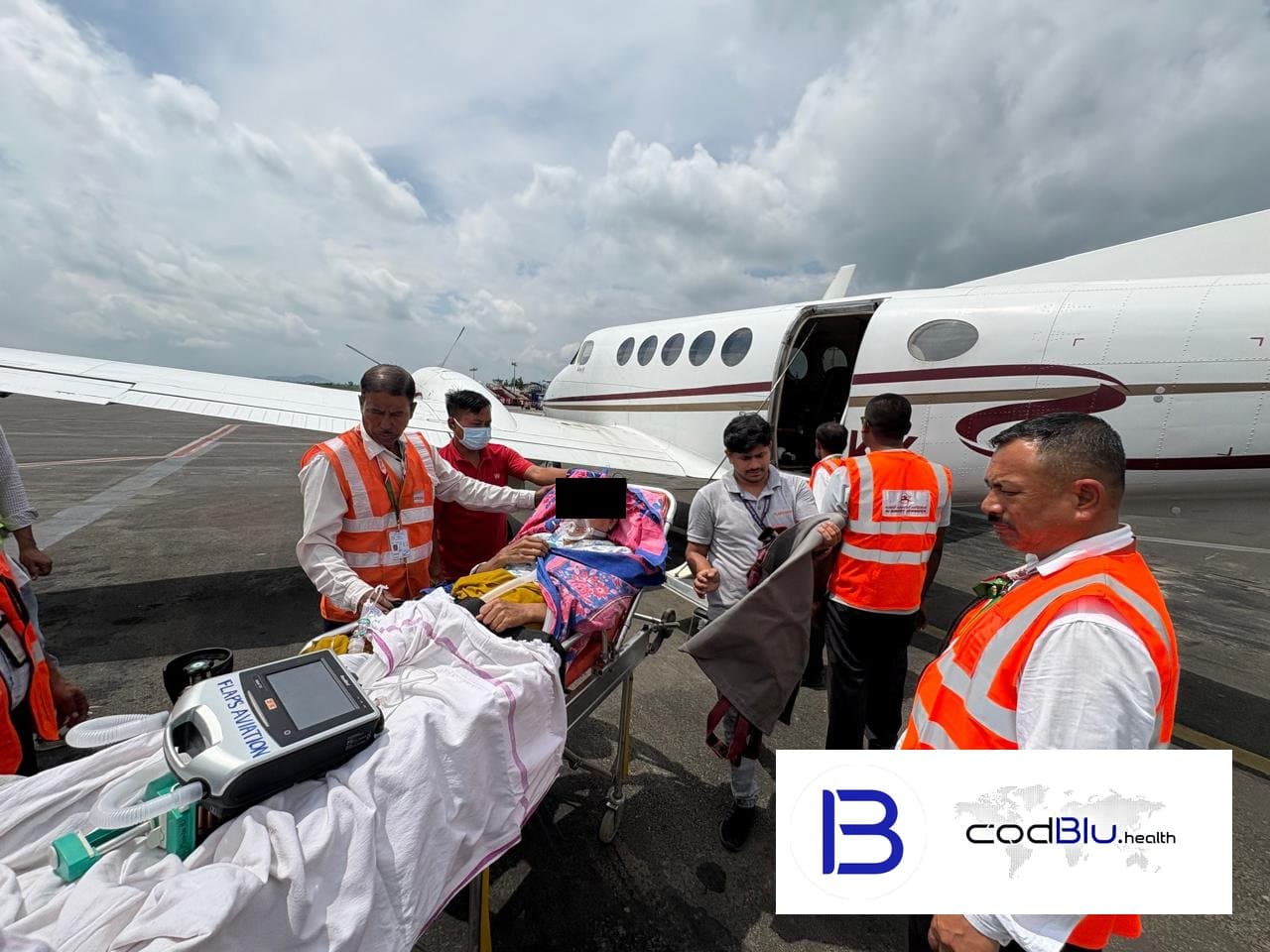


Max Hospital, Saket, Delhi – Mingalar Hospital, Mandalay | International Air Ambulance for Acute Liver Failure on Ventilator with Two Vasopressors
Published on: October 10, 2026
Deterioration During Hospital Admission
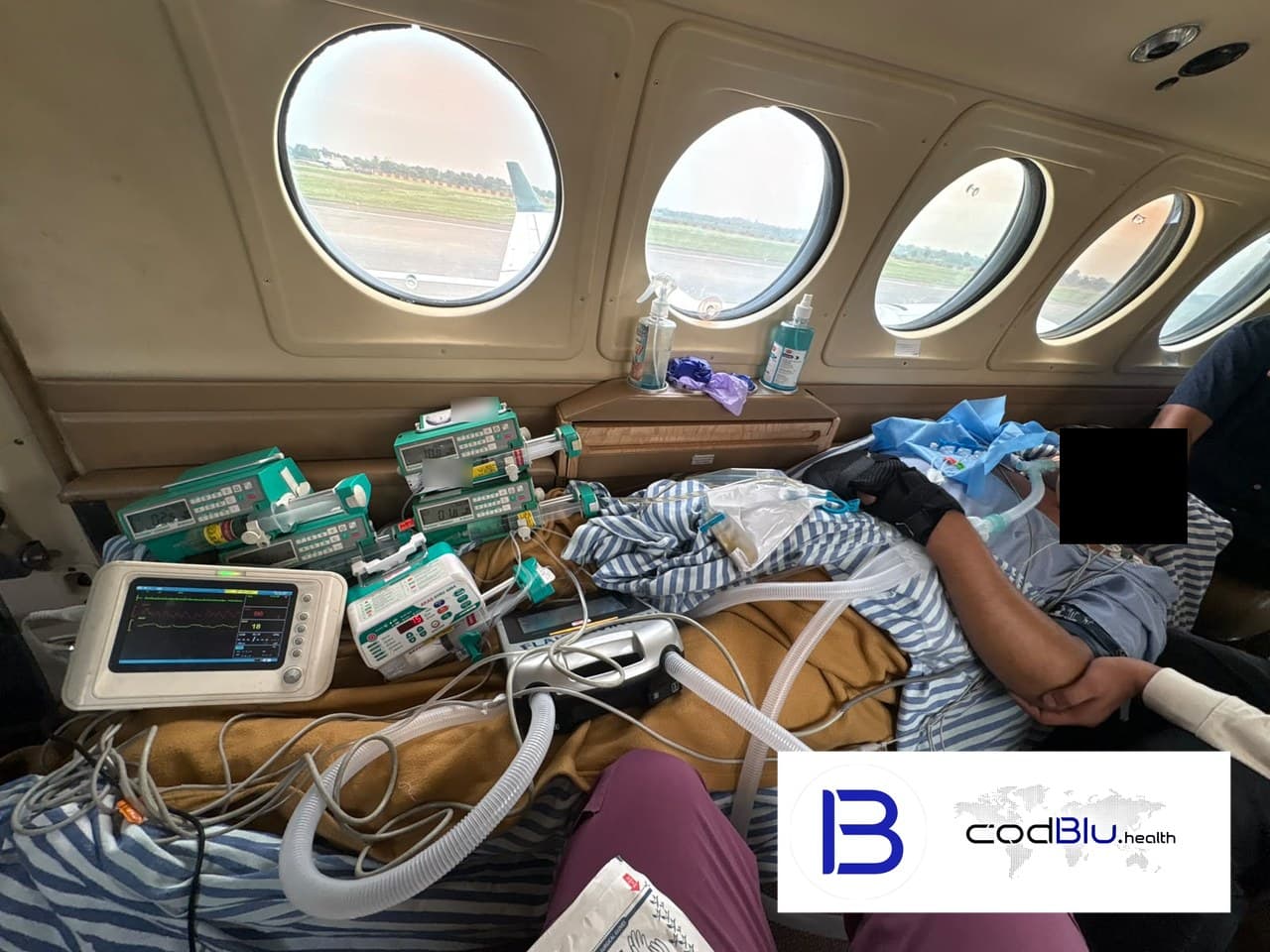
CodBlu Healthcare completed an international air ambulance transfer from Delhi to Mandalay for a 42-year-old man with acute liver failure and hepatic encephalopathy, requiring mechanical ventilation at FiO₂ 50% and noradrenaline and vasopressin infusions.
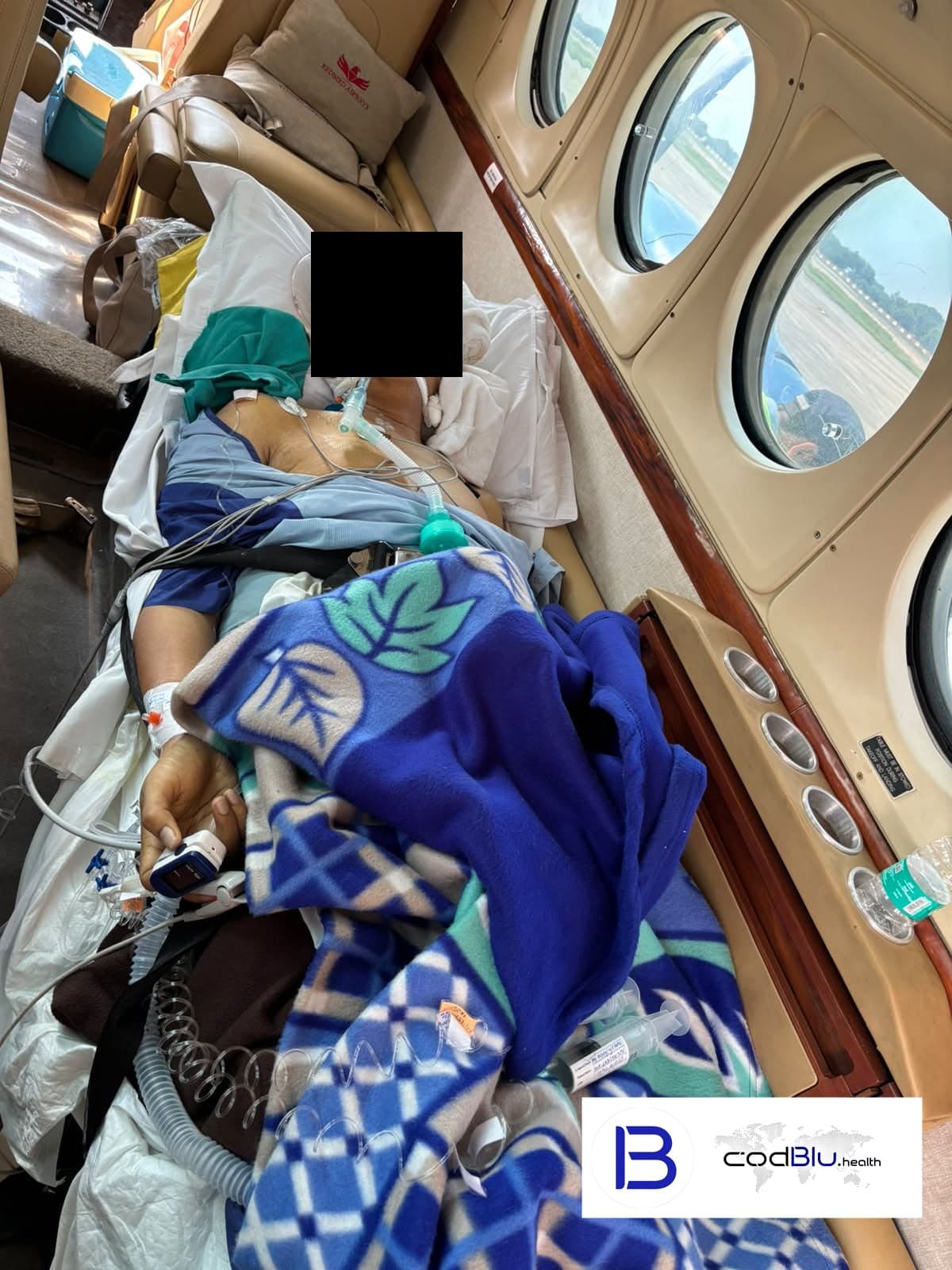
The patient was receiving treatment for acute liver failure at Max Hospital, Saket, Delhi. He was initially in the ward and subsequently developed hepatic encephalopathy. Following this deterioration, he was placed on ventilatory support.
At the time of transfer, he required supplemental oxygen through mechanical ventilation and two vasopressor medicines: noradrenaline and vasopressin. One critical care doctor and one paramedic accompanied him during the airlift to Myanmar.
The receiving facility was Mingalar Hospital in Mandalay. The patient was successfully transferred to the destination hospital.
The change from ward care to ventilation is central to understanding this case. Transport requirements needed to reflect the patient’s condition after deterioration, rather than the level of assistance he had needed earlier in the admission.
Acute Liver Failure and the Neurological Concern
Hepatic encephalopathy is a disturbance of brain function associated with liver dysfunction. In acute liver failure, neurological deterioration can occur alongside problems affecting other organ systems.
Clinical guidance identifies cerebral oedema and progressive organ dysfunction as important concerns in acute liver failure. These risks explain why consciousness, circulation and respiratory support require close attention when planning movement. They are general clinical considerations, not additional complications claimed for this patient. [1]
Mechanical ventilation can be required when airway protection or respiratory support becomes necessary. In this case, ventilation followed the development of encephalopathy; the exact encephalopathy grade and airway-management details are not stated.
A ventilator patient transfer involving liver failure therefore needs a broader assessment than oxygen requirements alone. Neurological status, haemodynamic support, recent investigations and the overall clinical trajectory contribute to transport suitability.
Add CodBlu Healthcare as a Preferred Source

Ventilation at FiO₂ 50%
The reported oxygen concentration was FiO₂ 50%. This describes the proportion of oxygen delivered by the ventilator and indicates an ongoing supplemental oxygen requirement.
FiO₂ is different from oxygen saturation. A setting of 50% does not, by itself, establish the patient’s oxygenation, ventilator dependence severity or fitness for air travel.
For medical air ambulance planning, the respiratory assessment should include the complete ventilator prescription, airway security and the equipment needed to continue support during movement. Oxygen reserves must cover the expected journey and reasonable contingencies, including ground stages and operational delays.
Ventilator power, circuit connections and access for suction or airway assessment are also relevant. These general planning requirements help explain the complexity of moving a patient who cannot travel without organised respiratory support.
Noradrenaline and Vasopressin Support
Both noradrenaline and vasopressin were running during this transfer. Their use formed part of the patient’s circulatory support.
In air medical transport, a continuous vasopressor infusion requires dependable delivery, secure vascular access and a means of assessing blood pressure. Pump power, medication supply and clear identification of the infusion lines are important practical considerations.
Respiratory and circulatory management also interact. Positive-pressure ventilation can affect haemodynamics, so the patient’s tolerance of movement needs assessment across both systems.
The medicines confirm a requirement for ongoing blood-pressure support. Their presence alone does not identify the cause of instability or establish a specific shock diagnosis.
The critical care doctor and paramedic accompanied the patient to provide medical assistance during the journey. General monitoring priorities for this combination of conditions include oxygen saturation, ECG rhythm, blood pressure, ventilator performance and neurological assessment where feasible.
Delhi to Mandalay Requires Clinical and International Coordination
This journey connected a hospital in New Delhi with a receiving hospital in Mandalay, Myanmar. Cross-border movement adds coordination requirements to an already complex clinical transfer.
International planning generally involves receiving-facility acceptance, transfer documentation, applicable travel permissions, aviation arrangements and destination ground transport. These processes should align with the patient’s readiness for movement and the support required throughout the journey.
Mingalar Hospital was the identified receiving facility in this case. The account does not assume a hospital partnership, a transplant plan or a particular treatment outcome after arrival.
CodBlu’s information on air ambulance services in Delhi provides broader context for medically supervised transfers originating from the city. Each international journey requires its own clinical and operational assessment.
Successful Transfer to Mingalar Hospital
The patient was successfully transferred from Max Saket to Mingalar Hospital, Mandalay.
For a case involving acute liver failure, an effective handover should communicate the progression to encephalopathy, current ventilatory support, vasopressor medicines and doses, recent observations and relevant investigations.
The confirmed outcome is completion of the transfer to the receiving hospital. This case demonstrates the care requirements involved when neurological deterioration, mechanical ventilation and circulatory support coexist during international patient movement.
Case-Specific Questions
Which respiratory support was reported?
The patient was on mechanical ventilation with FiO₂ 50%. Additional ventilator settings are not included in this account.
Which vasopressors were running?
Noradrenaline and vasopressin were both being administered.
Who accompanied the Delhi-to-Mandalay airlift?
One critical care doctor and one paramedic accompanied the patient. The transfer to Mingalar Hospital was successfully completed.
Clinical Reference
[1] AASLD. Defining and Managing Acute Liver Failure. January 7, 2025.
Need Emergency Ambulance?
CodBlu Healthcare operates 24x7 across India — air, rail & road.
Call 24x7: +91-9310864489