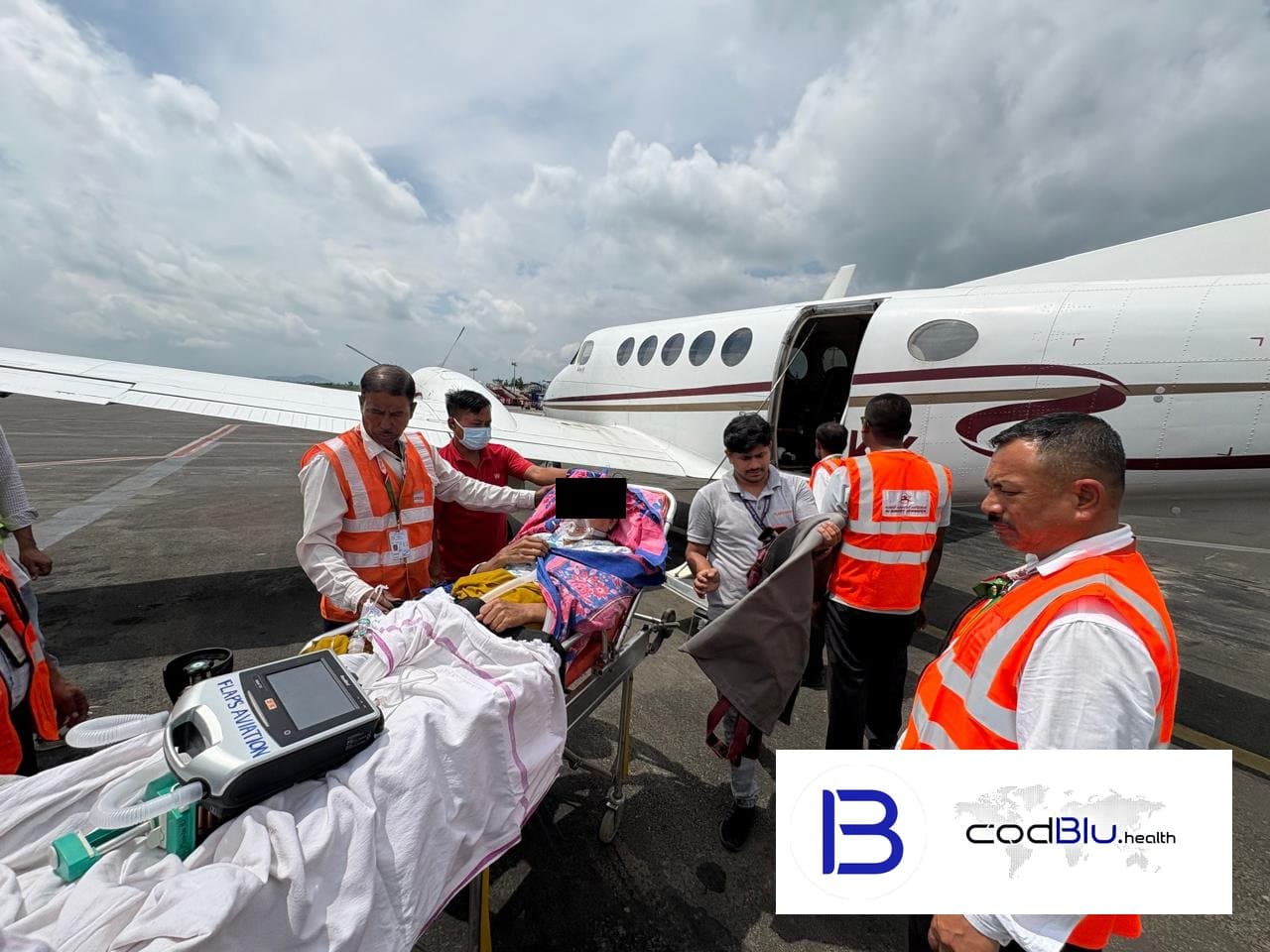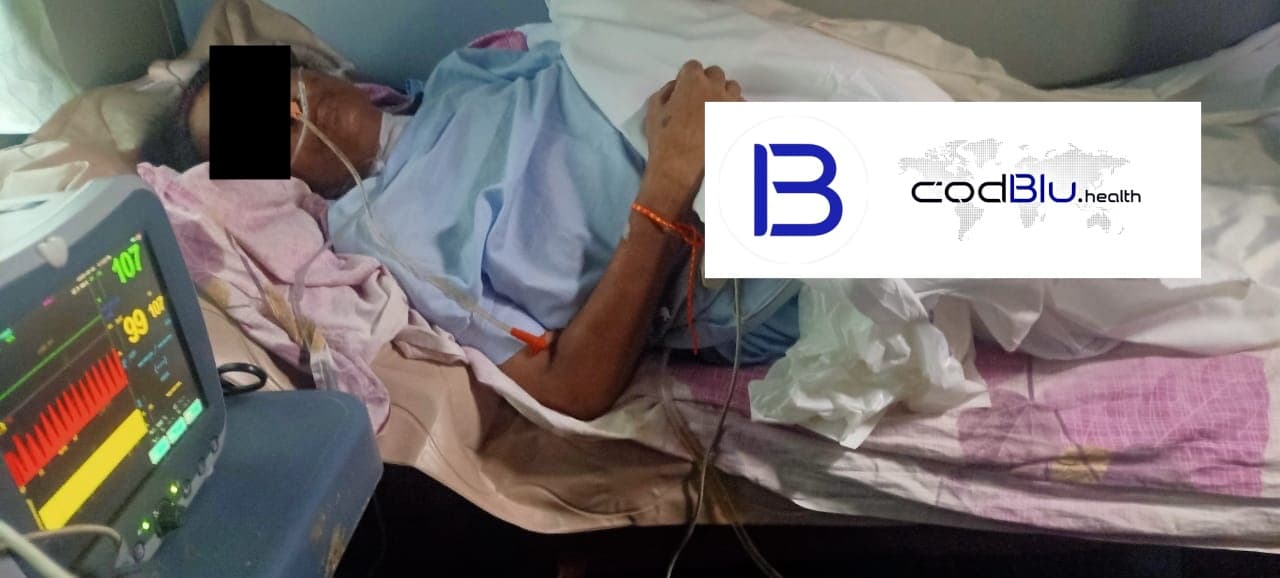


MMI Narayana, Raipur – Apollo Hospitals, Jubilee Hills, Hyderabad | Air Ambulance Transfer for ARDS on Ventilator with Five Infusions
Published on: October 10, 2026
The Case at a Glance
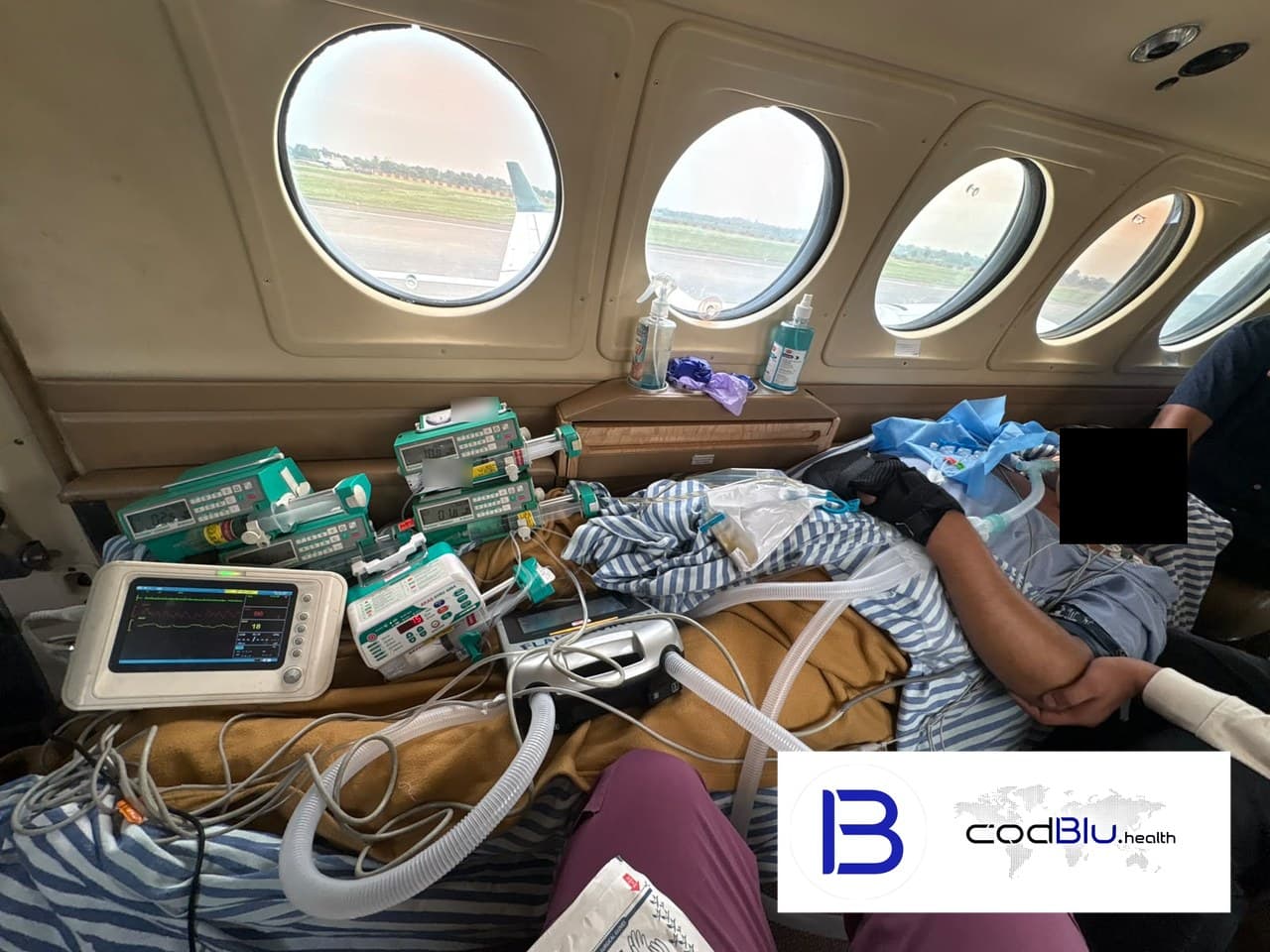
CodBlu Healthcare completed an air ambulance transfer from Raipur to Hyderabad for a 42-year-old man with ARDS, previous H1N1 positivity, ongoing atrial fibrillation and hepatic encephalopathy, requiring mechanical ventilation and five continuous infusions.
The patient was airlifted from MMI Narayana Multispeciality Hospital in Raipur to Apollo Hospitals, Jubilee Hills, Hyderabad. One doctor and one paramedic accompanied him, and the patient was successfully handed over to the receiving hospital.
His care requirements combined substantial respiratory support, medicines supporting circulation, treatment for atrial fibrillation and a neurological complication related to hepatic encephalopathy. This combination made continuity of treatment a central consideration throughout the intercity relocation.
The history of previous H1N1 positivity provides context for the respiratory illness. Current infection status and the cause of ARDS require separate clinical assessment.
ARDS and the Respiratory Support Required for Transport
Acute respiratory distress syndrome affects gas exchange and can make oxygenation difficult. For this patient, the reported ventilator settings were:
- FiO₂: 80%
- PEEP: 12 cmH₂O
- Tidal volume: 420 mL
- Respiratory rate: 18 breaths per minute
FiO₂ of 80% represents a substantial supplemental oxygen requirement. PEEP maintains positive pressure at the end of expiration and can help keep recruitable lung units open. A setting of 12 cmH₂O is clinically meaningful, but its suitability depends on oxygenation, lung mechanics and haemodynamic response.
Tidal volume also needs interpretation in relation to the patient’s predicted body weight. ARDS guidance recommends limiting tidal volume and inspiratory pressure; the volume alone cannot confirm whether a ventilation strategy is lung-protective. [1]
For a medical air ambulance carrying a ventilator-dependent patient, planning includes equipment compatibility, oxygen reserves, battery capacity and secure breathing-circuit connections. These are important during movement to the aircraft, the flight and onward transfer.
Add CodBlu Healthcare as a Preferred Source

Five Infusion Pumps Alongside Ongoing Atrial Fibrillation
Five continuous infusion pumps were running, delivering:
- Adrenaline
- Vasopressin
- Noradrenaline
- Fentanyl
- Amiodarone
Adrenaline, vasopressin and noradrenaline formed part of the patient’s circulatory support. Fentanyl was among the ongoing medicines, while amiodarone was being administered in the context of continuing atrial fibrillation.
This combination added complexity to the ventilator patient transfer. Oxygenation, cardiac rhythm and blood pressure needed consideration together because changes in respiratory support or circulation can affect overall tolerance of movement.
In air medical transport involving several infusions, important safeguards include identifying each medicine and line, maintaining reliable pump power and carrying adequate medication supplies. Secure vascular access and accessible connections help the medical team identify problems promptly.
The infusion list describes the support required; it does not, by itself, establish a particular shock diagnosis.
Hepatic Encephalopathy and the Need for Medical Accompaniment
Hepatic encephalopathy added another dimension to the patient’s condition. It can affect consciousness, making neurological assessment relevant alongside respiratory and cardiovascular observation.
The accompanying doctor and paramedic provided medical assistance during the journey. The combination of ARDS, ongoing AF and multiple infusions called for attention to both the patient and the systems delivering treatment.
General monitoring priorities for a case of this nature include oxygen saturation, ECG rhythm, blood pressure, ventilator performance and assessment of consciousness where feasible. These observations support recognition of developing hypoxaemia, rhythm changes, circulatory deterioration or equipment problems.
The case-specific readings and any treatment adjustments are not included in this account. The clinical focus is the confirmed support requirement and the completed transfer.
Connecting Raipur with the Receiving Hospital in Hyderabad
The journey connected a referring hospital in Chhattisgarh with the selected receiving hospital in Telangana. The destination was Apollo Hospitals in Jubilee Hills, Hyderabad.
For critical care transport, the clinical plan needs to cover each transition between hospital and transport equipment. Loading and unloading deserve particular attention when a patient depends on ventilation and several continuous medicines.
CodBlu’s information on air ambulance services in Hyderabad explains broader patient assessment, medical accompaniment and hospital-transfer coordination. The arrangements for each patient depend on the clinical requirements of the individual journey.
Successful Handover at Apollo Jubilee Hills
The patient was successfully handed over at Apollo Hospitals, Jubilee Hills, Hyderabad.
In a transfer involving this level of support, handover should convey the respiratory settings, infusion medicines and doses, current rhythm and relevant neurological findings. Clear communication helps the receiving team continue treatment with an understanding of the support already in place.
Successful hospital handover is the confirmed outcome of this mission. The case demonstrates the practical demands of transporting a patient with simultaneous respiratory, circulatory and neurological care needs.
Questions This Case Helps Answer
Can a patient with ARDS be transferred by air ambulance?
Selected patients can undergo medically supervised air transfer following individual assessment. Oxygenation, ventilator requirements, circulation and the ability to deliver treatment during transport guide suitability.
What support did this patient require?
He required mechanical ventilation at FiO₂ 80% and PEEP 12 cmH₂O, with tidal volume 420 mL and respiratory rate 18 breaths/min, plus five continuous medicine infusions.
Who accompanied the Raipur-to-Hyderabad transfer?
One doctor and one paramedic accompanied the patient. He was successfully handed over at Apollo Hospitals, Jubilee Hills, Hyderabad.
Clinical Reference
[1] American Thoracic Society. An Update on Management of Adult Patients with Acute Respiratory Distress Syndrome. 2024.
Need Emergency Ambulance?
CodBlu Healthcare operates 24x7 across India — air, rail & road.
Call 24x7: +91-9310864489