

Air Ambulance Services in Thailand
CodBlu Healthcare coordinates international medical transfers between Thailand and India, including charter air ambulances, commercial flights with a medical escort, and hospital-to-hospital repatriation.
Bangkok has two international airports — Suvarnabhumi (BKK) and Don Mueang (DMK). Phuket International Airport (HKT) may spare a patient an unnecessary journey through Bangkok for those already in the south.
The safest route depends first on the patient's condition, then on airline medical clearance, airport access and the receiving hospital's acceptance. Our team can review the clinical information and coordinate the air and ground stages.
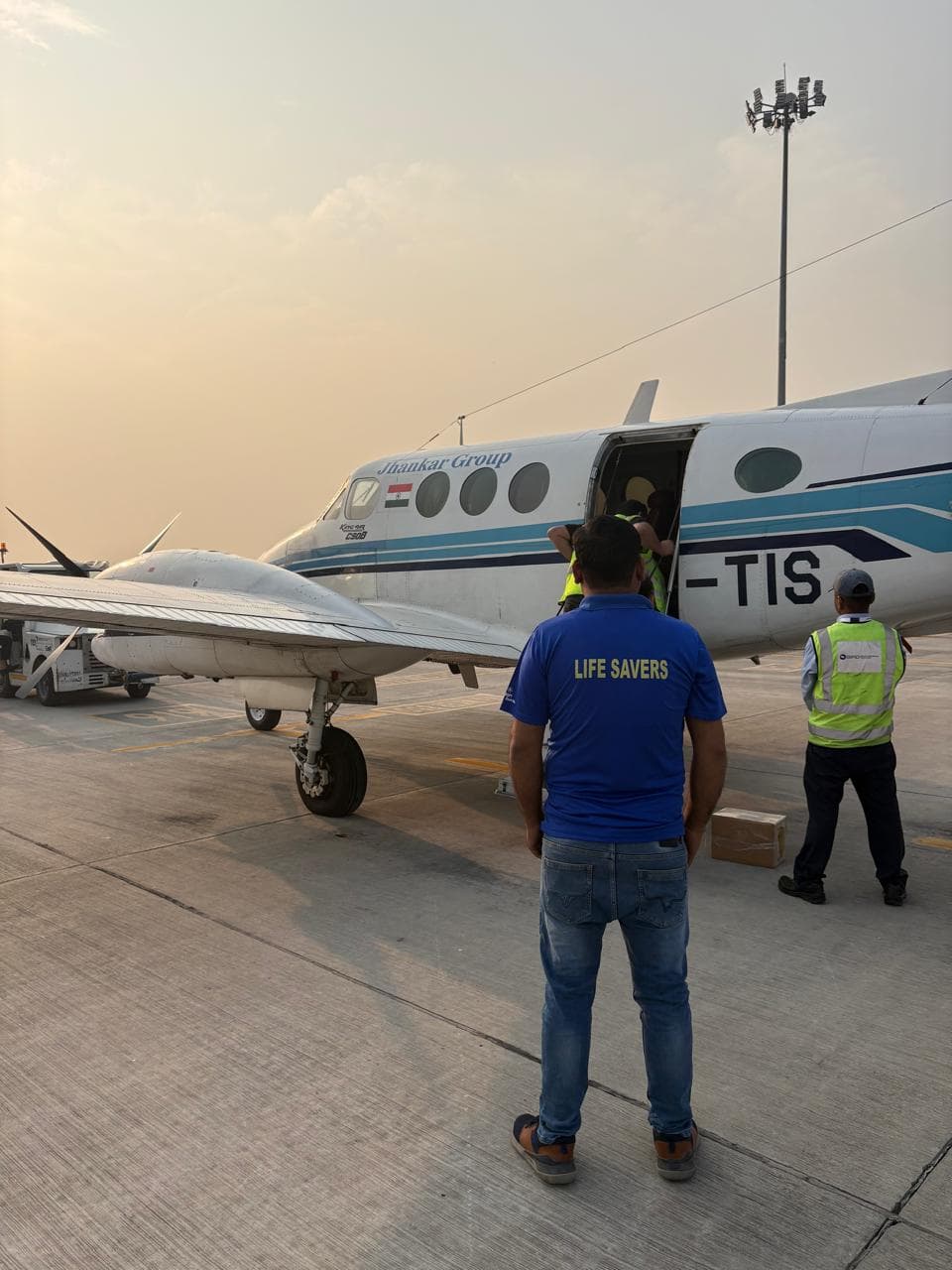
Returning a Patient from Thailand: Start with the Clinical Decision
A patient recovering in Bangkok may be well enough to sit with a medical escort on a scheduled flight to India. A patient who cannot sit safely, requires continuous ventilation or is at risk of deterioration may need a different cabin configuration and a higher level of care.
These decisions should be made with the treating doctor using current observations, oxygen needs, airway status, treatment in progress and the expected duration of the entire journey.
Location matters too. A patient in Phuket, Chiang Mai or on an island may face a ground, boat or domestic-flight stage before an international departure. For that patient, the shortest airborne route is not necessarily the shortest or safest hospital-to-hospital transfer.
Charter Air Ambulance from Thailand
A dedicated charter may be appropriate when a patient needs an ICU-level transfer, cannot meet an airline's medical conditions, needs to remain on a stretcher with substantial treatment during flight, or would be exposed to too many handovers on a connecting itinerary.
The aircraft, cabin space, stretcher arrangement and medical team must be matched to the clinical plan. Depending on the case, planning may include:
- Transport ventilator
- Medical oxygen reserve
- Suction
- Multiparameter monitoring
- Infusion pumps
- Emergency medicines
- Airway management equipment
Equipment and staff are selected after medical assessment, not assumed for every booking.
CodBlu's charter air ambulance coordination includes the transfer plan from the Thai hospital to the departure airport, the medical handover into the aircraft, and an appropriately arranged ground ambulance and hospital handover in India.
Confirm the receiving ICU bed and the transport plan before discharge from the Thai hospital.
Commercial Air Ambulance and Medical Escort on Scheduled Flights
For a clinically stable patient, a scheduled flight may avoid the cost of chartering an aircraft. A medical escort may accompany someone who can sit upright but needs clinical observation, assistance with medicines, mobility support or help during a long international journey.
The escort may be a doctor or nurse depending on the assessed needs. A patient who must remain lying down may be considered for an airline stretcher only where that airline and aircraft offer the arrangement and approve the individual case.
Airlines may ask for a Medical Information Form (MEDIF), recent medical reports and details of oxygen or a portable oxygen concentrator (POC). Rules differ by airline and aircraft. Do not bring a private oxygen cylinder or connect medical equipment to cabin power without the airline's explicit approval.
A connection also needs its own checks — the next carrier may use different medical rules, and the patient may need a long terminal transfer or a change between Bangkok's two airports.
Commercial medical escort is often the more economical option when the patient and airline both permit it. If there is unstable oxygenation, an unsecured airway or a high likelihood of intervention in flight, the clinical decision cannot be settled by cost alone.

Which Thai Airport Makes Sense?
Bangkok Suvarnabhumi Airport (BKK)
A major international gateway with useful India connections. It can suit direct scheduled flights and some charter plans, subject to flight, handling and medical approvals.
Don Mueang International Airport (DMK)
A separate Bangkok airport served by different airlines. Check the exact departure airport on every segment — transferring an ill patient between DMK and BKK creates an additional ground stage and should be avoided where possible.
Phuket International Airport (HKT)
Useful for patients already in Phuket or parts of the Andaman coast. A direct India service, if suitable and available on the travel date, may avoid a transfer through Bangkok entirely.
Chiang Mai International Airport (CNX)
A starting point for patients in northern Thailand. Compare a feasible charter departure with an appropriately cleared connecting commercial itinerary.
For patients on Koh Samui or smaller islands, the immediate question may be how to reach a suitable hospital and airport safely. Sea crossings, local aircraft availability and seasonal conditions can shape the first stage. Airport choice is made after the ground route and the patient's stability are understood.
Thailand to India: Routes Worth Comparing
The times below are approximate direct scheduled-flight benchmarks, not charter flight times or total transfer times. Schedules and the ability to carry a medically assisted passenger must be checked for the actual date.
| Route | Approx. Direct Flight Time |
|---|---|
| Bangkok (BKK) to Delhi (DEL) | ~4 hours 20 minutes |
| Bangkok (BKK) to Kolkata (CCU) | ~2 hours 30 minutes |
| Bangkok (BKK) to Mumbai (BOM) | ~4 hours 30 minutes |
| Bangkok (BKK) to Chennai (MAA) | ~3 hours 20 minutes |
| Phuket (HKT) to Delhi (DEL) | ~4 hours 55 minutes |
Bangkok to Delhi Air Ambulance
A stable patient may be assessed for an escorted seat or an approved stretcher; a patient needing continuous high-acuity support may require charter assessment. Allow separately for Bangkok ground traffic, international formalities and the receiving hospital transfer in Delhi NCR.
Bangkok to Kolkata Air Ambulance
The short air sector can make Kolkata a practical Indian entry point for some families, but it does not remove the need for airline clearance or a confirmed destination bed. If treatment is required elsewhere in India, assess the additional Indian transfer as part of the same medical plan.
Bangkok to Mumbai Air Ambulance
Compare the total escorted journey with a charter plan, including boarding, flight, arrival formalities and Mumbai ground movement. A direct service can reduce handovers only if the airline accepts the patient's needs.
Bangkok to Chennai Air Ambulance
Chennai may be the intended receiving city for continued specialist care or for a family returning to southern India. Confirm the specific operating airline's oxygen, stretcher and escort rules before committing to a commercial booking.
Phuket to Delhi Air Ambulance
This can avoid transporting a suitable patient back through Bangkok. A patient from an island or a hospital farther south may still need a substantial local transfer before HKT — that first leg should be assessed as carefully as the international flight.

ICU, Ventilator and Young Patient Transfers
An ICU or ventilator patient needs an uninterrupted clinical plan across the hospital exit, ground ambulance, airport, flight and destination handover. The team reviews:
- Airway security
- Oxygen consumption with contingency reserve
- Ventilator settings
- Suction requirements
- Haemodynamic stability
- Continuous medicines and infusions
- Cabin pressure considerations
- Access to the patient during flight
The treating and receiving clinicians should agree on what can safely be done at each stage.
Neonatal and paediatric repatriation needs age-appropriate staffing and equipment. For a newborn, this may involve a transport incubator, temperature control, oxygen or respiratory support, monitoring and syringe pumps. Aircraft and airline policies can limit commercial travel for very young or premature infants. The neonatal team must assess the entire pathway and secure a receiving unit before travel is booked.
Some highly specialised transfers, including ECMO, require a separate feasibility review of the specialist team, equipment, power, oxygen, cabin dimensions, ground vehicles and receiving centre. Do not assume that such a transfer is available on a proposed route until every component is confirmed.
Thai Hospitals and the Handover to India
Referring hospitals may include major institutions such as Bumrungrad International Hospital, Bangkok Hospital Headquarters, MedPark Hospital and Samitivej Sukhumvit Hospital in Bangkok; Bangkok Hospital Phuket and Bangkok Hospital Siriroj in Phuket; and Bangkok Hospital Chiang Mai in the north. For children, Samitivej International Children's Hospital is another relevant institution.
The actual referring team supplies the patient's current findings, transfer advice and discharge plan.
Before departure, the receiving hospital in India should confirm acceptance, the appropriate level of bed and the clinician who will take handover. CodBlu then coordinates the medical transport segments that can be arranged for that case.
Hospital names are mentioned for geographical reference only and do not imply an official partnership or affiliation unless specifically stated.
Documents and Insurance That Can Delay a Transfer
Families can assemble the patient's passport and applicable travel documents, a recent clinical summary, investigations, current prescriptions and infusion details, a proposed discharge summary and the receiving hospital's acceptance.
For scheduled flights, add the airline's MEDIF or fit-to-fly documents where required, plus approval for the escort, stretcher, oxygen or devices. Entry and transit requirements depend on nationality and itinerary and should be checked before booking.
If travel or health insurance might apply, contact the insurer or assistance company early. Ask whether it requires pre-authorisation, a guarantee of payment, particular medical records or its own doctor-to-doctor review. Cover for evacuation or repatriation depends on the individual policy — a hospital bill and a flight quotation may be handled under different terms.

Add CodBlu Healthcare as a Preferred Source

How Much Does an Air Ambulance from Thailand to India Cost?
There is no defensible single price for all Thailand–India transfers. A Bangkok-to-Delhi charter with an ICU team is a different service from a Phuket-to-Mumbai escorted seat, and a jet that must position into Thailand can cost substantially more than one already nearby.
Treat any online figure as a dated planning reference, not a fixed CodBlu tariff.
A useful quotation should name:
- Thai origin hospital and city
- Indian destination and airport
- Patient positioning (seat, stretcher, charter ICU)
- Medical team and equipment
- Aircraft or airline arrangements
- Ground ambulances at both ends
- Permits, handling charges and taxes
- Any waiting or repositioning charges
Request a separate commercial-flight assessment where clinically feasible. It can cost markedly less than charter, but airline approval, stretcher seat blocks, escort travel and equipment can change the total.
A current case-specific quotation is the reliable basis for a decision.
A Simple Bed to Bed Route from Thailand
Medical support is planned across the complete bed-to-bed journey — from the Thai hospital through to the receiving hospital in India.

How to Arrange an Air Ambulance from Thailand to India
Share four key details to begin planning.
Share the patient's current hospital name and city in Thailand — Bangkok, Phuket, Chiang Mai or another location. For island patients, mention the island and current facility.
Share the intended destination city and receiving hospital in India, if already confirmed. This allows assessment of the most suitable departure airport and route.
Share the diagnosis, current clinical condition, ongoing medicines and a recent medical summary. Include current infusion details and any specialist advice on transfer.
Share the current oxygen requirement or ventilator settings. For a baby or child, also share age, weight and neonatal or paediatric support needs.
Based on this information, the patient can be assessed for:
- Charter air ambulance
- Commercial medical escort on scheduled flights
- Airline stretcher transfer
- Neonatal or paediatric repatriation
- ECMO or specialist transport (feasibility assessed separately)
The final plan should cover the patient from the Thai hospital bed to the receiving hospital in India.
Frequently Asked Questions (FAQs)
Possibly. The treating doctor must assess fitness to fly, and the specific airline must approve the oxygen arrangement and any portable oxygen concentrator (POC). Required oxygen flow, battery reserve and boarding needs should be stated before a ticket is confirmed.
Not always. The carrier can require its own Medical Information Form (MEDIF) and medical clearance, especially for a stretcher, oxygen, recent hospitalisation or complex equipment. Approval can be specific to the flight and aircraft.
No. Some direct Phuket–India flights exist. Whether one works for this patient depends on the destination, travel date, airline acceptance and the route from the Thai hospital to Phuket International Airport (HKT).
This requires an individual neonatal assessment. Prematurity, respiratory support, age, airline restrictions and receiving-unit acceptance all matter. An incubator transfer needs a compatible aircraft and ground plan.
Only the insurer can confirm cover and authorisation under the policy. Contact the insurer early and keep the medical recommendation, hospital records and proposed transfer quotation available. Cover for evacuation or repatriation depends on the individual policy.
Timing depends on medical stability, Thai hospital discharge readiness, the receiving bed in India, airline or aircraft acceptance, documentation, permits and ground arrangements. A flight time by itself cannot predict the bed-to-bed timeline.
Discuss a Thailand–India Medical Transfer
Share the Thai hospital and city, intended destination in India, a recent medical summary, oxygen or ventilator needs and the treating doctor's transfer advice. CodBlu Healthcare can assess a suitable charter or commercial medical escort pathway and coordinate the confirmed hospital-to-hospital journey.