


Rail Ambulance Services in Delhi
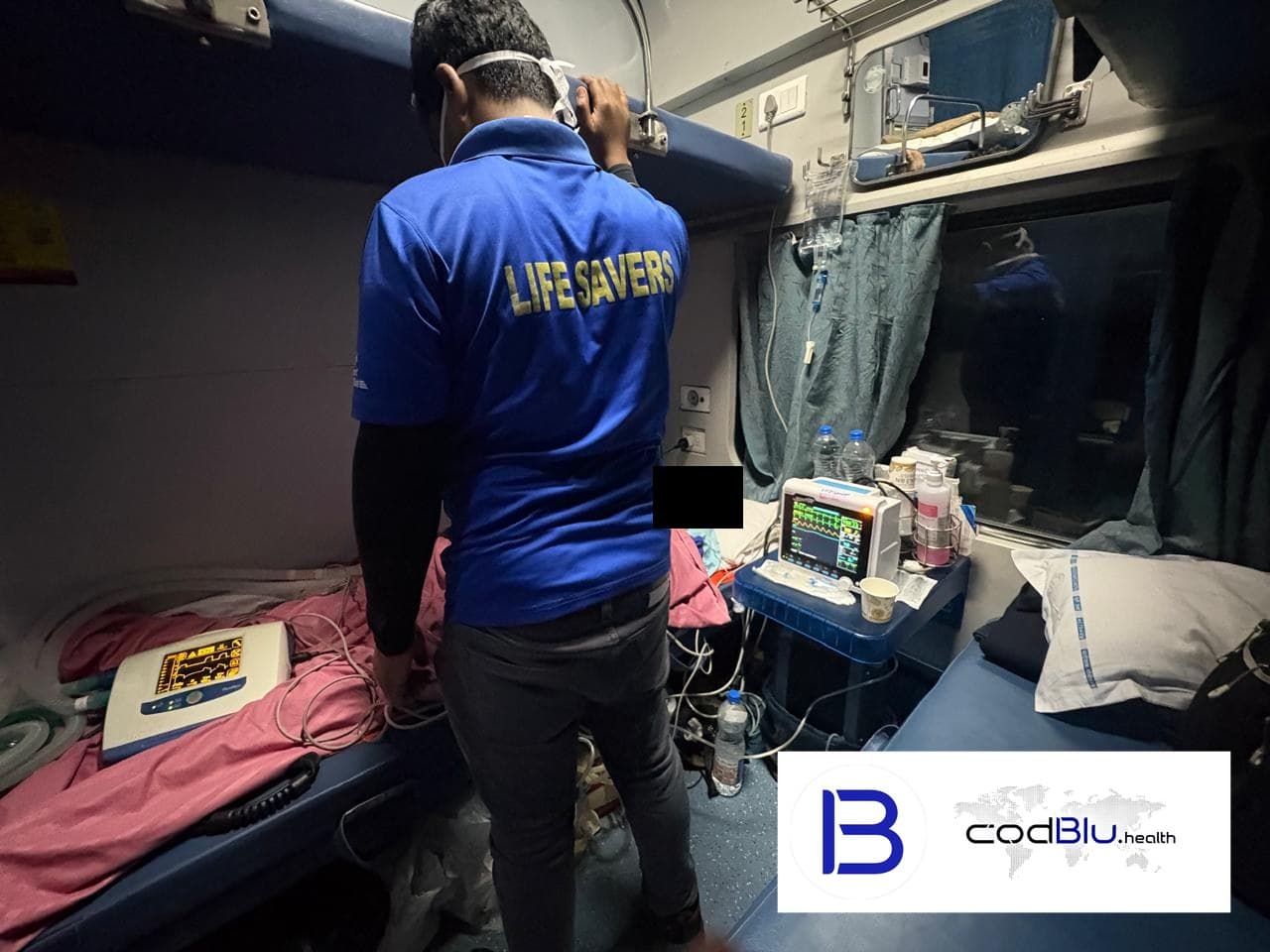
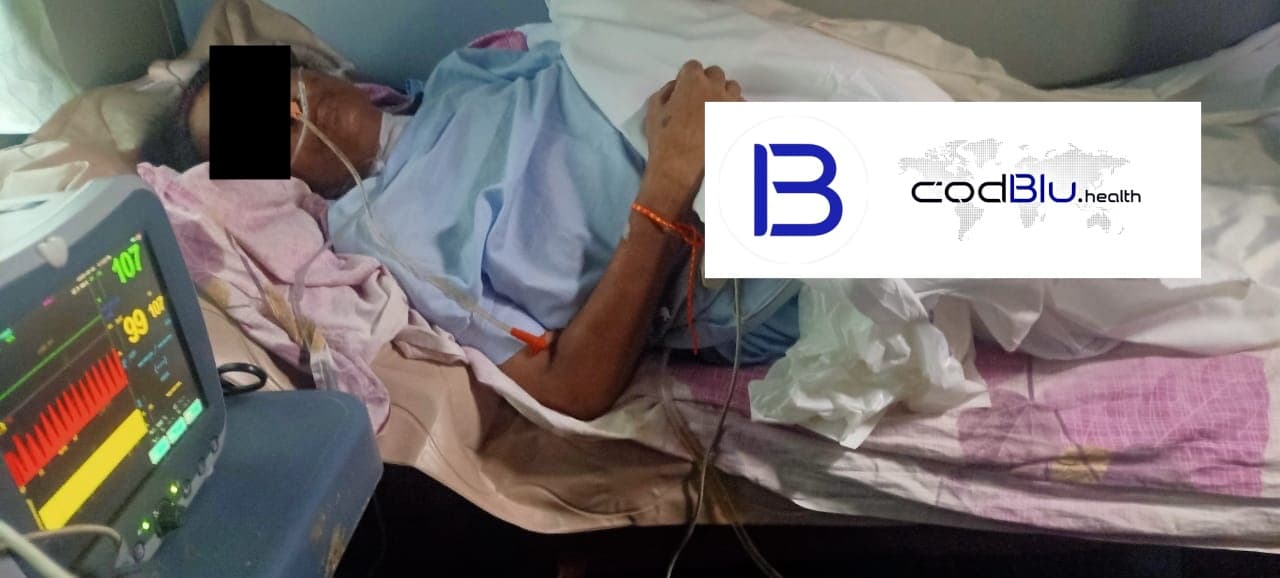
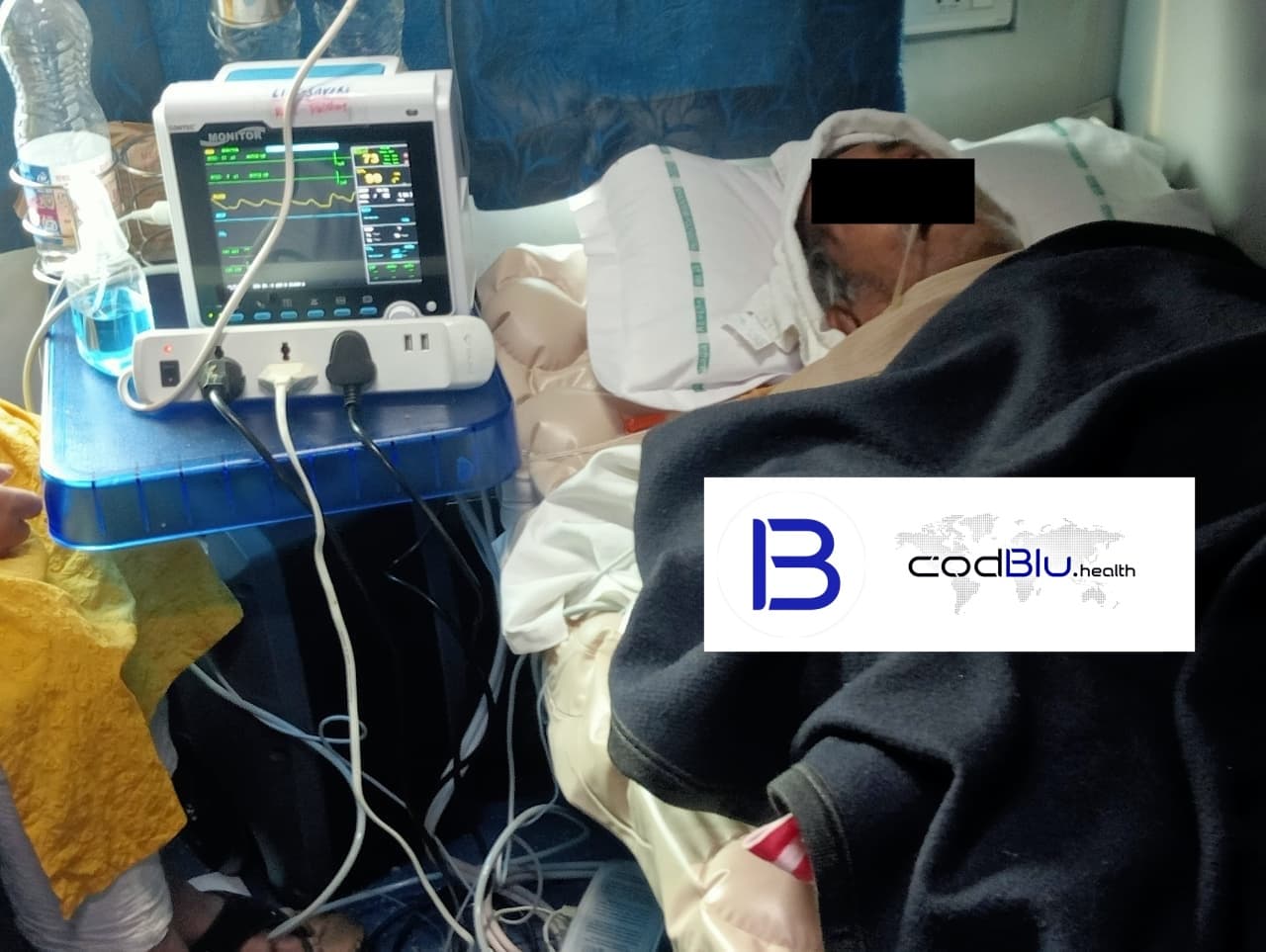
CodBlu Healthcare provides rail ambulance services from Delhi using reserved Second AC berths on the fastest suitable available train for the route, preferably a Rajdhani Express. Patients travel with paramedical staff and a semi-ICU setup or doctor staff and a full ICU setup, according to their assessed medical needs. Arrangements cover the complete end-to-end transfer, including ground ambulances at both ends. CodBlu also specialises in neonatal rail transport with a dedicated setup for temperature management and medically supported travel. Coordination is available 24/7; the departure station and timing depend on the selected train and confirmed accommodation.
Call +91 93108 64489 for 24/7 medical coordination.
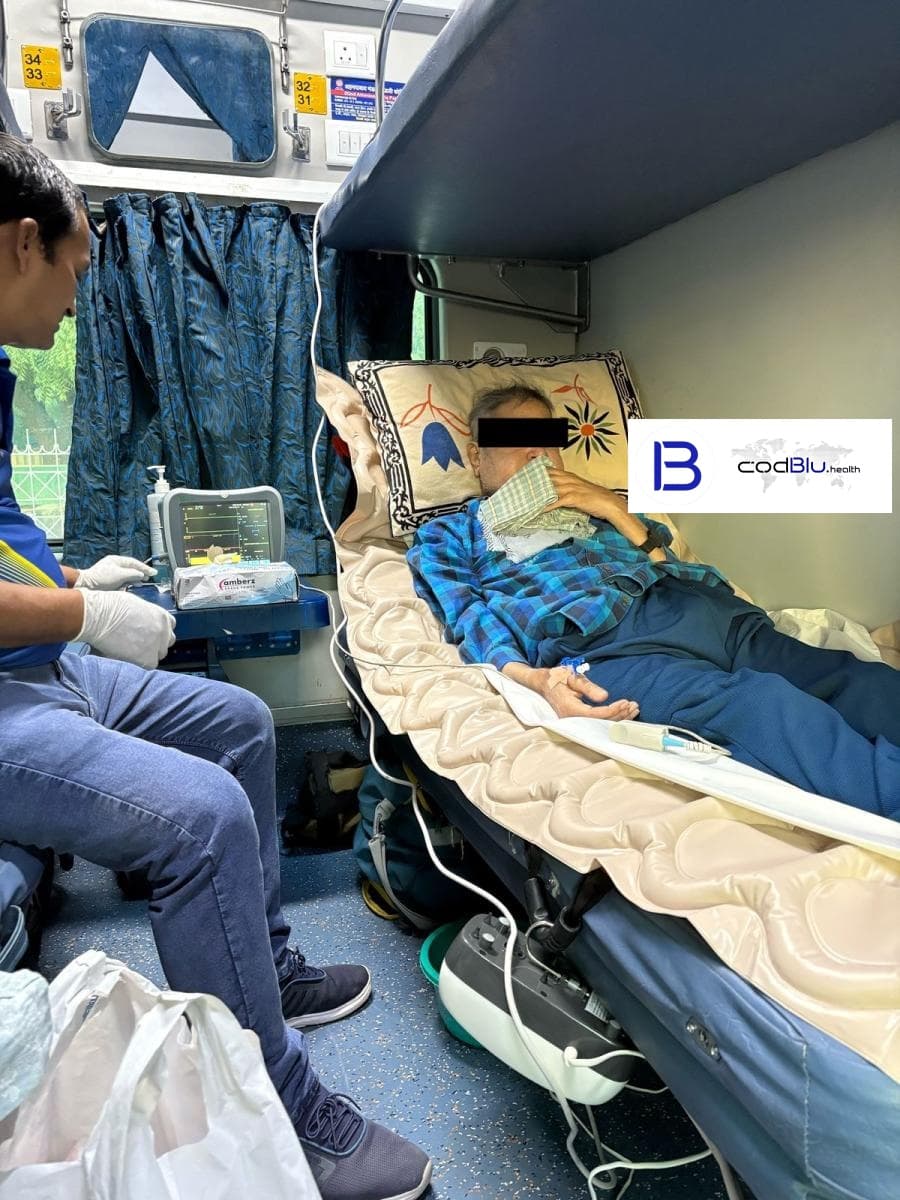
Medical Care During a Long-Distance Train Journey
After treatment in Delhi, a patient may need to return closer to home or continue care in another city. A regular train booking may be insufficient when the patient needs oxygen, airway care, monitoring, assistance with movement or ongoing medication.
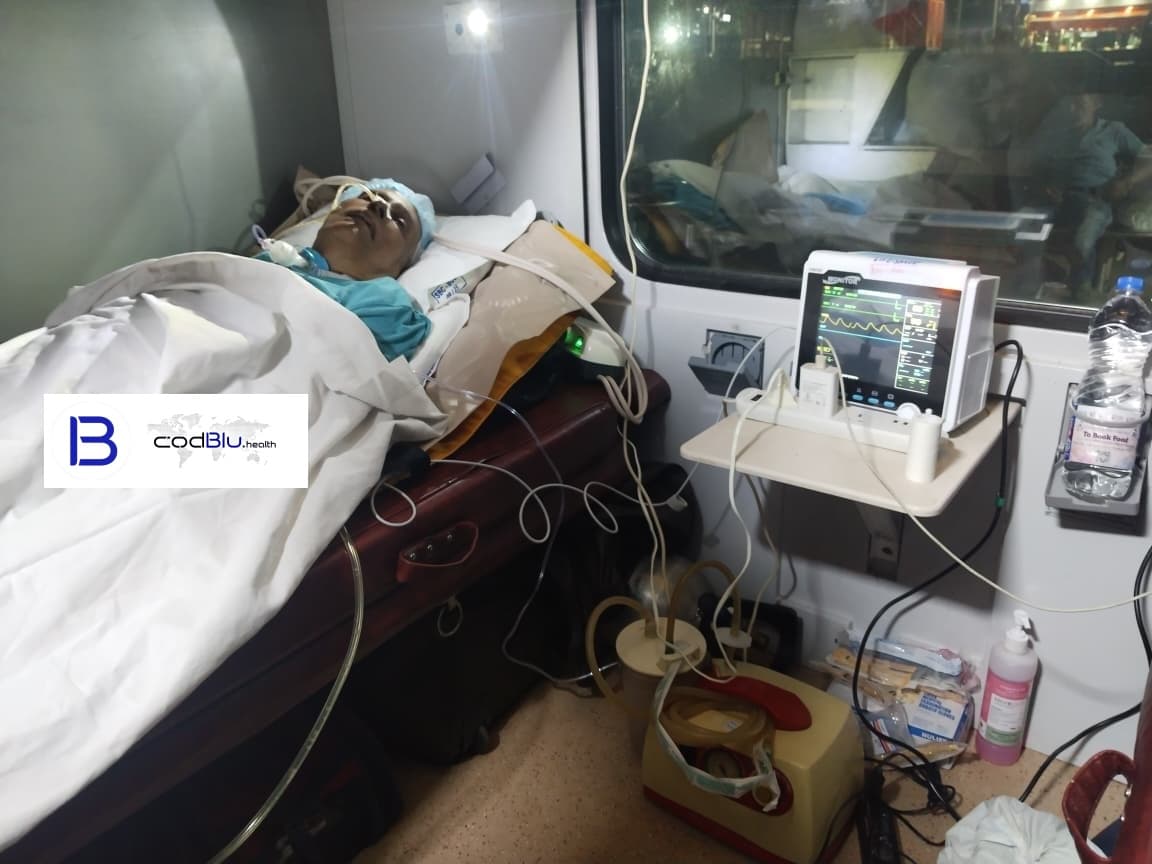
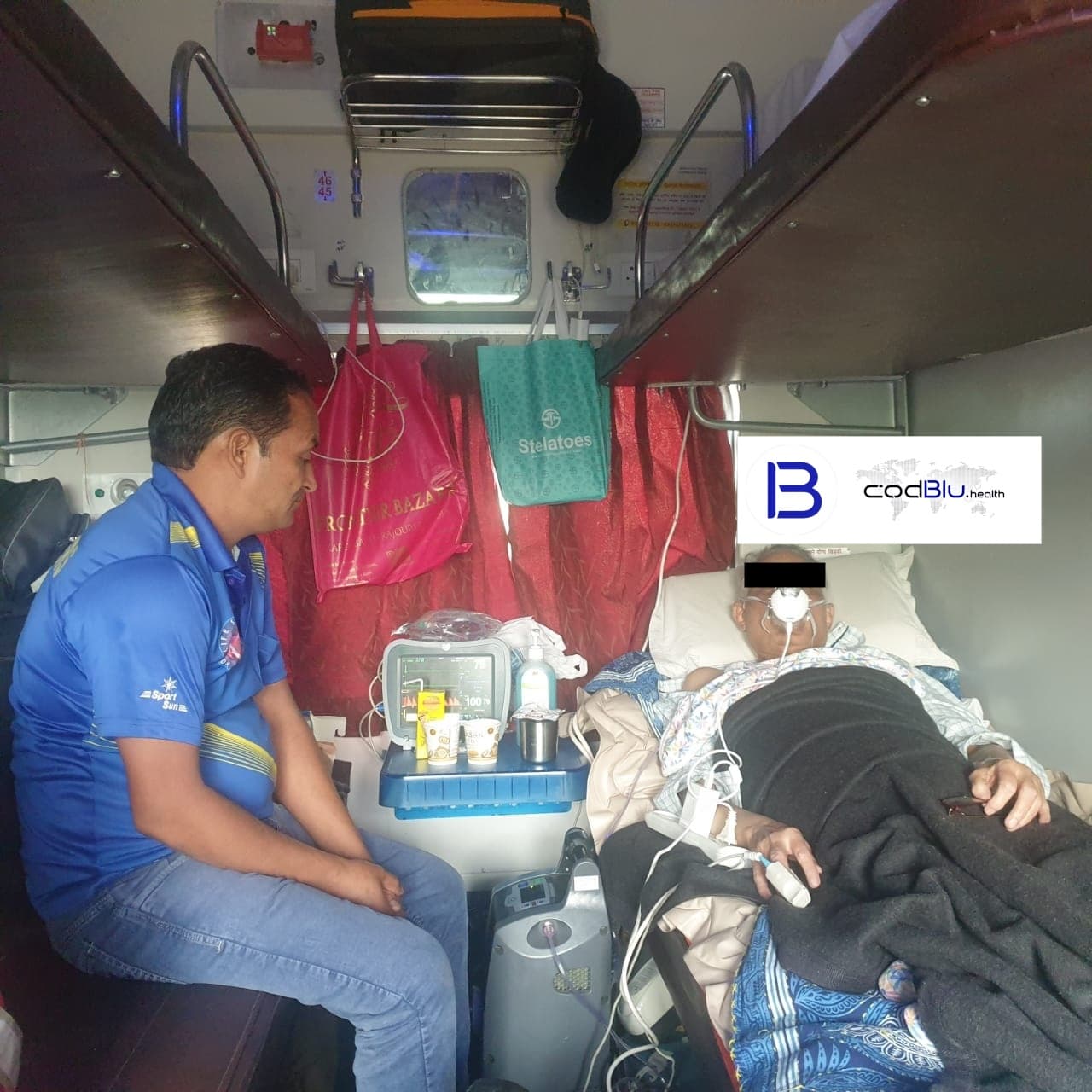
A rail ambulance is a medically supported journey on a scheduled passenger train. CodBlu arranges the railway accommodation, accompanying medical staff, patient-specific equipment and ambulance transfers around that journey.
The first decision is whether the patient can tolerate the proposed transfer. This includes the road journey to the station, boarding, time on the train and movement to the receiving hospital.
Selected patients recovering from surgery, living with restricted mobility or requiring supervised oxygen-supported travel may be considered. Ventilator-dependent patients require a more detailed assessment of their condition and transport requirements.
Being unfit for commercial air travel does not automatically make a patient suitable for rail transport. The clinical team must assess the benefits and risks of the longer journey.
Second AC Booking: Four Tickets or Five Tickets
CodBlu books Second AC, also called AC 2-tier or 2A, for the arrangements described below.
We seek the fastest possible train that is suitable for the patient and has the required accommodation available, preferably a Rajdhani Express. Another appropriate service may be selected when its timing, route or availability provides a more practical transfer.
| Transport arrangement | Total tickets booked | Ticket allocation |
|---|---|---|
| Paramedical staff + semi-ICU setup | 4 | 1 patient, 1 paramedical staff member and 2 attendants |
| Doctor staff + full ICU setup | 5 | 1 patient, 2 accompanying medical-crew members including the doctor, and 2 attendants |
These are berth bookings within a passenger train. They should not be understood as booking an entire coach or a guaranteed private First AC cabin.
The team plans patient positioning, access for care and equipment placement around the confirmed accommodation. Final berth allocation remains subject to railway availability and allotment.
How the Medical Arrangement Is Selected
Paramedical staff with a semi-ICU setup may be considered when the patient’s assessed care requirements can be managed by the accompanying paramedical professional. The quotation and transport plan specify the applicable equipment and support.
Doctor staff with a full ICU setup provides an accompanying doctor and supporting medical crew for patients requiring more intensive transport management. Depending on the case, the plan may include ventilation, airway support, monitoring, suction and controlled medication delivery.
“Semi-ICU” and “full ICU” describe different service arrangements. Families should understand the actual staffing and equipment included rather than choosing by the package name or price alone.
Add CodBlu Healthcare as a Preferred Source

Rail Ambulance Cost From Delhi
The following are CodBlu Healthcare’s supplied indicative prices for complete end-to-end transfers departing from Delhi.
Rail Ambulance Costs for Departures From Delhi
| Route from Delhi | Paramedical staff + semi-ICU setup | Doctor staff + full ICU setup |
|---|---|---|
| Delhi → Patna | ₹65,000 | ₹1,00,000 |
| Delhi → Kolkata | ₹80,000 | ₹1,25,000 |
| Delhi → Ranchi | ₹70,000 | ₹1,15,000 |
| Delhi → Siliguri / New Jalpaiguri | ₹85,000 | ₹1,30,000 |
| Delhi → Mumbai | ₹75,000 | ₹1,15,000 |
| Delhi → Hyderabad / Secunderabad | ₹90,000 | ₹1,30,000 |
| Delhi → Chennai | ₹95,000 | ₹1,40,000 |
| Delhi → Bengaluru / Bangalore | ₹90,000 | ₹1,30,000 |
| Delhi → Guwahati | ₹90,000 | ₹1,35,000 |
These figures apply only to the listed journeys starting from Delhi. They are not prices for transfers into Delhi, reverse journeys or departures from other states.
The arrangements include the applicable Second AC tickets described above, accompanying staff, the agreed medical setup and ground ambulance transfers at both ends.
The written quotation confirms the precise pickup and destination, clinical requirements, equipment, oxygen arrangements and included services. Neonatal requirements and any additional ground journey beyond the agreed destination must be specified before booking.
These are planning figures rather than a substitute for a current written quotation. Changes to the patient’s needs or the agreed journey may require revised arrangements.
Neonatal Rail Ambulance From Delhi
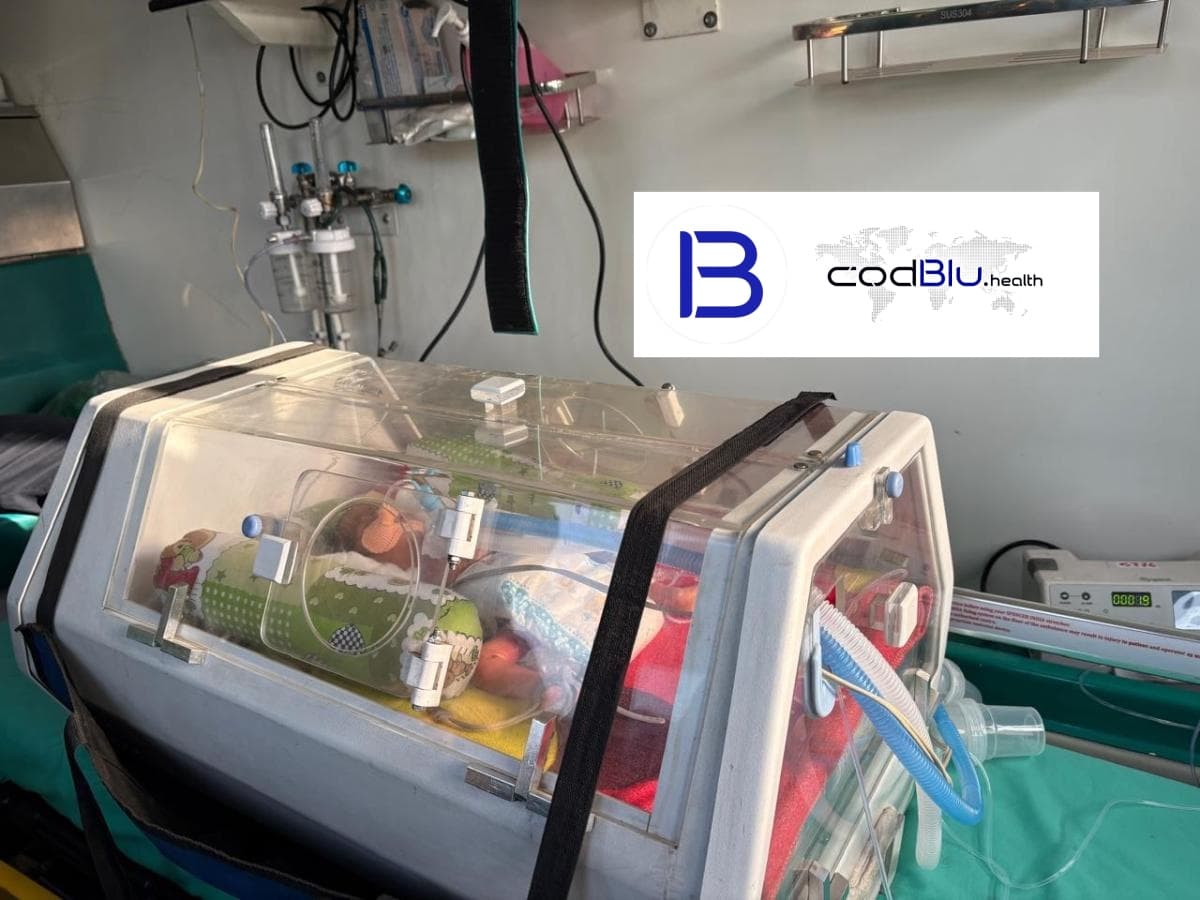
CodBlu Healthcare specialises in transporting neonatal patients by rail, using a dedicated neonatal transport setup for babies assessed as suitable for the journey.
A newborn’s transport needs differ substantially from those of an adult. Prematurity, low birth weight, respiratory support, feeding requirements and temperature regulation can all affect the transport decision.
Temperature Management Throughout the Transfer
Thermal care begins before leaving the sending hospital and continues during station movement, boarding, the train journey and the receiving ambulance transfer.
The neonatal plan may use a transport incubator and appropriate thermal protection, with the baby’s temperature monitored during movement. The usual normal newborn body-temperature range is 36.5°C to 37.5°C, unless the treating specialist prescribes a different target.
This is the baby’s body-temperature target, not a fixed incubator setting. Incubator settings and protective measures are adjusted to the baby’s condition, measurements and surrounding environment.
Second AC air conditioning alone does not provide neonatal temperature control. Both excessive cooling and overheating need to be avoided.
Breathing, Monitoring and Ongoing Care
The transport plan addresses the baby’s prescribed respiratory support, oxygen needs, monitoring, medication, fluids and feeding arrangements. Neonatal and paediatric transport equipment and appropriately skilled accompanying staff are selected for the individual baby.
Parents should provide the gestational age, current weight, diagnosis, recent clinical summary, respiratory support and receiving NICU details.
Rail may be considered for selected neonatal transfers, but a baby needing faster access to definitive care may require another transport mode. Receiving NICU acceptance should be confirmed before departure.
Battery-Backed Equipment and Journey Reserves
All powered medical equipment carried for the transfer has its own battery backup. This allows the devices to continue operating during a temporary interruption to the train’s electrical supply, within their available battery runtime.
Battery backup is particularly relevant during boarding, movement between vehicles and periods when a suitable power connection is unavailable.
Before departure, the plan must account for device charge, operating requirements, expected runtime and charging arrangements. A long journey should not rely on an assumption that one battery charge will last until arrival.
Oxygen is planned separately from electrical power. The prescribed requirement, expected consumption and reserve supply must cover the agreed journey and foreseeable delays.
For patients receiving intensive support, preparation also includes equipment security, access to the airway, ongoing treatment and a response plan if the patient deteriorates.
Which Delhi Railway Station Will Be Used?
The confirmed train determines the departure station. The closest station to the patient’s hospital may not have the most suitable service.
| Railway station | Code | What needs to be checked |
|---|---|---|
| New Delhi Railway Station | NDLS | Selected service, station approach, entrance and boarding access |
| Hazrat Nizamuddin Junction | NZM | Train availability and the hospital-to-station journey |
| Anand Vihar Terminal | ANVT | Suitable service and access from East Delhi or the eastern NCR |
| Delhi Junction / Old Delhi | DLI | Route suitability, station approach and patient-handling arrangements |
Other stations may be considered when a suitable service and workable boarding plan are available.
Platform access, coach position and the patient’s movement from the ambulance to the berth require coordination. A departure from the train’s originating station may provide more preparation time than boarding during a short intermediate stop, but this must be checked for the selected service.
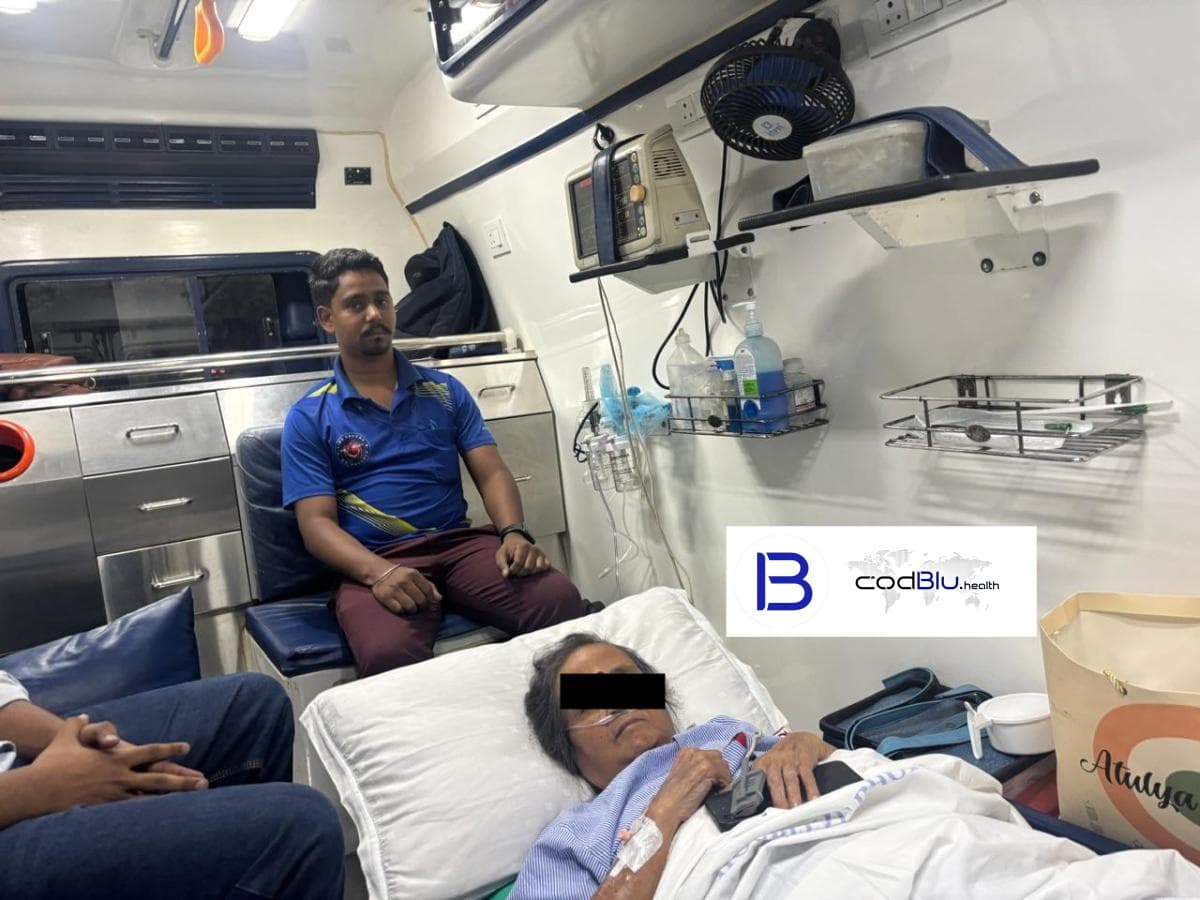
Delhi Hospitals and NCR Pickup Logistics
The sending hospital’s location affects the first part of the journey.
Central and west-central Delhi: Sir Ganga Ram Hospital in Rajinder Nagar and BLK-Max Super Speciality Hospital on Pusa Road require a ground-transfer plan matched to the confirmed departure station.
South Delhi: AIIMS New Delhi in Ansari Nagar, Max Super Speciality Hospital in Saket and the Institute of Liver and Biliary Sciences in Vasant Kunj have different station-access journeys.
South-east Delhi: Patients starting from Indraprastha Apollo Hospitals in Sarita Vihar need hospital readiness, ambulance departure and boarding coordinated together.
Gurugram and wider NCR: Transfers starting from Medanta – The Medicity or locations in Noida, Greater Noida, Ghaziabad and Faridabad include an additional ground segment that needs assessment.
Delhi traffic, hospital discharge formalities and station handling all affect the departure plan. The pickup time should allow for these requirements without creating unnecessary waiting for the patient at the platform.
For patients starting farther away, including surrounding Haryana or western Uttar Pradesh, the feeder journey and applicable quotation must be confirmed separately.
Routes Available for Delhi-Origin Transfers
Delhi to Patna Rail Ambulance
For a patient returning to Patna after treatment in Delhi, the receiving address helps determine the appropriate arrival and ambulance arrangements. If the destination is outside Patna, the additional ground journey must be included in the plan.
Delhi to Kolkata Rail Ambulance
Kolkata-area transfers require matching the selected train’s arrival terminal to the receiving hospital or home. The medical plan accounts for continued support during the final ground journey.
Delhi to Ranchi Rail Ambulance
The receiving location should be confirmed before choosing the train. A transfer ending in Ranchi differs from one continuing into another district of Jharkhand, particularly when ongoing oxygen or other support is needed. See a published Delhi-to-Ranchi transfer.
Delhi to Siliguri / New Jalpaiguri Rail Ambulance
New Jalpaiguri may be the suitable arrival point for a Siliguri destination, depending on the selected service. An onward journey towards hill areas or neighbouring districts requires its own assessment and confirmed scope.
Delhi to Mumbai Rail Ambulance
Mumbai’s receiving hospital or home location matters when choosing the arrival terminal and ground ambulance. The destination plan should minimise avoidable waiting and repeated patient handling.
Delhi to Hyderabad / Secunderabad Rail Ambulance
The selected station must be matched to the receiving facility. For specialist-care transfers to Hyderabad, hospital acceptance and the intended treatment pathway should be established before the journey begins.
Delhi to Chennai Rail Ambulance
Chennai transfers require careful planning for the longer journey and continuing treatment. Travel beyond Chennai, including a different medical destination, must be identified explicitly rather than assumed to be part of the same sector.
Delhi to Bengaluru / Bangalore Rail Ambulance
The chosen arrival station and receiving address determine the last ambulance segment. Medication schedules, positioning and care needs must be planned across the complete journey.
Delhi to Guwahati Rail Ambulance
Guwahati may be the destination or the start of a further regional journey. Transfers continuing elsewhere in Assam or the Northeast need additional planning; the listed sector price should not be assumed to cover that extension.
The selected train’s current timetable is checked during booking. Scheduled rail time, booking preparation and total bed-to-bed transfer time are different, and delays can extend the journey.
Bed-to-Bed Coordination
The arrangement coordinates patient movement and the applicable medical support across these stages.
Medical records, treatment information and any changes during transport are communicated at handover. For a home destination, the required support and the receiving caregiver’s arrangements should be established before travel.
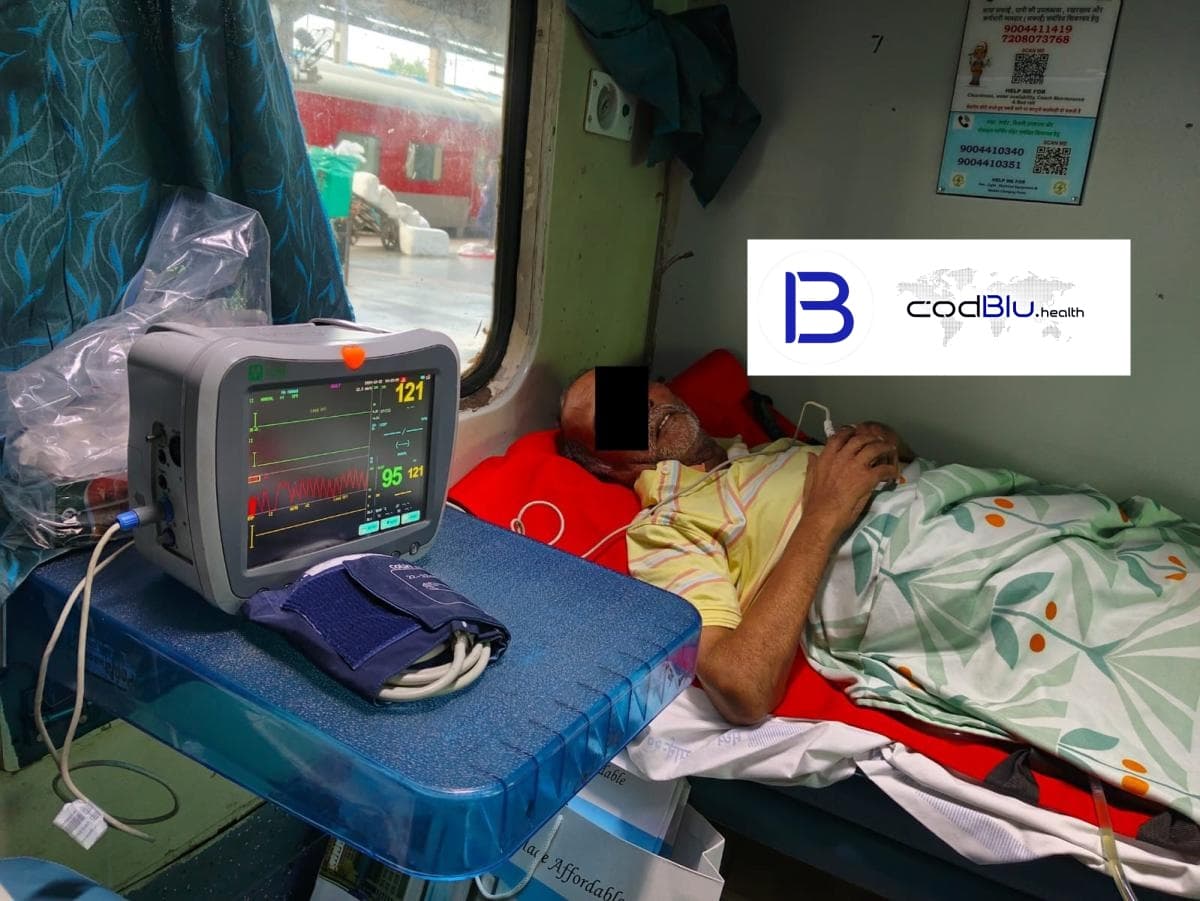
When Rail Is Not the Most Appropriate Choice
The transport recommendation should reflect the patient’s condition, urgency and complete journey.
A charter air ambulance may warrant assessment when faster transfer is clinically important. Selected patients may be suitable for commercial medical escort or airline-stretcher transport, subject to airline clearance. See our air ambulance assessment in Delhi for those options.
A direct medically supported road transfer may be more practical for a nearby destination. International repatriation and specialist transport, including ECMO, require separate case-specific assessment and should not be treated as standard rail arrangements.
CodBlu’s doctor-led approach places clinical suitability before selecting the transport mode.
Arrange a Rail Ambulance From Delhi
Share the following information with the coordination team:
Share the sending hospital or pickup address in Delhi or the NCR.
Share the receiving hospital or the complete destination address.
Share the latest medical summary and the treatment the patient is receiving.
Describe the patient’s current support and mobility requirements.
Share the preferred travel date and how urgent the transfer is.
Provide details of the two attendants who will travel with the patient.
The team assesses the case, checks suitable trains and accommodation, and provides a written quotation. The transfer proceeds after medical suitability and the required travel arrangements are confirmed.
Frequently Asked Questions
The arrangements on this page use Second AC, also called AC 2-tier or 2A. The selected train must have suitable accommodation available for the patient, medical crew and attendants.
Four tickets are booked: one for the patient, one for the paramedical staff member and two for attendants. The accompanying care arrangement is semi-ICU, subject to assessment.
Five tickets are booked: one patient ticket, two medical-crew tickets including the doctor, and two attendant tickets. This is the doctor-staff arrangement with a full ICU setup.
Rajdhani is preferred where it is a suitable option. The actual choice depends on the route, date, patient requirements and accommodation on the fastest suitable available service.
Berth placement depends on railway allocation. The team checks whether the confirmed arrangement provides workable patient access and equipment space before proceeding.
Yes. The supplied prices cover the agreed end-to-end journey, including the applicable tickets, staffing, medical setup and ground ambulances at both ends. Exact addresses and inclusions are confirmed in writing.
No. These prices apply only to the listed departures from Delhi. Reverse routes, inbound transfers and departures from other states require separate quotations.
Powered medical devices have their own battery backup and can continue operating within their available runtime. Charge, charging arrangements and backup requirements are checked for the planned journey.
Yes. Neonatal rail transport is a CodBlu specialisation. Each baby’s suitability, respiratory needs, thermal care, equipment and accompanying staff are assessed individually.
A dedicated thermal-care arrangement, which may include a transport incubator, is used with temperature monitoring. The plan protects against both cooling and overheating throughout the transfer.
Selected patients may be considered after detailed assessment. The team must establish whether the patient’s respiratory and other care needs can be managed over the proposed journey.
NCR pickup can be assessed and included in the agreed plan. The exact pickup address and ground-transfer scope must be confirmed against the quotation.
Departure depends on medical readiness, a suitable scheduled train, accommodation and the required crew and equipment. Round-the-clock coordination does not mean a train is available to depart immediately.
The accompanying team manages the situation within its clinical scope and follows the contingency plan. Hospital assessment or an altered journey may be necessary if the patient’s condition changes.
A home destination may be considered when clinically appropriate. Caregiver readiness, access to the home and the support required after arrival should be established beforehand.
Discuss a Rail Ambulance Transfer From Delhi
Discuss a transfer with the CodBlu Healthcare coordination team — share the pickup address, destination, medical summary and preferred travel date.
24/7 medical coordination: +91 93108 64489