
Rail Ambulance Services in India
Medically Supervised Train Transfers From Hospital to Destination
CodBlu Healthcare provides rail ambulance services for patients who need medical supervision during long-distance train travel. Depending on the patient’s condition, we arrange transport with paramedical staff and a semi-ICU setup, or a doctor-led team and a full ICU transport setup.
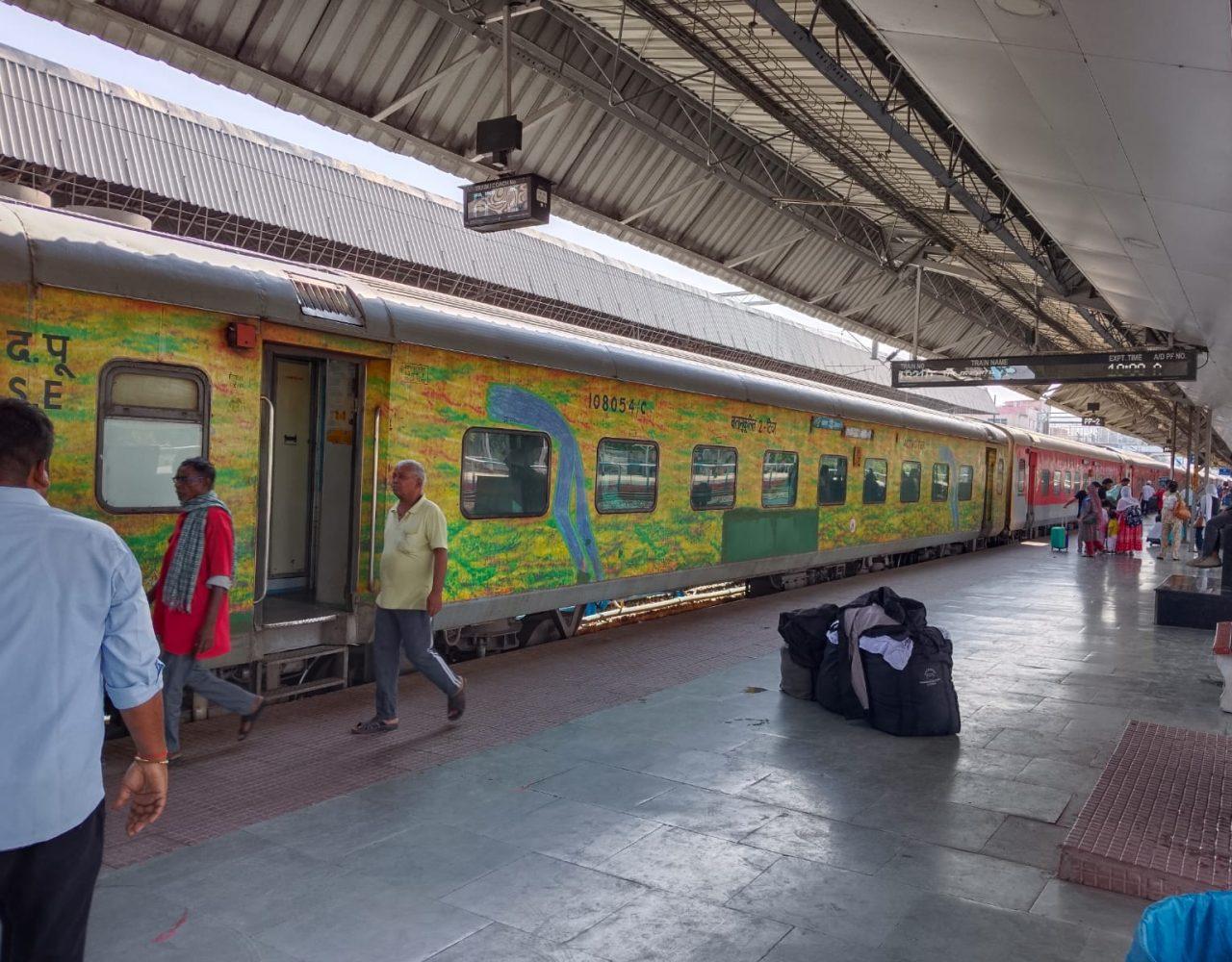
We coordinate the complete journey: hospital pickup, road ambulance transport to the railway station, urgent ticket booking, assisted boarding, medical care during travel, and a receiving ambulance to the agreed hospital or home.
Patients travel in reserved Second AC berths on a suitable scheduled train. Medical suitability, confirmed berths, equipment requirements and destination arrangements are assessed before departure.
For 24/7 medical coordination, call +91 9310864489.
What Is a Rail Ambulance?
A rail ambulance, also called a train ambulance, is a medically supervised patient transfer using a scheduled passenger train. An accompanying medical team carries the equipment, oxygen, medicines and monitoring required for the assessed journey.
The service combines:
- Road ambulance transfers at both ends.
- Reserved berths for the patient, medical crew and attendants.
- Medical supervision during the journey.
- Handover at the receiving hospital or agreed destination.
A rail ambulance does not provide every resource available in a hospital ICU. The transfer plan must account for journey duration, possible delays and the treatment that can be maintained during travel.
Which Patients Can Travel by Rail Ambulance?
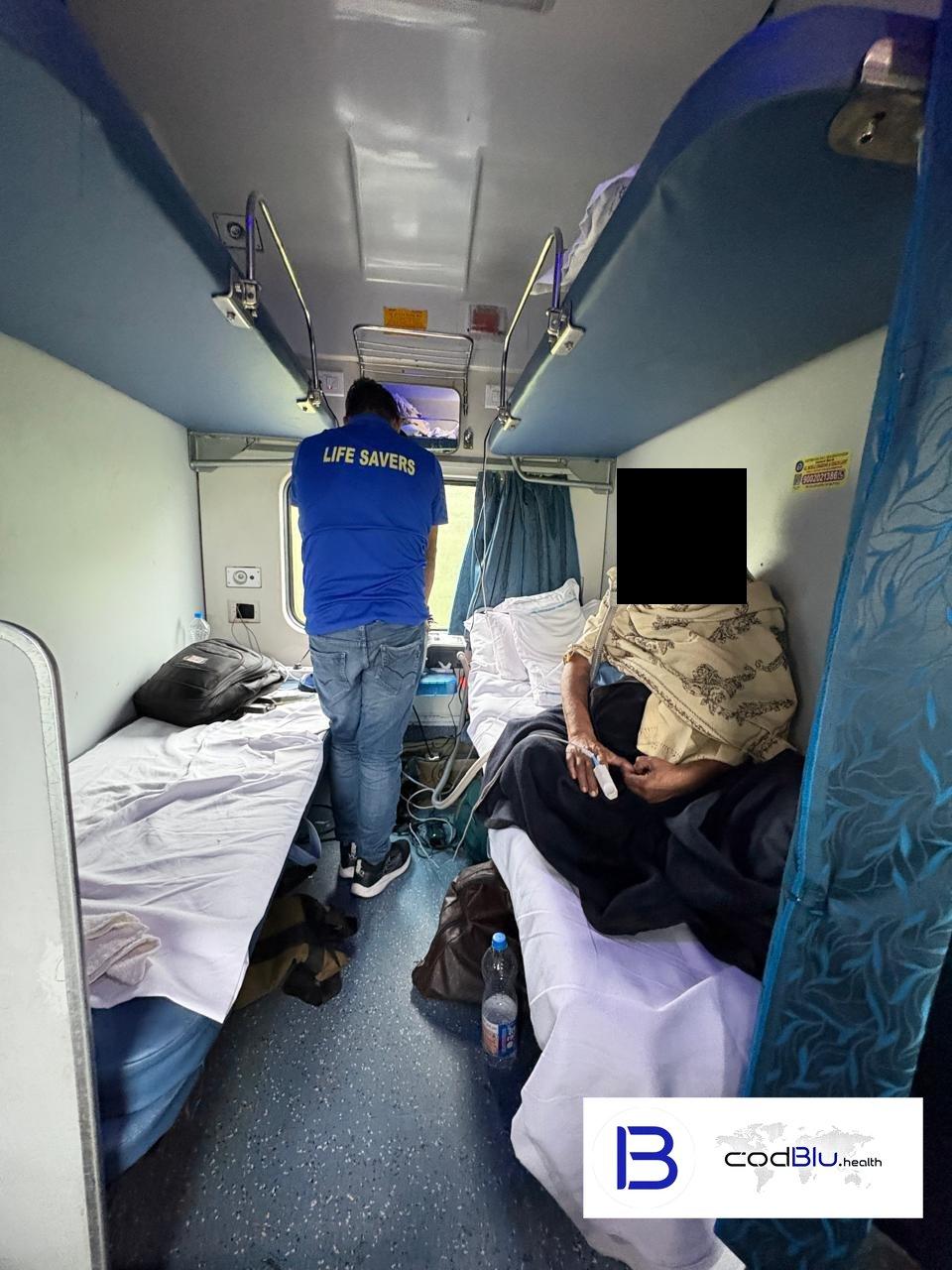
Rail transport may be considered for the following patients after individual medical assessment.
| Patient Group | What Needs to Be Assessed |
|---|---|
| Bedridden patients or patients with limited mobility | Positioning, pressure-area care, feeding, toileting and boarding assistance |
| Patients recovering from a stroke or neurological illness | Consciousness, airway protection, seizures, mobility and monitoring requirements |
| Patients requiring oxygen | Prescribed support, expected consumption and reserves for the complete journey |
| Patients with a tracheostomy | Airway stability, suction requirements, oxygen or ventilation needs and trained accompaniment |
| Selected ventilator-dependent patients | Clinical stability, ventilator settings, oxygen supply, equipment endurance and contingency arrangements |
| Patients recovering after surgery | Bleeding risk, pain control, wound care and whether travel would delay necessary treatment |
| Patients with cancer | Symptoms, medicines, nutrition, treatment requirements and the purpose of the transfer |
| Selected patients travelling for transplant assessment or treatment | Receiving-team acceptance, medical stability and the treatment timeline |
| Selected newborns and children | Temperature control, respiratory support, feeding, equipment and medical accompaniment |
| Patients returning closer to home for continued care | Destination readiness, ongoing treatment arrangements and tolerance of prolonged travel |
A diagnosis alone does not establish fitness for rail travel. The patient’s current condition and the support required throughout the transfer determine the decision.
When Is Rail Ambulance Travel Unsuitable?
Rail transport may be unsuitable when a patient:
- Requires active resuscitation.
- Has uncontrolled bleeding or shock.
- Has rapidly worsening breathing or escalating oxygen or ventilator requirements.
- Needs an urgent operation or intervention that a train journey would delay.
- Requires support that cannot be reliably maintained during the proposed journey.
- Cannot be boarded, positioned or transferred safely.
- Has no suitable receiving-care arrangement.
Stabilisation or another transport mode may be necessary.
Being unfit to fly does not automatically make a patient fit to travel by train.
Add CodBlu Healthcare as a Preferred Source

Paramedical Semi-ICU and Doctor-Led Full ICU Packages
| Arrangement | Paramedical Staff + Semi-ICU | Doctor-Led Team + Full ICU Transport Setup |
|---|---|---|
| Medical accompaniment | Paramedical staff | Doctor and accompanying paramedical professional |
| Patient selection | Assessed patients whose care requirements can be managed by the paramedical team | Assessed patients needing doctor supervision and more intensive transport support |
| Equipment | Monitoring, oxygen and other equipment selected for the patient | Monitoring, oxygen, ventilation and other critical care equipment where required and arranged |
| Train tickets | Four tickets | Five tickets |
| Ticket allocation | One patient, one paramedic and two attendants | One patient, two medical crew members and two attendants |
| End-to-end coordination | Included in the agreed package | Included in the agreed package |
“Full ICU” describes the arranged transport equipment and medical team. It does not mean every hospital ICU investigation or intervention is available onboard.
Rail Ambulance Cost From Delhi
These package estimates apply to patients departing from Delhi. See rail ambulance services in Delhi for Delhi hospitals, stations and train options.
| Destination | Paramedical Staff + Semi-ICU | Doctor-Led Team + Full ICU |
|---|---|---|
| Patna | ₹65,000 | ₹1,00,000 |
| Kolkata | ₹80,000 | ₹1,25,000 |
| Ranchi | ₹70,000 | ₹1,15,000 |
| Siliguri / New Jalpaiguri | ₹85,000 | ₹1,30,000 |
| Mumbai | ₹75,000 | ₹1,15,000 |
| Hyderabad / Secunderabad | ₹90,000 | ₹1,30,000 |
| Chennai | ₹95,000 | ₹1,40,000 |
| Bengaluru | ₹90,000 | ₹1,30,000 |
| Guwahati | ₹90,000 | ₹1,35,000 |
Other destinations can be assessed and quoted on request.
Rail Ambulance Cost From Mumbai
These package estimates apply to patients departing from Mumbai. See rail ambulance services in Mumbai for Tata Memorial pickups and Mumbai terminals.
| Destination | Paramedical Staff + Semi-ICU | Doctor-Led Team + Full ICU |
|---|---|---|
| Delhi | ₹75,000 | ₹1,15,000 |
| Hyderabad / Secunderabad | ₹70,000 | ₹1,10,000 |
| Bengaluru | ₹75,000 | ₹1,15,000 |
Other destinations, including Patna, Varanasi, Lucknow and Kolkata, can be quoted on request.
Rail Ambulance Cost From Hyderabad
These package estimates apply to patients departing from Hyderabad or Secunderabad, subject to confirmation of the pickup location and train. See rail ambulance services in Hyderabad for Hyderabad hospitals, stations and train options.
| Destination | Paramedical Staff + Semi-ICU | Doctor-Led Team + Full ICU |
|---|---|---|
| Delhi | ₹85,000 | ₹1,30,000 |
| Kolkata | ₹90,000 | ₹1,35,000 |
| Bhubaneswar | ₹75,000 | ₹1,15,000 |
| Raipur | ₹80,000 | ₹1,20,000 |
| Mumbai | ₹75,000 | ₹1,10,000 |
| Bengaluru | ₹75,000 | ₹1,10,000 |
Additional destinations, including Visakhapatnam and Guwahati, can be assessed and quoted on request.
What Is Included in the Cost?
The agreed end-to-end package includes:
- Road ambulance pickup from the referring hospital or agreed location.
- Transport to the departure station.
- Train tickets for the patient, selected medical crew and two attendants.
- Equipment, oxygen and medicines specified for the transfer.
- Medical supervision during travel.
- Receiving road ambulance transport.
- Handover at the agreed hospital or home.
These are route-specific estimates, not a national flat tariff. The written quotation confirms the patient’s requirements, pickup and drop locations, train arrangements and included services.
Prices may differ in the reverse direction. Delhi-to-Hyderabad and Hyderabad-to-Delhi, for example, have different paramedical package estimates.
How the Complete Transfer Works
Share the latest medical summary, current treatment, oxygen or ventilator requirements, pickup hospital and destination.
CodBlu assesses rail suitability and selects the required medical accompaniment. For admission transfers, acceptance and bed availability must be confirmed with the receiving hospital.
CodBlu handles ticket booking and checks the fastest suitable train available for the route.
A Rajdhani is preferred where it serves the route and meets the transfer requirements. A Duronto or another suitable express train may be selected according to operating days, berth availability, stations and journey duration.
An appropriately equipped road ambulance collects the patient. The team manages the transition from hospital equipment to the transport setup.
The team coordinates station arrival, patient movement and boarding. Equipment, oxygen and medicines are positioned for use during travel.
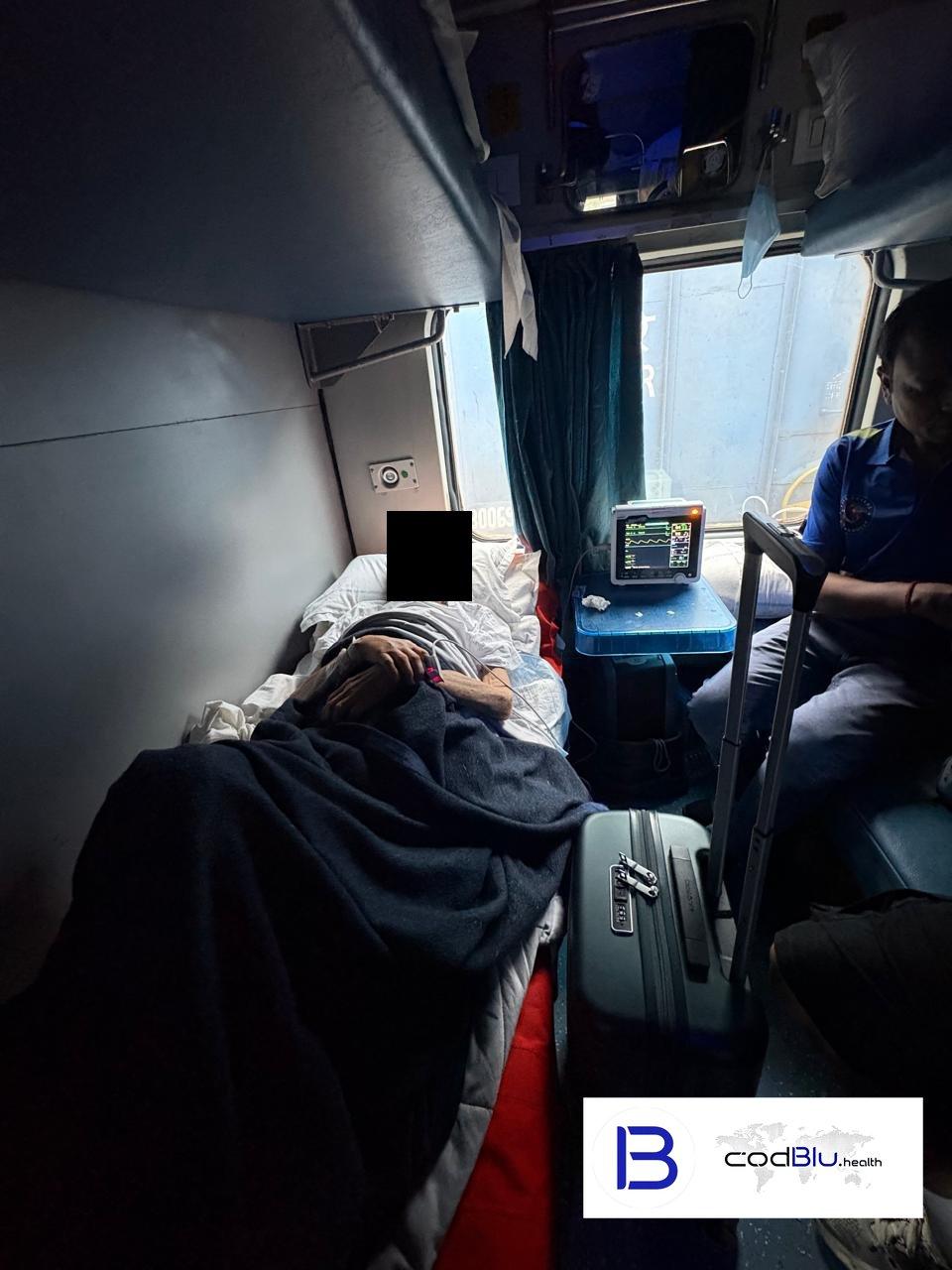
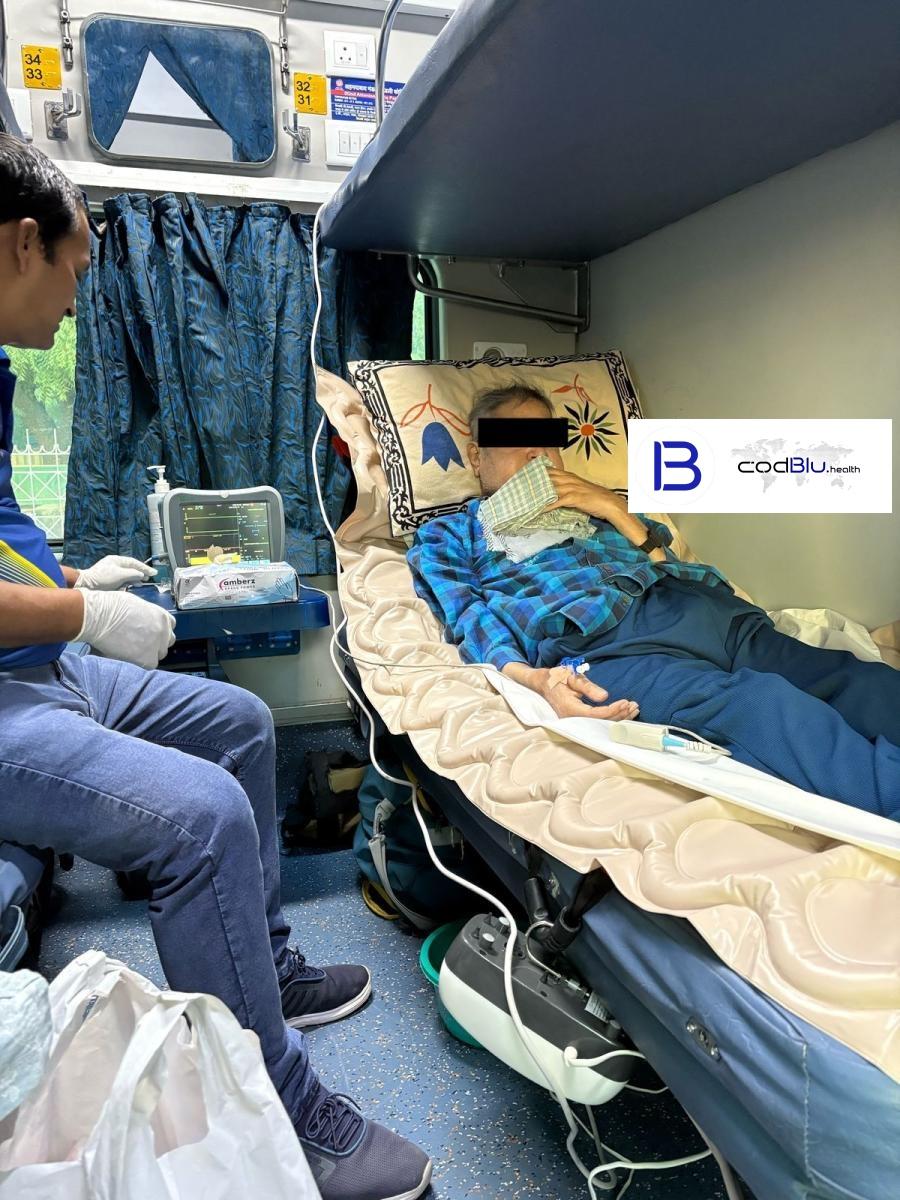
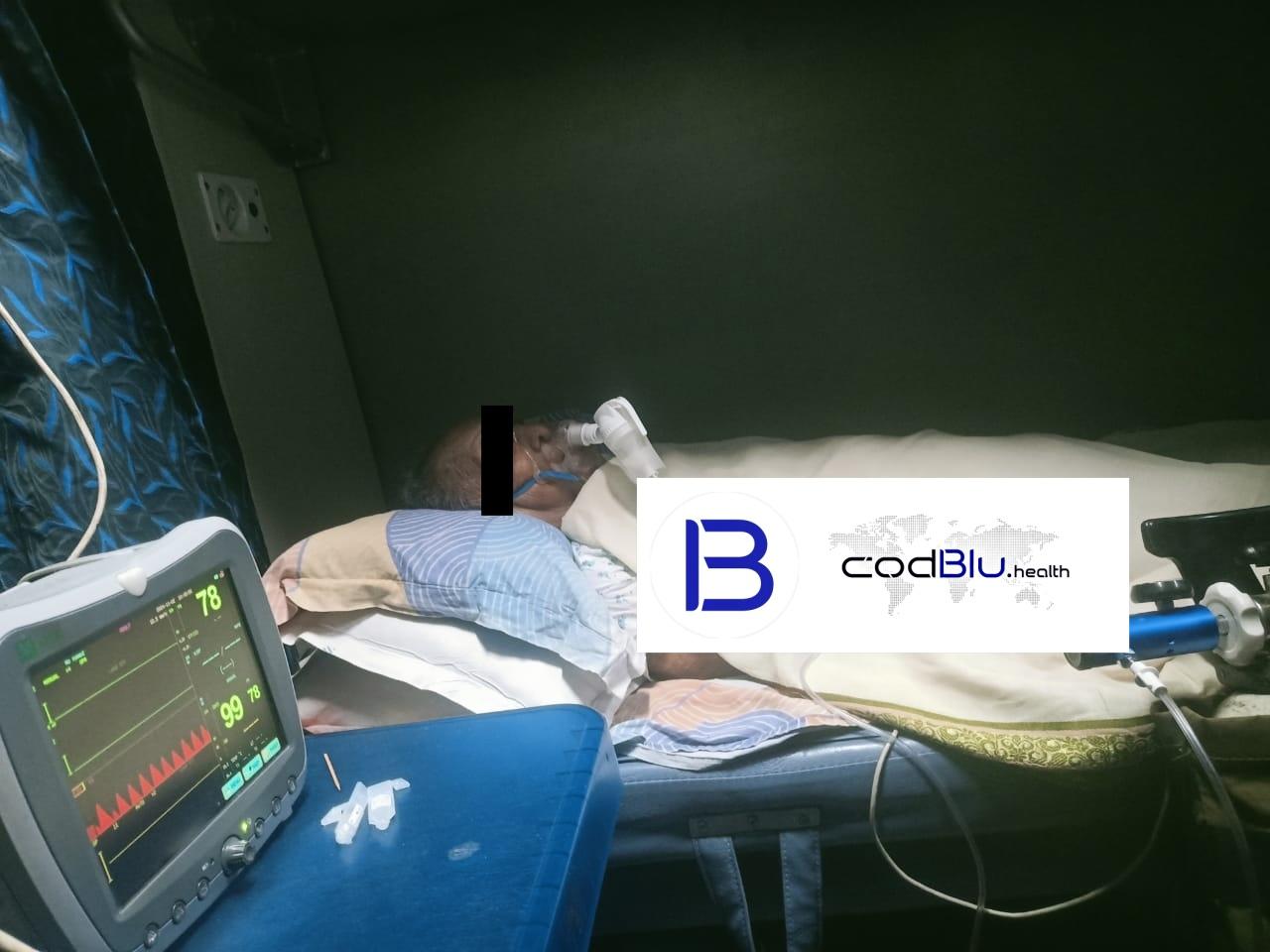
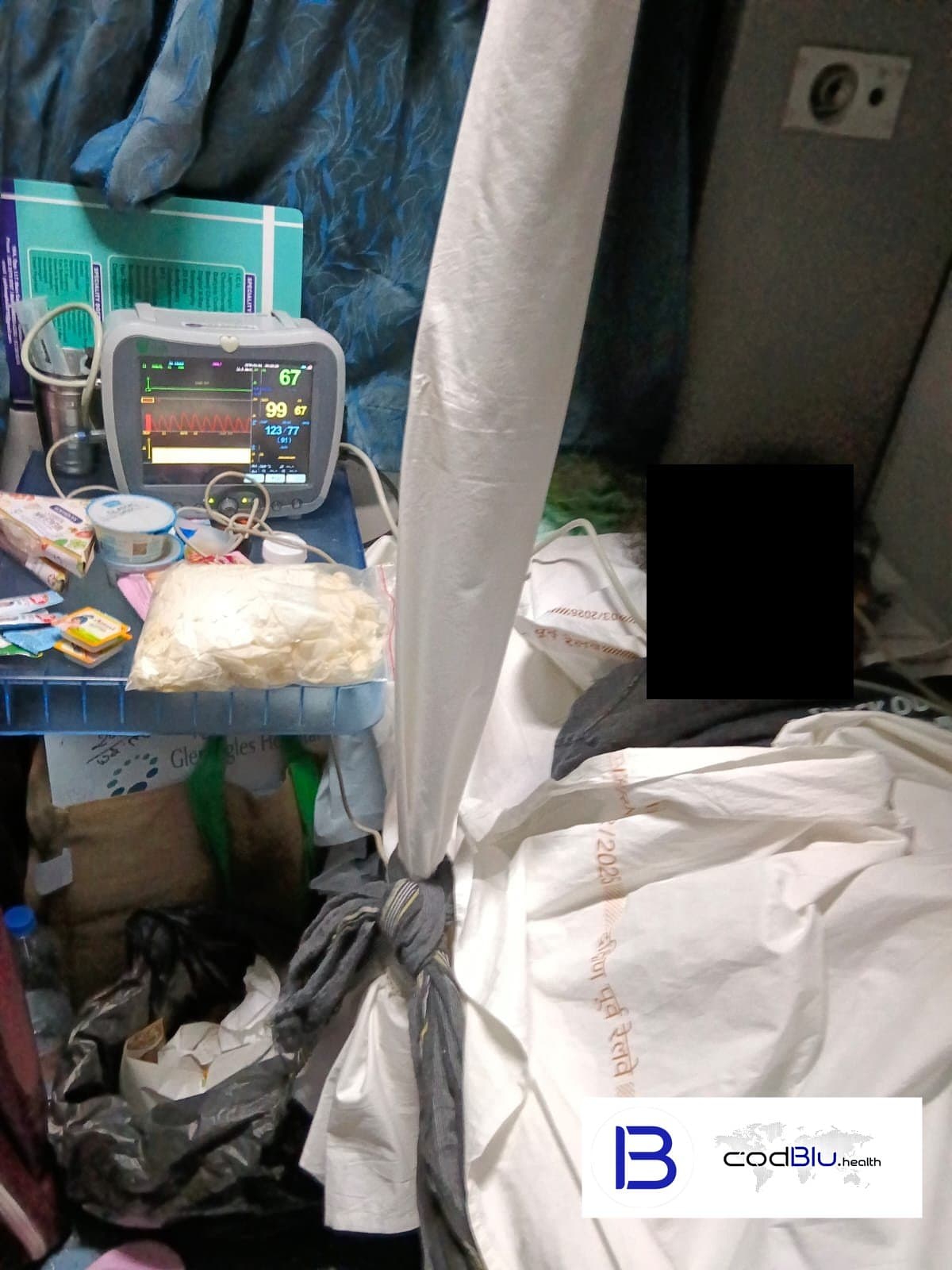
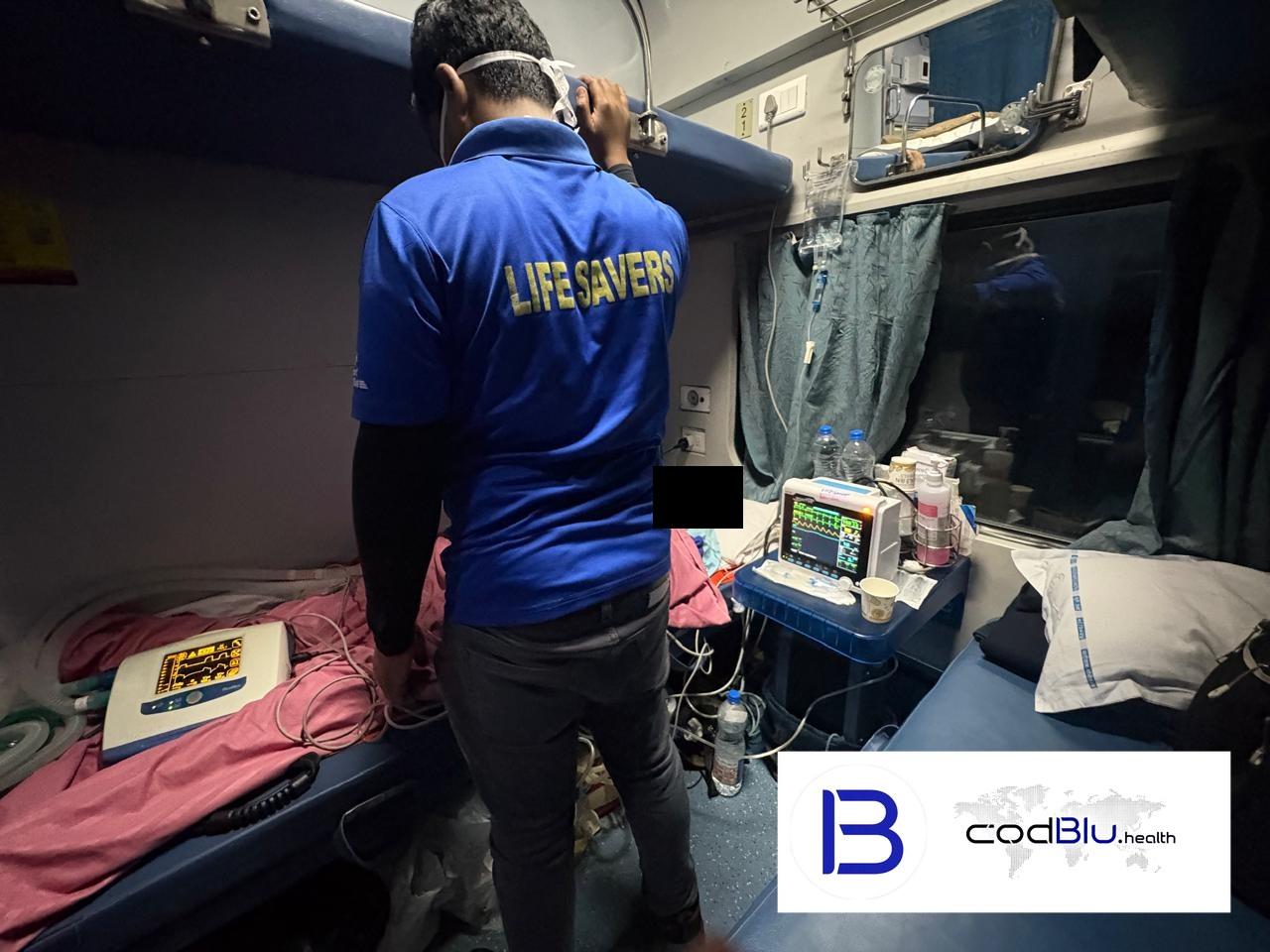
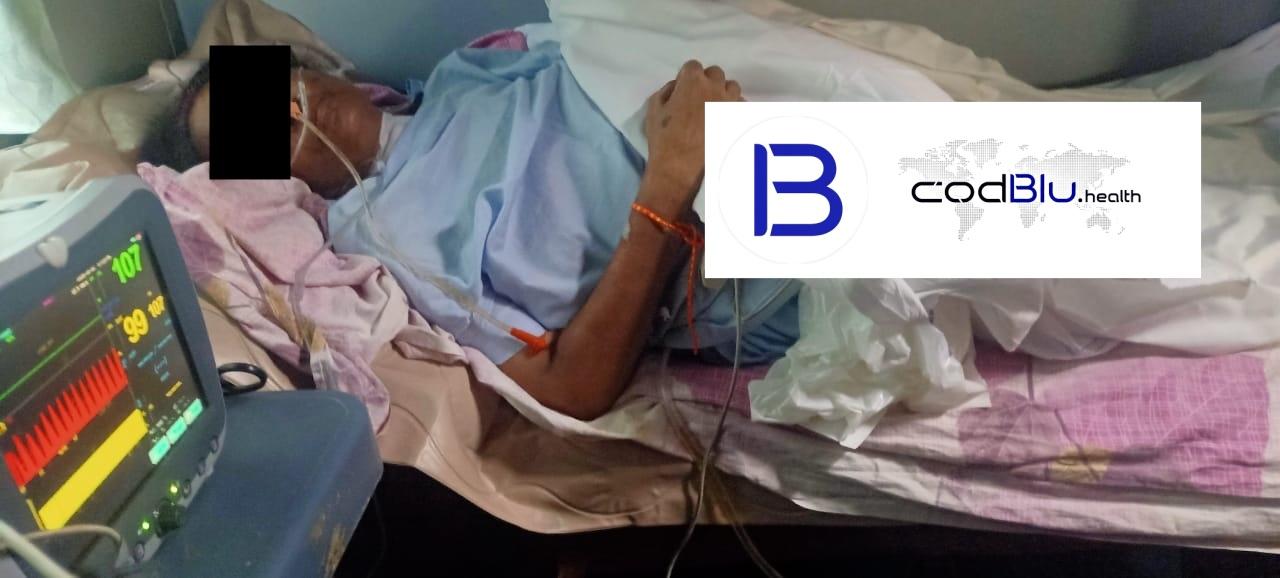
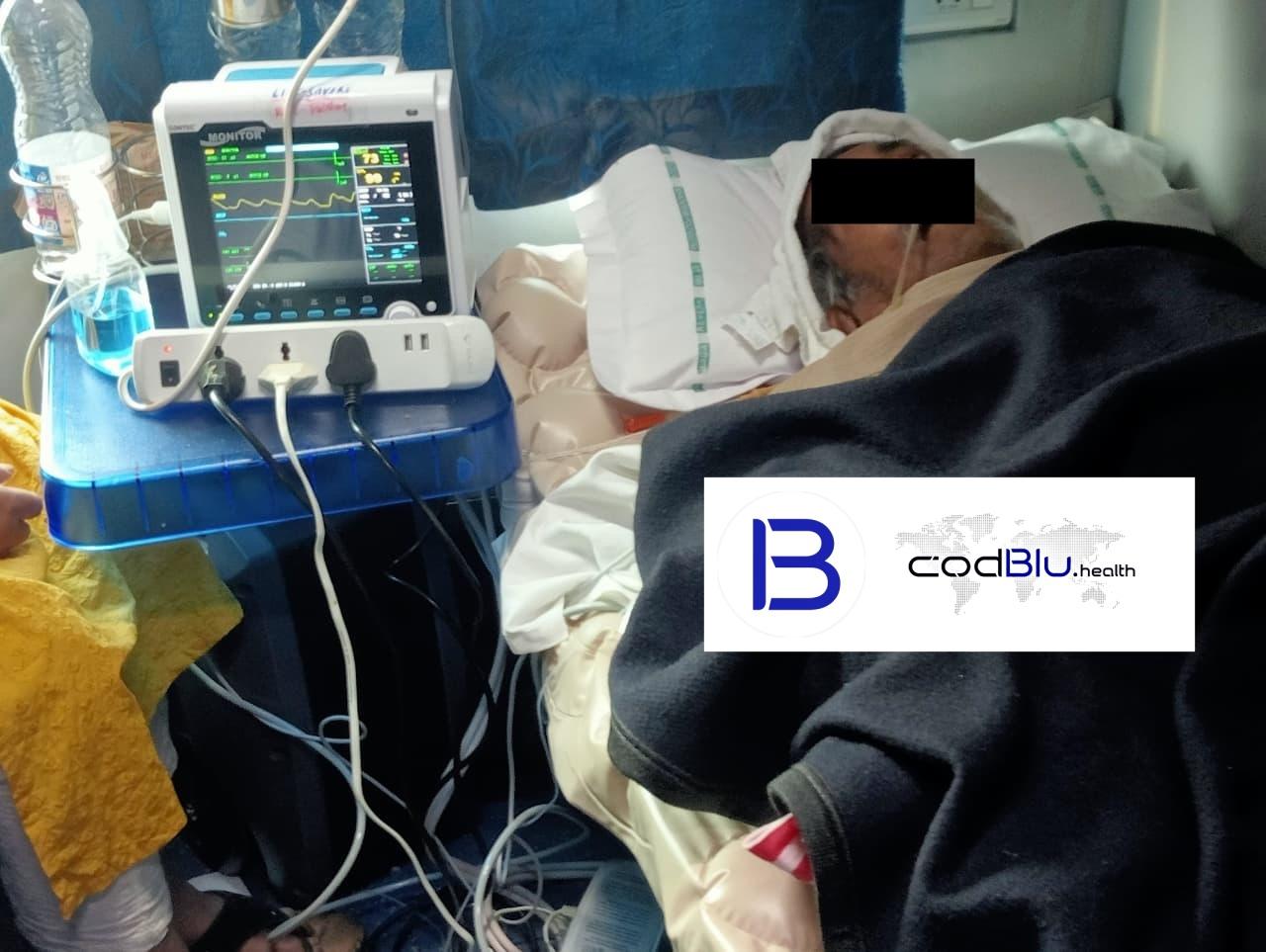
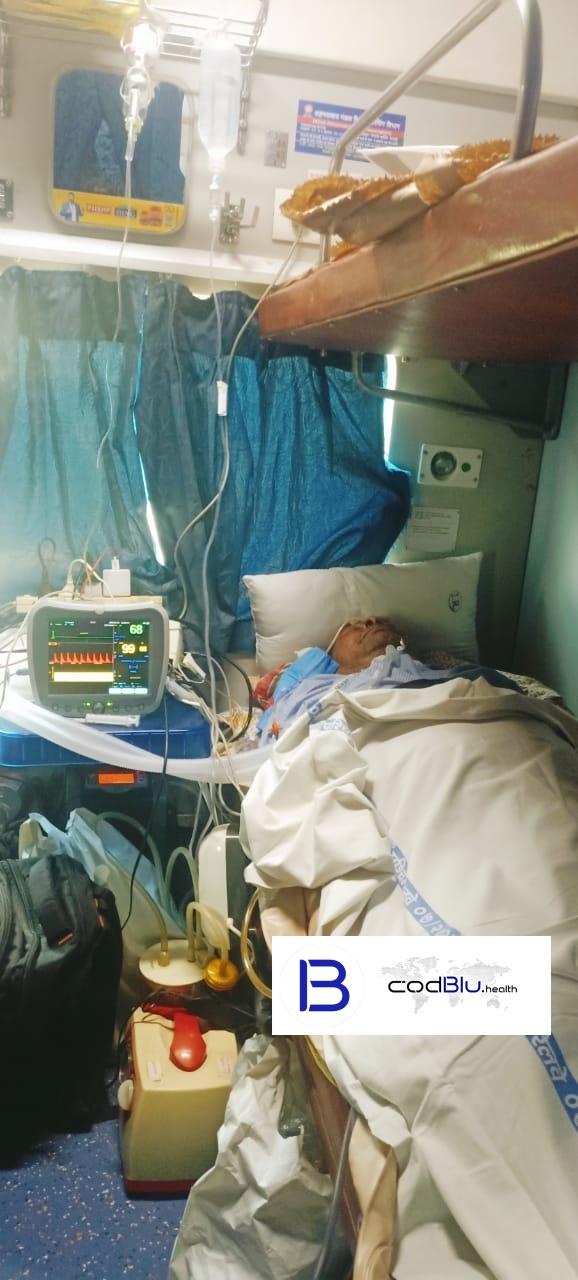
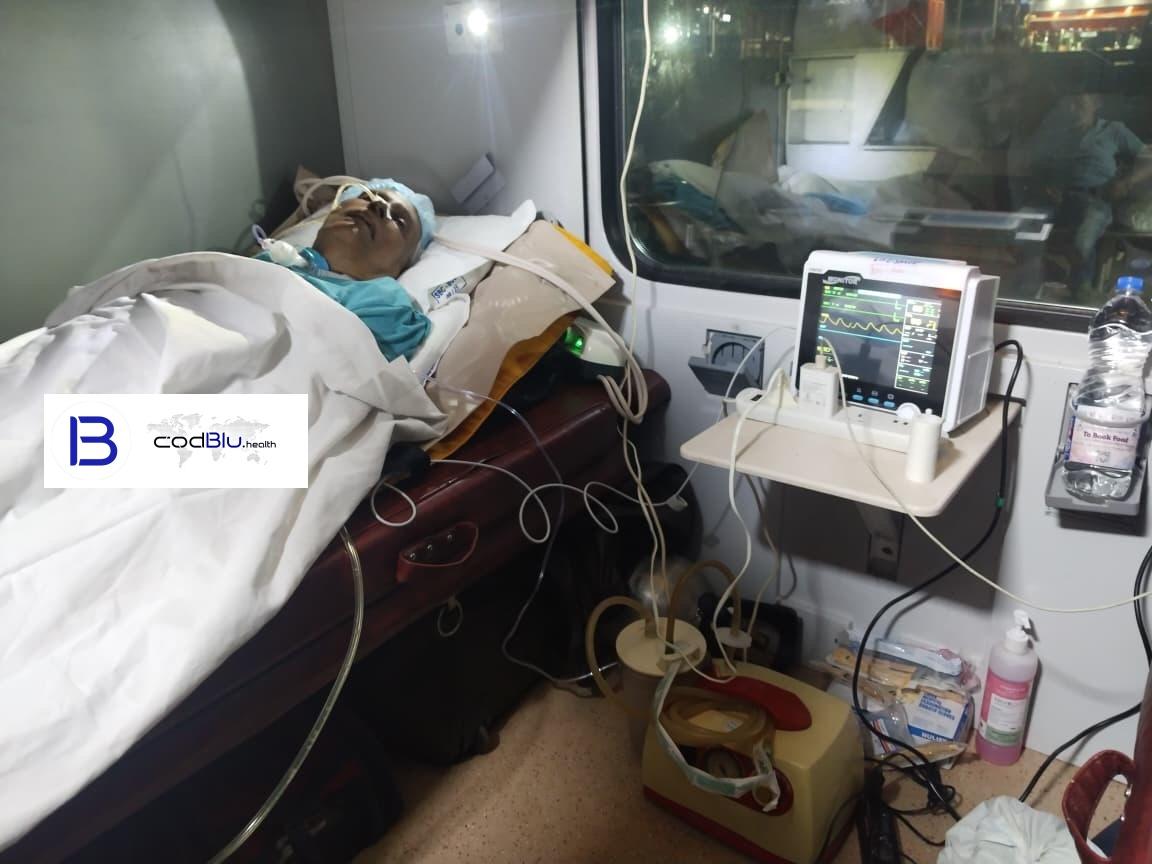
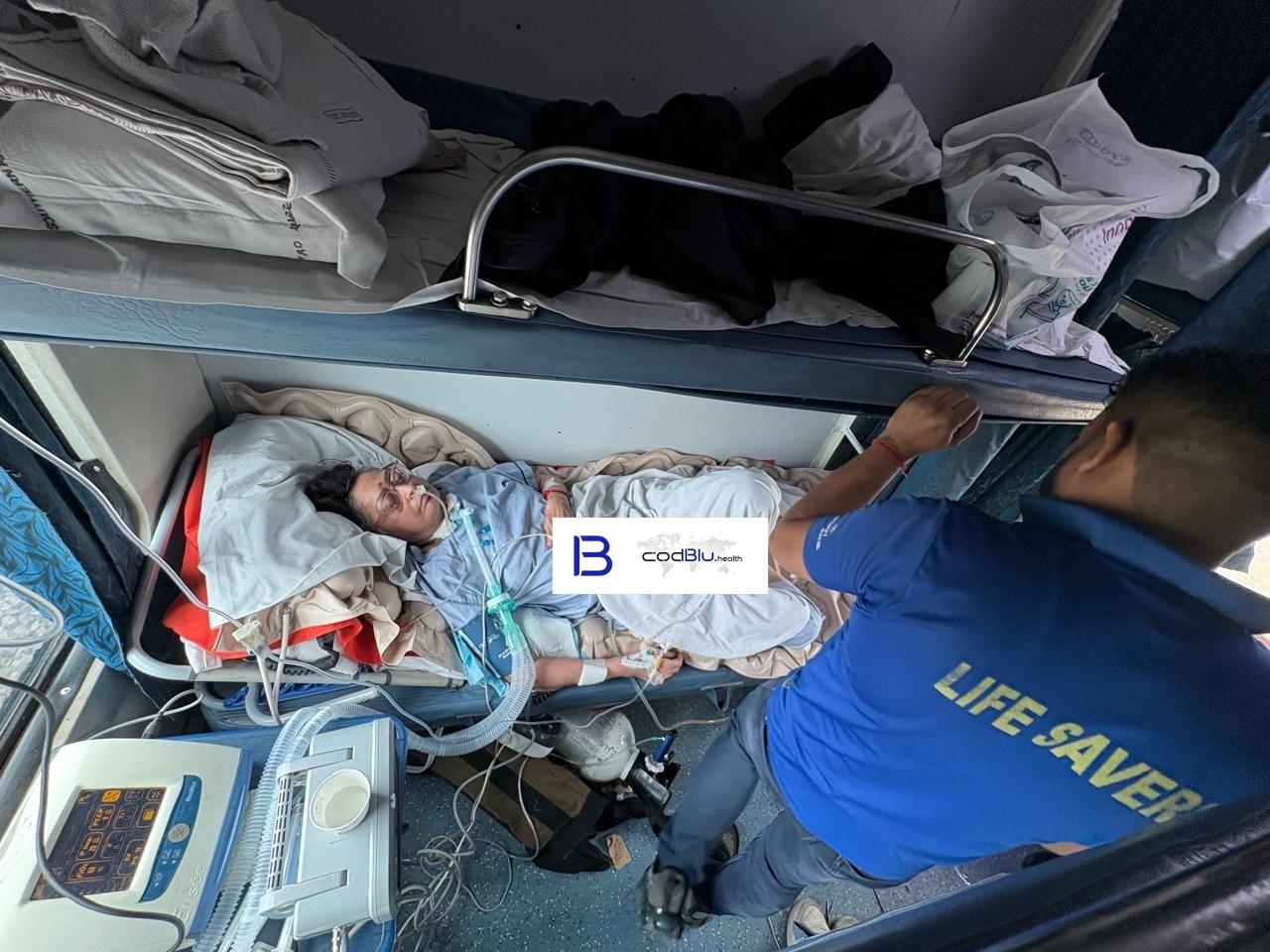
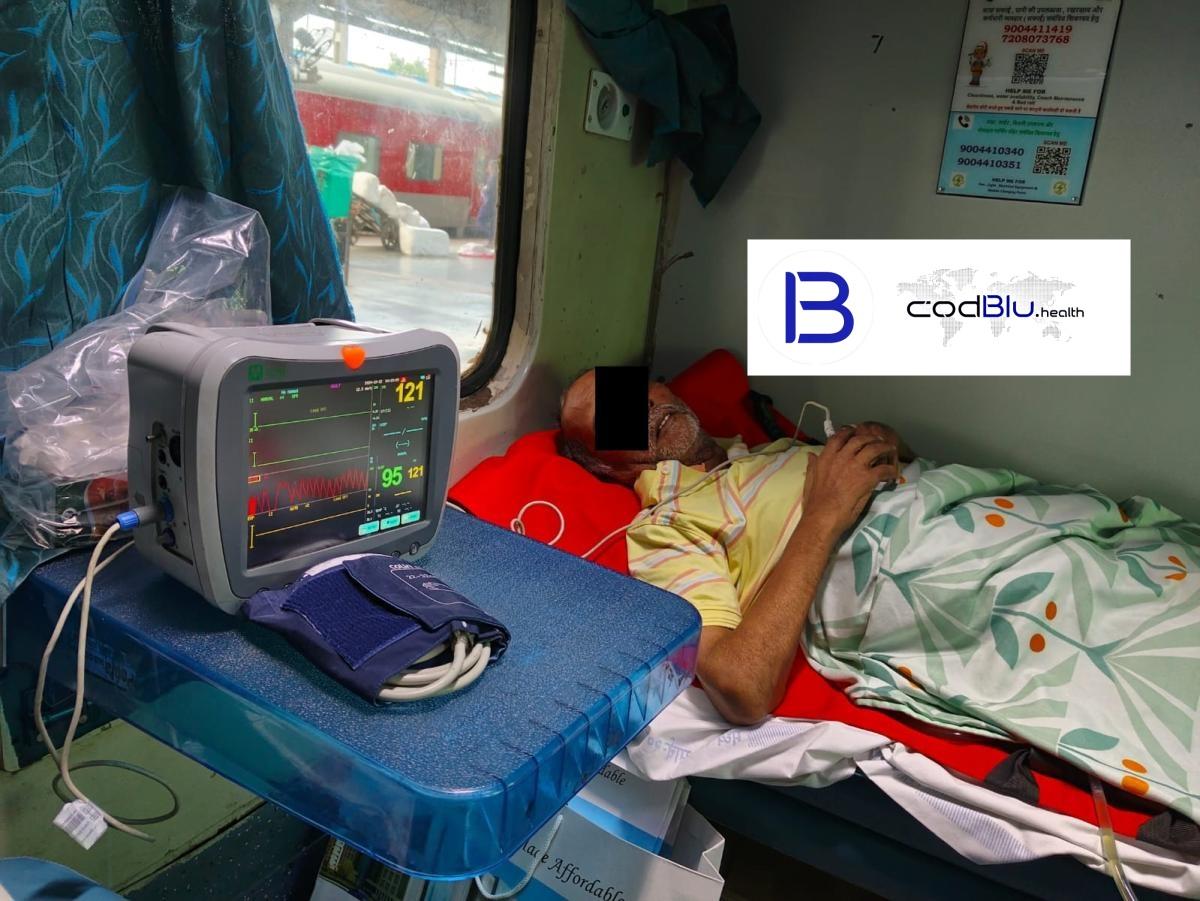
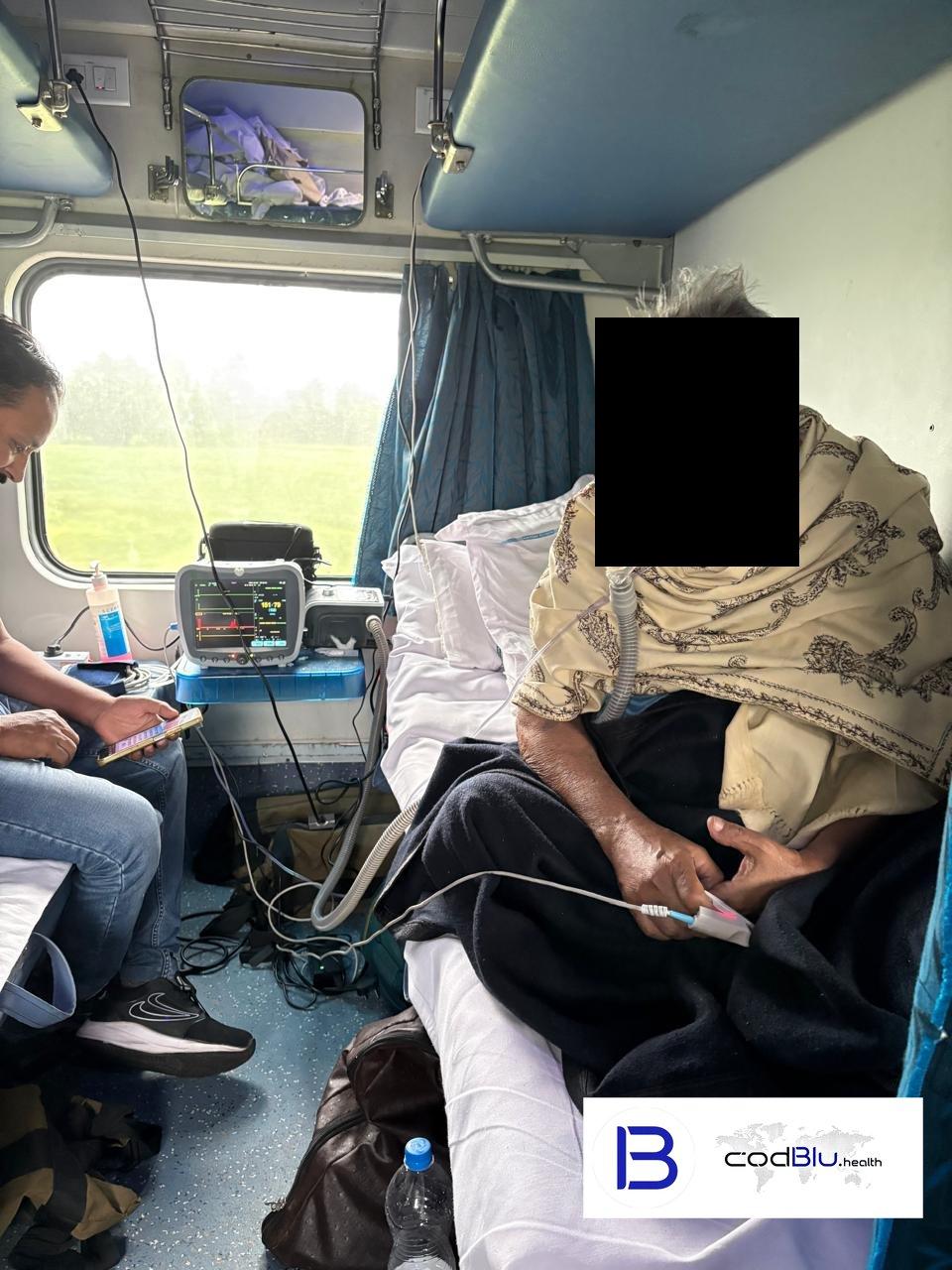
The accompanying team monitors the patient and maintains the agreed support. This may include oxygen, suction, ventilation, medicines, positioning and temperature monitoring.
At the arrival station, a receiving road ambulance takes the patient to the agreed hospital or home. The transfer concludes with a clinical handover and communication of ongoing care requirements.
Second AC Tickets and Attendant Arrangements
Our standard packages use Second AC — AC 2-Tier, or 2A — berths.
| Package | Patient | Medical Crew | Attendants | Total Tickets |
|---|---|---|---|---|
| Paramedical semi-ICU | 1 | 1 | 2 | 4 |
| Doctor-led full ICU | 1 | 2 | 2 | 5 |
The two medical crew tickets in the doctor-led package include the doctor.
These are reserved berths within a scheduled train. An exclusive cabin or an entire coach is not automatically included.
Equipment, Oxygen and Battery Backup
Equipment is selected according to the patient’s assessed requirements. It may include:
- A multiparameter monitor.
- Oxygen delivery equipment and planned reserves.
- A transport ventilator, where required.
- A suction machine.
- Infusion pumps, where required.
- Emergency medicines and airway equipment.
- Neonatal equipment for an assessed newborn transfer.
Each powered medical device carried for the journey has a separate backup battery. Before departure, the team checks its charge and operating duration against the patient’s requirements, expected travel time and possible delays.
Battery endurance is finite. Charging arrangements and contingency requirements form part of the transfer plan.
Oxygen reserves are calculated separately according to the patient’s prescribed support and expected consumption.
Neonatal and Paediatric Rail Ambulance Transfers
CodBlu provides rail transport for selected neonatal and paediatric patients after medical assessment.
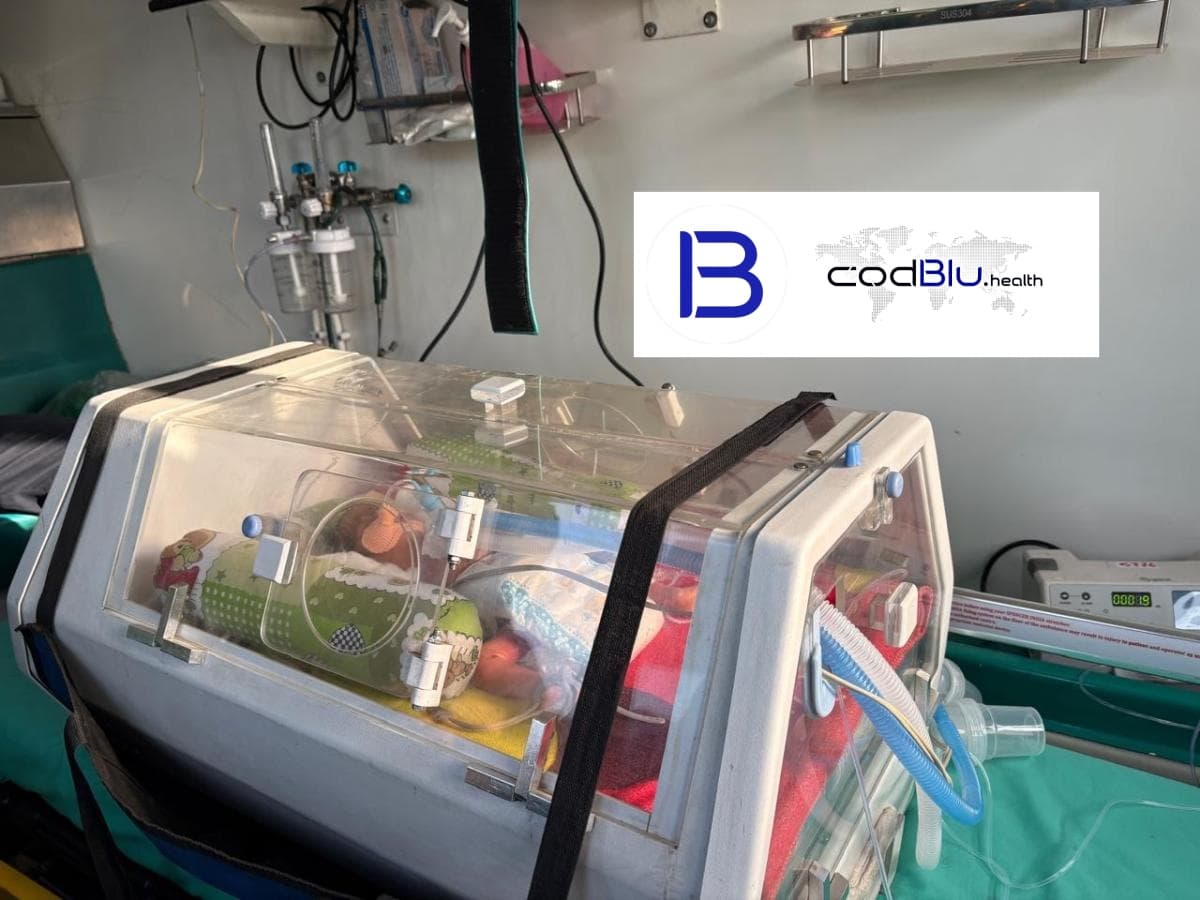
For a newborn, arrangements may include a transport incubator, temperature monitoring, thermal support, oxygen or respiratory assistance, feeding arrangements and neonatal monitoring equipment.
The team considers gestational age, weight, temperature stability, breathing, circulation and treatment requirements. Temperature care continues through hospital pickup, station movement, boarding, train travel and destination handover.
Some newborns require a faster transfer or treatment that cannot wait for a train journey. Rail transport is selected only when appropriate for the individual baby.
Learn more about neonatal and paediatric transport services.
Hospitals and Railway Stations Across India
These tables include hospitals featured in CodBlu’s patient stories and additional referral centres for transfer planning. The station used depends on the selected train, confirmed berths, boarding access and road ambulance connections.
North India
| City / Region | Hospitals | Railway Stations |
|---|---|---|
| Delhi |
|
|
| Gurugram, Haryana |
|
|
| Faridabad, Haryana |
|
|
| Lucknow, Uttar Pradesh |
|
|
| Kanpur, Uttar Pradesh |
|
|
| Noida, Uttar Pradesh |
|
|
| Mohali, Punjab |
|
|
| Ludhiana, Punjab |
|
|
| Amritsar, Punjab |
|
|
| Bathinda, Punjab |
|
|
| Chandigarh |
|
|
| Dehradun, Uttarakhand |
|
|
| Rishikesh, Uttarakhand |
|
|
| Tanda, Himachal Pradesh |
|
|
| Kakryal / Katra, Jammu and Kashmir |
|
|
West India
| City / Region | Hospitals | Railway Stations |
|---|---|---|
| Mumbai, Maharashtra |
|
|
| Nagpur, Maharashtra |
|
|
| Ahmedabad, Gujarat |
|
|
| Jaipur, Rajasthan |
|
|
| Jodhpur, Rajasthan |
|
|
| Panaji / Dona Paula, Goa |
|
|
Central India
| City / Region | Hospitals | Railway Stations |
|---|---|---|
| Bhopal, Madhya Pradesh |
|
|
| Indore, Madhya Pradesh |
|
|
| Raipur, Chhattisgarh |
|
|
East India
| City / Region | Hospitals | Railway Stations |
|---|---|---|
| Patna, Bihar |
|
|
| Ranchi, Jharkhand |
|
|
| Jamshedpur, Jharkhand |
|
|
| Kolkata, West Bengal |
|
|
| Bhubaneswar, Odisha |
|
|
South India
| City / Region | Hospitals | Railway Stations |
|---|---|---|
| Hyderabad / Secunderabad, Telangana |
|
|
| Visakhapatnam, Andhra Pradesh |
|
|
| Vijayawada, Andhra Pradesh |
|
|
| Chennai, Tamil Nadu |
|
|
| Vellore, Tamil Nadu |
|
|
| Bengaluru, Karnataka |
|
|
| Kochi, Kerala |
|
|
| Kozhikode, Kerala |
|
|
| Puducherry |
|
|
Northeast India
| City / Region | Hospitals | Railway Stations |
|---|---|---|
| Guwahati, Assam |
|
|
| Agartala, Tripura |
|
|
| Naharlagun, Arunachal Pradesh |
|
|
| Chümoukedima / Dimapur region, Nagaland |
|
|
| Falkawn / Aizawl, Mizoram |
|
|
Listed for planning only; no affiliation implied. Inclusion does not establish a previous CodBlu transfer from every hospital or guarantee route availability.
Rail Transfer Stories From CodBlu
Our published patient stories describe individual rail transfers involving different hospitals and care requirements:
- Sir Ganga Ram Hospital, Delhi, to Ranchi: a medically supervised journey coordinated with the referring hospital and receiving team.
- Ahmedabad to KIMS Hospital, Secunderabad: transport for planned lung transplant care, including oxygen and equipment contingency planning.
- Kolkata to Christian Medical College, Vellore: a transfer requiring ongoing treatment and medical monitoring.
Every case involves an individual assessment. Patients with similar diagnoses may need different transport arrangements.

Rail Ambulance or Air Ambulance?
Rail transport can be more economical when the patient can tolerate the longer journey and the required support can be maintained. Air transport may be more appropriate when time is critical or a proposed rail journey is unsuitable.
The listed Mumbai-to-Delhi doctor-led rail package is ₹1,15,000, while Hyderabad-to-Delhi is ₹1,30,000.
For illustration, a charter air ambulance quotation of ₹8–10 lakh for the same journey would be substantially higher. That charter figure is a comparison scenario, not a current fixed CodBlu air ambulance tariff. A live air quotation is required.
The decision should consider medical suitability, total transfer time, available departures and the complete cost.
Cancellation and Refund Policy
Cancellation by the Patient or Attendant
When the patient or attendant cancels, the following deductions apply:
- Actual costs of train or flight tickets already purchased for the transfer.
- A processing fee.
The remaining balance is refunded within 1–2 working days.
Cancellation by CodBlu Healthcare
If CodBlu cancels because of operational circumstances or unforeseen events:
- Actual costs of train or flight tickets already purchased are deducted.
- No processing fee applies.
The remaining balance is refunded within 1–2 working days.
Frequently Asked Questions
A rail ambulance is a medically supervised patient journey on a scheduled train. It combines reserved berths, an accompanying medical team, suitable equipment and road ambulance connections at both ends.
The cost depends on the departure city, destination, patient’s condition and medical team. Examples include Delhi to Patna at ₹65,000 with paramedical staff and semi-ICU, and Mumbai to Delhi at ₹1,15,000 with a doctor-led full ICU transport setup. Additional estimates appear in the route tables.
Yes. The agreed end-to-end package includes train tickets, road ambulances at both ends, the selected medical crew, and equipment and support specified in the quotation.
No. The reverse route can have a different price because departure-city arrangements, train availability and logistics differ. Request a quotation for the actual direction of travel.
Call +91 9310864489 with the patient’s medical summary, current support requirements, pickup hospital, destination and preferred date. CodBlu assesses suitability, checks train arrangements and provides a written quotation.
Yes. CodBlu handles urgent ticket booking. Departure depends on suitable confirmed berths, the train’s operating day and completion of medical and logistical preparations.
There is no fixed confirmation time for every route. It depends on the travel date, available trains and suitable berths. CodBlu communicates the actual booking status before confirming departure.
The standard booking is in AC 2-Tier (2A), commonly known as Second AC. The selected train and berth details are confirmed before departure.
The paramedical semi-ICU package includes four tickets: one patient, one paramedic and two attendants. The doctor-led package includes five tickets: one patient, two medical crew members—including the doctor—and two attendants.
Yes. Both packages include tickets for two attendants. Additional travellers need separate arrangements and confirmation.
No. A Rajdhani is preferred where it serves the route and suits the transfer. Its operating day or berth availability may not match an urgent request. A Duronto or another suitable express train may be selected.
The duration includes hospital pickup, station access, boarding, the train journey, arrival procedures and the final ambulance transfer. Scheduled train time is only part of the complete journey, and delays remain possible.
Selected patients can travel with planned oxygen support. The team assesses prescribed support, expected consumption, reserves and applicable railway arrangements before departure.
Some ventilator-dependent patients can be considered after detailed assessment. Clinical stability, ventilator settings, oxygen supply, equipment endurance and contingency options must support the entire journey.
Medical devices can run on their individual backup batteries during a power interruption. Available operating time varies with the equipment, settings and battery charge, so power requirements are assessed before travel.
Selected newborns can be assessed for transport with appropriate thermal support, monitoring, equipment and medical accompaniment. The baby’s condition and treatment timeline determine suitability.
Yes, where medically appropriate. Hospital-to-home transfers require suitable ongoing care, equipment and receiving support at the destination.
Typically, the team needs a recent medical summary, current treatment details, relevant reports, passenger identification details and transfer consent. Hospital admission transfers also require receiving-facility arrangements. Additional requirements are confirmed during assessment.
Not automatically. The standard package provides reserved Second AC berths. An exclusive cabin or whole coach is included only if separately arranged and expressly confirmed.
Yes. The hospital tables are planning references. Share the actual hospital and destination so CodBlu can assess station access, train options and medical requirements.
This service is for planned long-distance medical transfers. It is separate from emergency assistance for passengers who become acutely ill or are injured on local or suburban trains.
It is often more economical than a private charter, but the comparison depends on the route and medical arrangements. Lower cost does not make a long train journey suitable for every patient.
Actual ticket costs already incurred and a processing fee are deducted. The remaining balance is refunded within 1–2 working days. If CodBlu initiates cancellation, ticket costs are deducted, but no processing fee applies.
Request a Rail Ambulance Assessment
Share the pickup hospital or location, destination, latest medical summary, oxygen or ventilator requirements, and preferred travel date.
CodBlu Healthcare will assess suitability, check train and berth options, select the medical team and equipment, and provide an inclusive quotation for the agreed journey.
For 24/7 medical coordination, call +91 9310864489.
Email: codbluinfo@gmail.com

