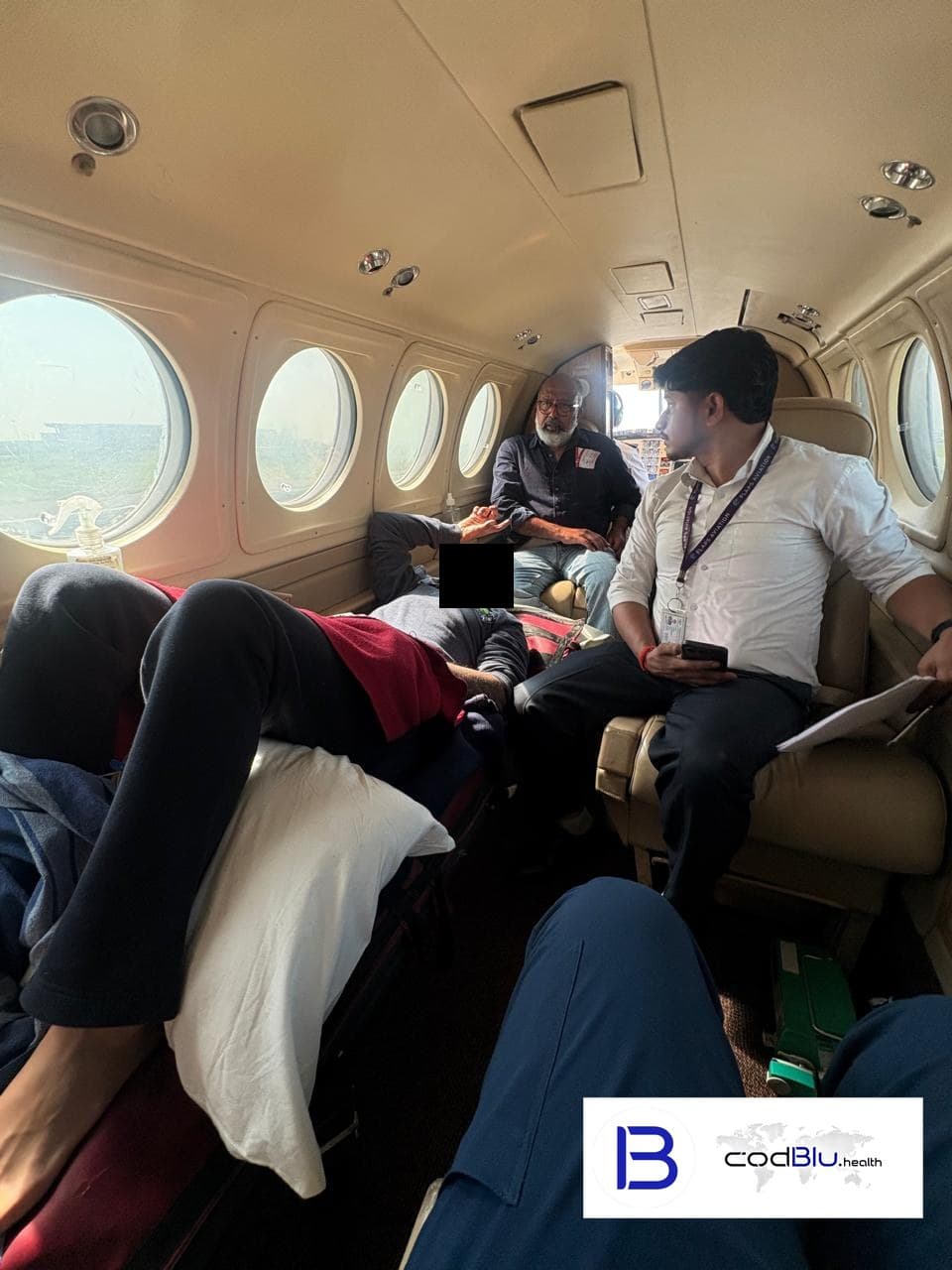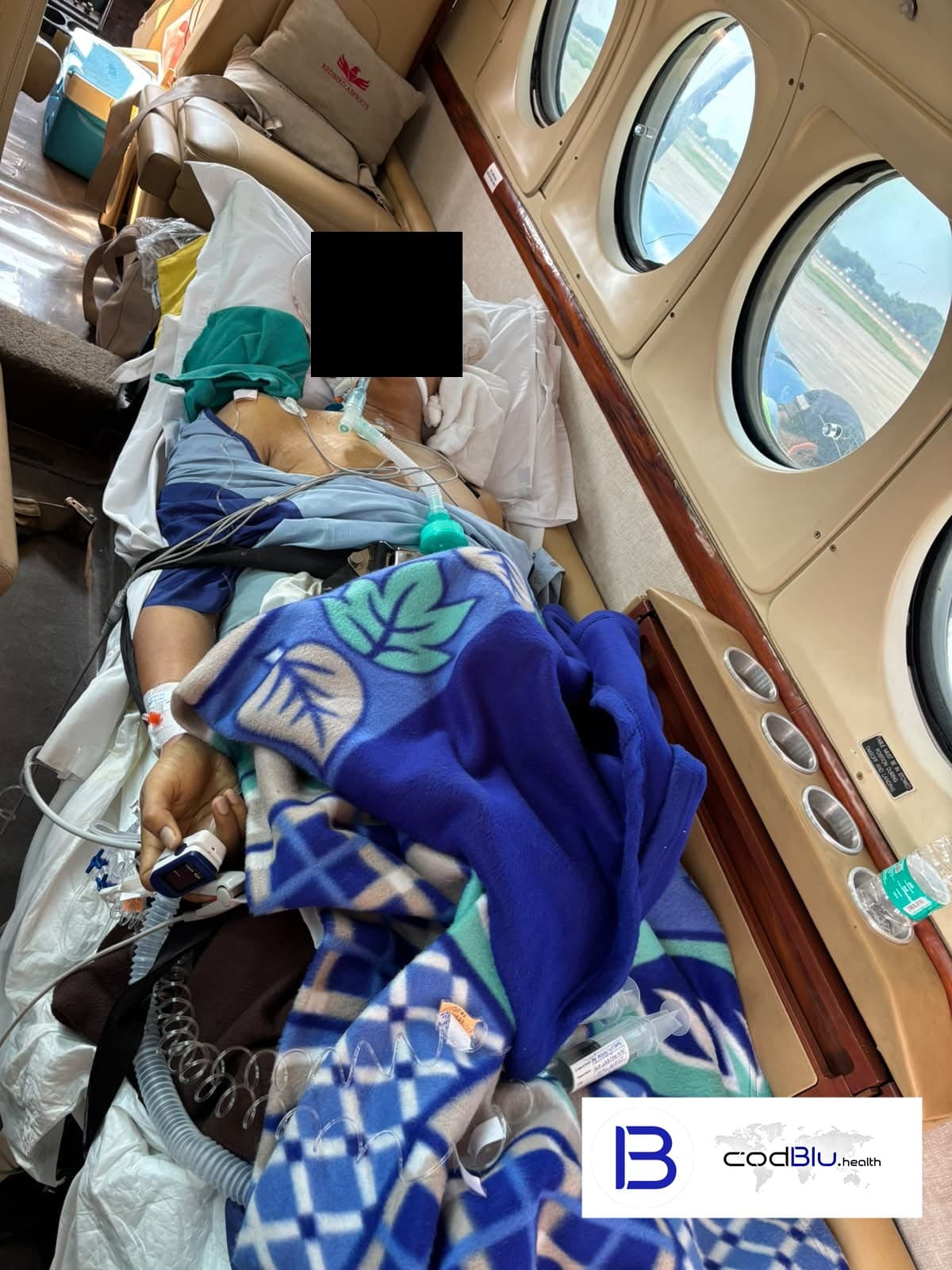


Mumbai to Kolkata | Rail Ambulance Transfer for a Young Stroke Patient with Semi-ICU Support
Published on: October 29, 2026
A Stroke Patient Travelling at 28
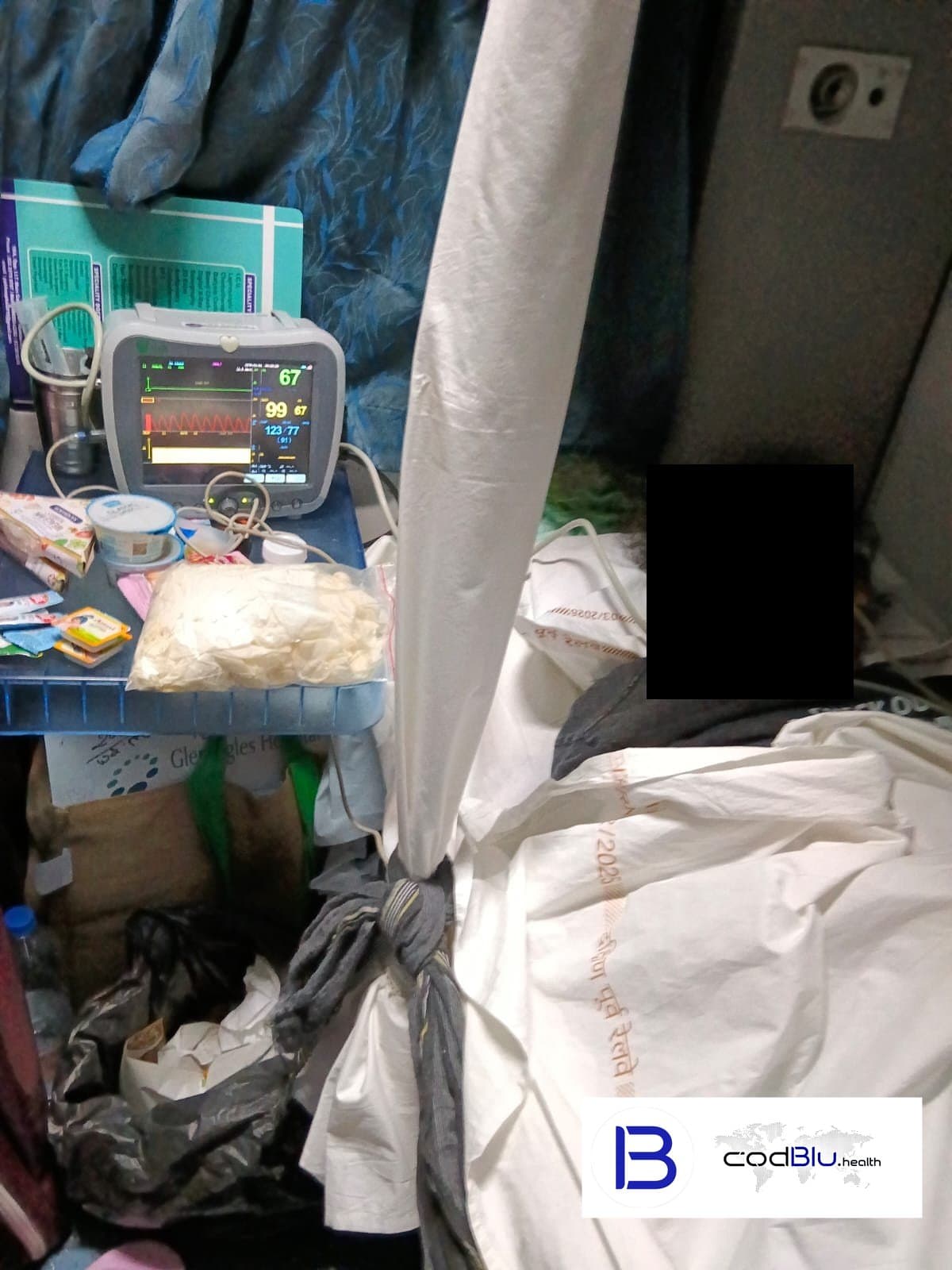
CodBlu Healthcare successfully transferred a 28-year-old woman with stroke from Mumbai to Kolkata by Duronto. The rail ambulance arrangement included a semi-ICU setup and a medical monitoring system to support observation during the journey.
The patient was a 28-year-old woman who needed to travel from Mumbai to Kolkata following a stroke. Her transfer was completed by rail, using a Duronto service with a semi-ICU medical arrangement.
Stroke is often associated with older adults, but younger patients can also experience it. Age alone does not establish how much assistance someone needs after a neurological event. The effects of the stroke, current condition and ongoing treatment are more relevant to transport planning.
For this patient, the confirmed arrangement included medical monitoring throughout the rail journey. The transfer was successfully completed to Kolkata.
Matching the Semi-ICU Setup to the Patient
A semi-ICU setup provides an arranged level of medical support during transport. It should reflect the patient’s assessed requirements rather than function as a standard equipment list applied to every diagnosis.
In a stroke patient transfer, assessment commonly considers consciousness, breathing, swallowing, mobility, prescribed medicines and any recent neurological changes. These findings help determine whether the patient’s needs can be supported over the anticipated journey.
The term “semi-ICU” does not establish that a patient needs oxygen, ventilation or continuous infusions. Those treatments depend on individual requirements. For this case, the confirmed details are the semi-ICU arrangement and medical monitoring system.
CodBlu’s published rail ambulance service information distinguishes between semi-ICU and more intensive transport arrangements, with support selected according to the patient’s condition.
Add CodBlu Healthcare as a Preferred Source

Monitoring During a Long Rail Journey
Medical monitoring was a central feature of this Mumbai-to-Kolkata transfer.
For neurological patients, monitoring equipment helps the accompanying professionals follow relevant physiological parameters. Depending on the clinical plan, these may include pulse, oxygen saturation, blood pressure and cardiac rhythm.
However, monitor readings need to be interpreted alongside direct observation. Changes in responsiveness, breathing pattern, speech, movement or behaviour may require attention even when a single displayed reading appears reassuring.
A useful transport baseline records the patient’s condition before departure. This allows later observations to be compared with what was already known, helping distinguish an established neurological deficit from a new change.
These are general principles for neurological patient transport; they do not imply that deterioration occurred during this journey.
Travelling by Duronto
The patient travelled from Mumbai to Kolkata by Duronto, with medical equipment arranged for use during the journey.
A scheduled train provides a different care environment from a hospital. Space, access to the patient, equipment placement and the expected duration of travel all influence preparation.
The monitoring system needs to remain secure and accessible. Powered equipment requires an appropriate battery and charging plan, while medicines and other supplies must cover the anticipated journey and reasonable delays.
Train selection also involves practical considerations such as operating days, berth availability, boarding access and destination arrangements. A train’s name alone does not establish medical suitability; the patient’s condition and the ability to maintain care remain the deciding factors.
Care Beyond the Monitor
A stroke patient’s needs during prolonged travel may extend beyond checking vital signs.
Depending on the individual’s deficits, relevant care can include assistance with positioning, pressure-area protection, communication, toileting and prescribed medication. Feeding arrangements should follow the treating team’s instructions, particularly where swallowing safety is a concern.
These needs vary substantially between patients. A stroke diagnosis should not automatically be taken to mean paralysis, impaired swallowing or inability to communicate.
For a semi-ICU train ambulance, the practical aim is to provide the support the patient actually requires while keeping observation and access manageable throughout travel.
Movement Between Care Settings
Rail transport includes handling stages before boarding and after arrival. Moving a patient between a bed, stretcher, vehicle and railway berth requires coordinated preparation.
For someone recovering from a neurological event, these transitions should account for mobility limitations, comfort, existing medical connections and the ability to continue observation.
The destination plan also matters. Relevant clinical information should accompany the patient so that care can continue with an understanding of the stroke history, current treatment and assistance required.
A medical journey is complete when the patient reaches the agreed destination and responsibility for ongoing care is clearly communicated.
Successful Transfer to Kolkata
The 28-year-old woman was successfully transferred from Mumbai to Kolkata by Duronto with a semi-ICU setup and medical monitoring.
This case highlights the role of individually planned rail transport for a patient with ongoing neurological care needs. The appropriate level of support follows the clinical assessment, rather than assumptions based on age or diagnosis alone.
Questions About This Transfer
Which train was used?
The patient travelled from Mumbai to Kolkata by Duronto.
What medical arrangement accompanied the journey?
The confirmed arrangement was a semi-ICU setup with a medical monitoring system.
Can every stroke patient travel by rail ambulance?
No. Suitability depends on the patient’s current condition, recent changes, treatment requirements and whether a prolonged journey would delay necessary care.
Need Emergency Ambulance?
CodBlu Healthcare operates 24x7 across India — air, rail & road.
Call 24x7: +91-9310864489