

Chandigarh – Jaipur | Air Ambulance Transfer for Lumbar Spine, Sacral and Pelvic Fractures after a Manali Road Journey
Published on: October 10, 2026
The Injury and the Two-Part Journey
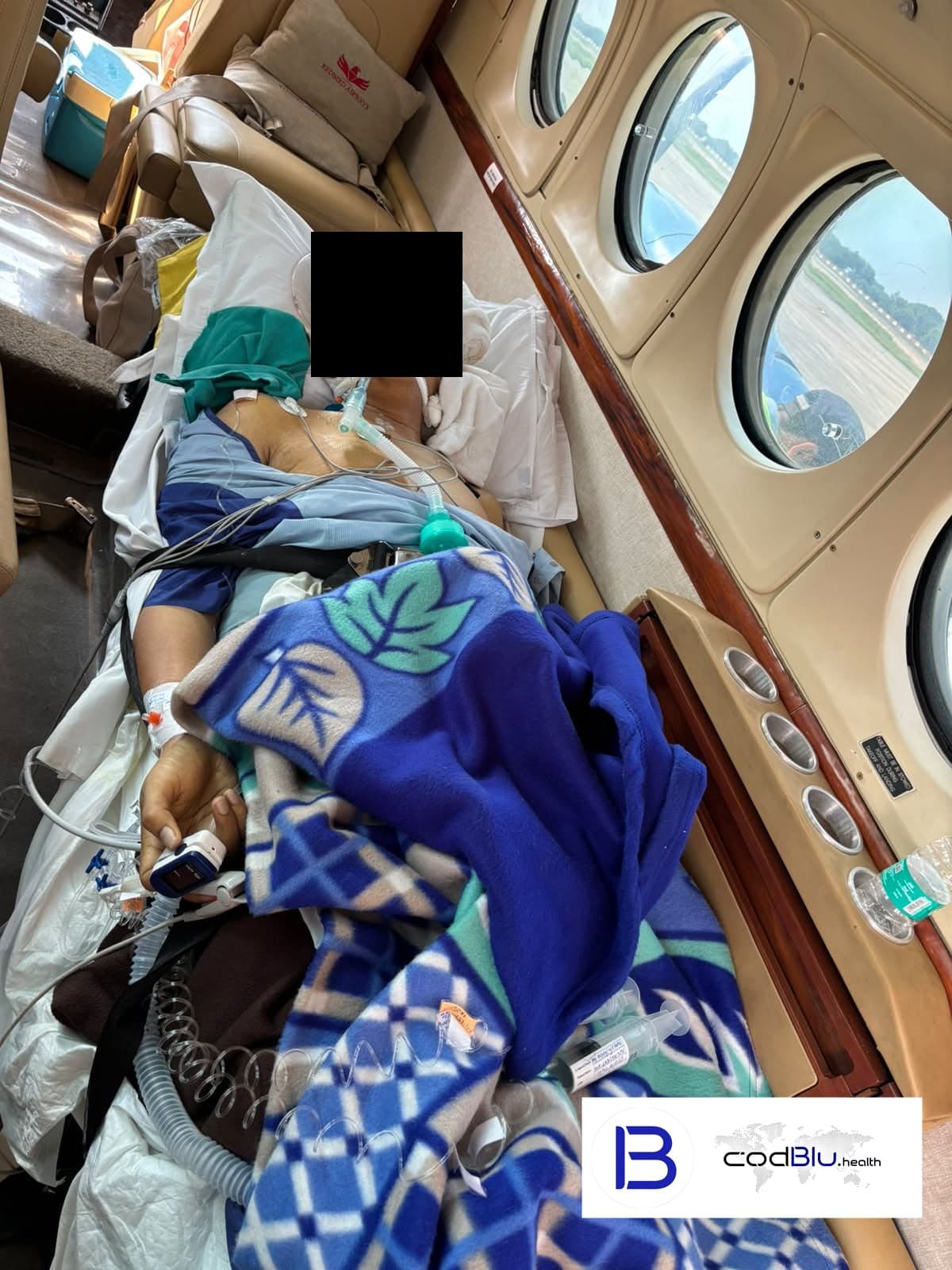
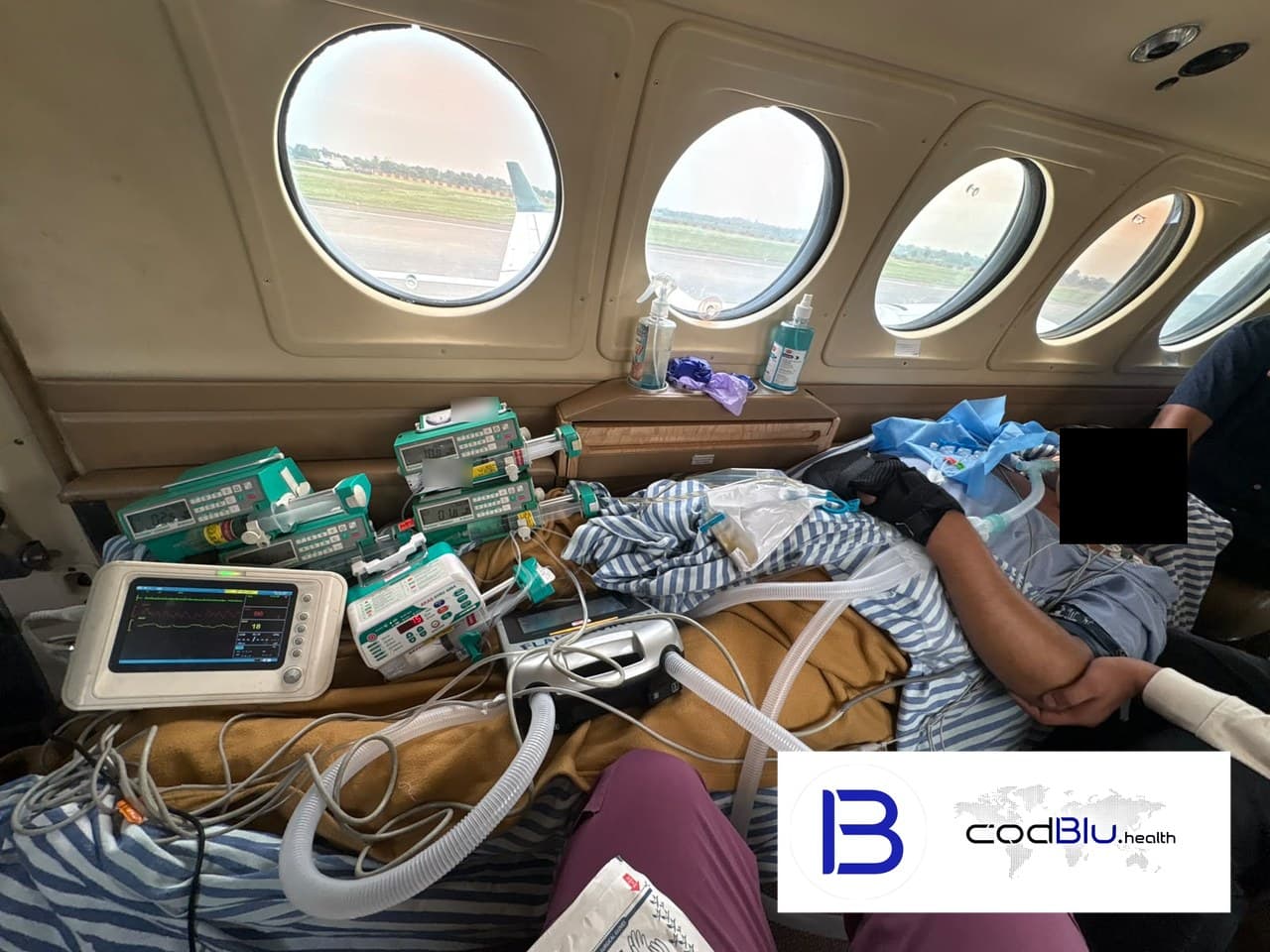
CodBlu Healthcare completed an air ambulance transfer from Chandigarh to Jaipur for a 45-year-old man with reported lumbar spine, sacral and pelvic fractures, following a road journey from Manali. He was on room air and pain medication, accompanied by one doctor and one paramedic.
The patient was participating in a bike rally in Manali when he fell from his motorcycle. The injury history supplied for this case described fractures involving lumbar levels L1–L5, the sacral region at S1 and the pelvis.
He travelled from Manali to Chandigarh by road and was subsequently airlifted from Chandigarh to Jaipur. These were two stages of the same medical relocation, with different transport environments and movement requirements.
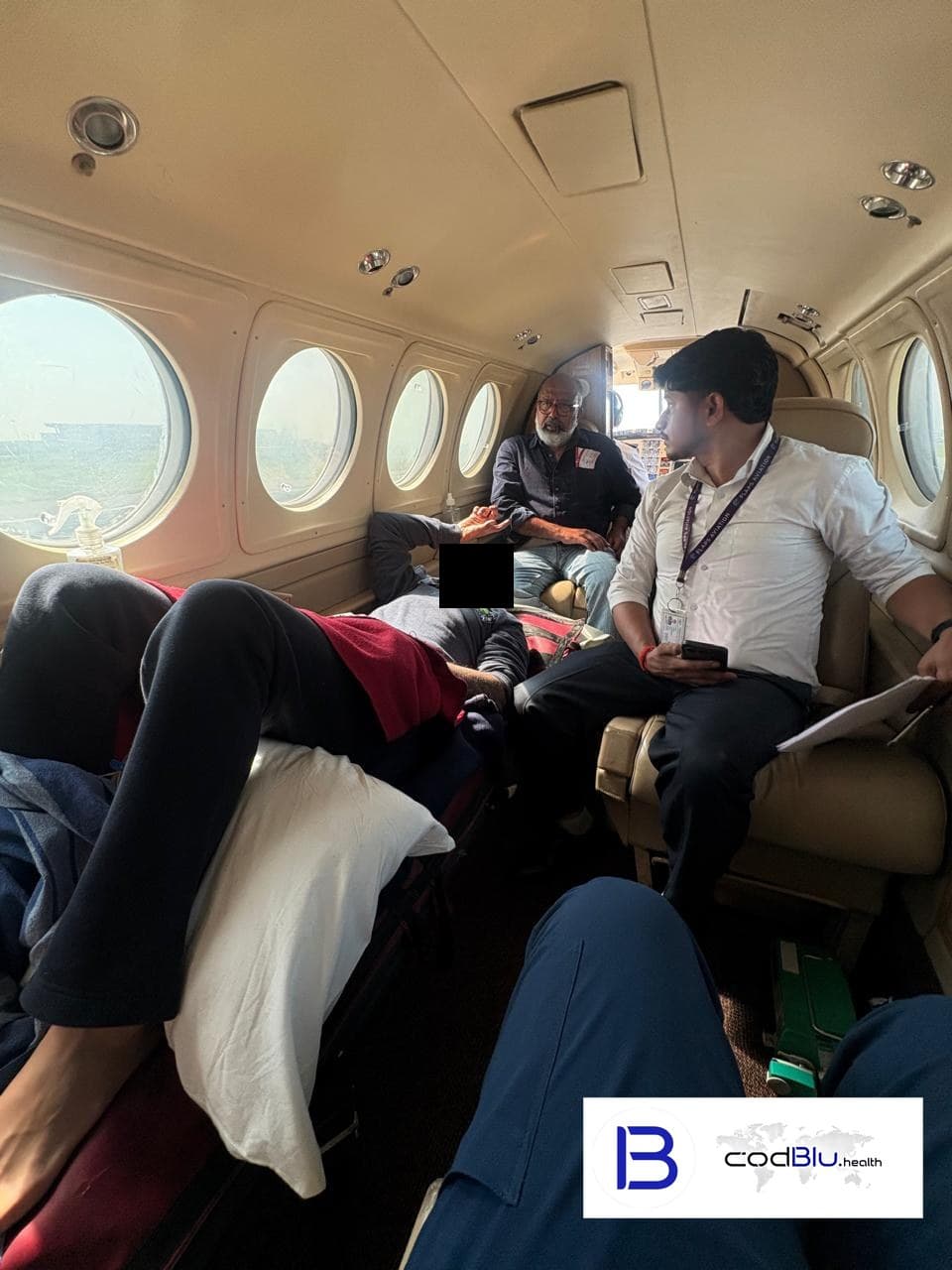
At the time described, the patient was breathing room air and receiving pain medication. One doctor and one paramedic accompanied the air transfer, which was successfully completed.
The account focuses on the reported fractures and transport needs. It does not assign a fracture classification or a spinal cord injury diagnosis without the corresponding medical findings.
Why Breathing Room Air Did Not Remove the Transport Challenge
Room air means that supplemental oxygen was not being administered at the time reported. Continuous ventilator support was also not part of the supplied case details.
However, respiratory support is only one element of a transport assessment. A patient with extensive skeletal injuries may still require medically supervised movement because of pain, positioning limitations and the need to avoid unnecessary movement around injured structures.
For a spinal injury patient transfer, the transport team needs to understand the imaging findings, spinal precautions prescribed by the treating clinicians and any neurological symptoms. Pelvic injuries also require assessment of fracture stability and possible associated bleeding.
The general risks guide preparation; they are not additional complications claimed for this patient. A room-air patient should not automatically be described as suitable for ordinary passenger travel solely because oxygen is unnecessary.
Add CodBlu Healthcare as a Preferred Source

From Manali by Road to the Chandigarh Airlift
The initial road stage began in Manali. For a patient with spinal and pelvic fractures, the movement involved in entering a vehicle, travelling and changing stretchers can be clinically important.
General planning priorities include an appropriate transfer surface, the treating team’s positioning instructions and coordinated handling. The equipment and technique should reflect the actual injury assessment rather than a standard approach applied to every fracture.
NICE guidance on traumatic spinal injuries emphasises careful assessment, appropriate spinal movement restriction and transport decisions based on the suspected injury. [1]
Chandigarh was the airlift point in this mission. The subsequent medical flight to Jaipur formed the second stage of the journey. The flight duration, aircraft model and detailed reason for selecting air transport were not provided, so no comparison of travel times or claimed urgency is added.
Pain Management and Observation During Movement
Pain medication was part of the patient’s treatment. Maintaining comfort matters during a fracture transfer, particularly when loading, unloading and changing position may aggravate pain.
The choice, dose and timing of analgesia depend on clinical assessment. Medication review should include the response to treatment and any potential effects on breathing, consciousness or blood pressure.
Relevant monitoring priorities for an air medical transport case of this nature include respiratory rate, oxygen saturation, pulse, blood pressure, pain and responsiveness. Neurological observations may include limb movement, sensation or newly reported symptoms, according to the injury and the patient’s ability to participate.
These are general clinical priorities rather than a record of specific measurements during this flight. Supplemental oxygen should be available where indicated by the assessed transport plan, with administration guided by clinical need.
Medical Accompaniment and Care at Each Transition
One doctor and one paramedic accompanied the patient during the air transfer.
For a medical air ambulance carrying a trauma patient, team preparation includes understanding the injuries, reviewing the ongoing medicines and identifying foreseeable problems during movement. Access to the patient must remain practical even when space is limited.
The journey also involves transitions between vehicles, stretchers and the aircraft. Coordinated handling and clear communication about positioning instructions are important throughout those stages.
CodBlu’s charter air ambulance information explains broader arrangements for dedicated medical flights and case-specific support. The configuration and treatment plan for an individual mission depend on the patient’s needs.
Regional Hospitals and the Confirmed Destination
Chandigarh and Jaipur have established tertiary healthcare institutions. PGIMER in Chandigarh has an Advanced Trauma Centre, while Sawai Man Singh Hospital is a major hospital in Jaipur. These institutions provide regional context; neither is identified here as having treated this patient. [2]
The confirmed destination city was Jaipur. The transfer was successfully completed, with onward management to be guided by the receiving clinical team.
Questions About This Trauma Transfer
What was the confirmed route?
The patient travelled from Manali to Chandigarh by road, followed by an airlift from Chandigarh to Jaipur.
Did he need oxygen or ventilation?
He was reported to be on room air. Continuous ventilation was not reported.
What injuries and accompaniment were described?
The supplied history reported lumbar spine, sacral and pelvic fractures. One doctor and one paramedic accompanied the air transfer, with pain medication forming part of the ongoing care.
References
[1] NICE NG41. Spinal injury: assessment and initial management.
Need Emergency Ambulance?
CodBlu Healthcare operates 24x7 across India — air, rail & road.
Call 24x7: +91-9310864489