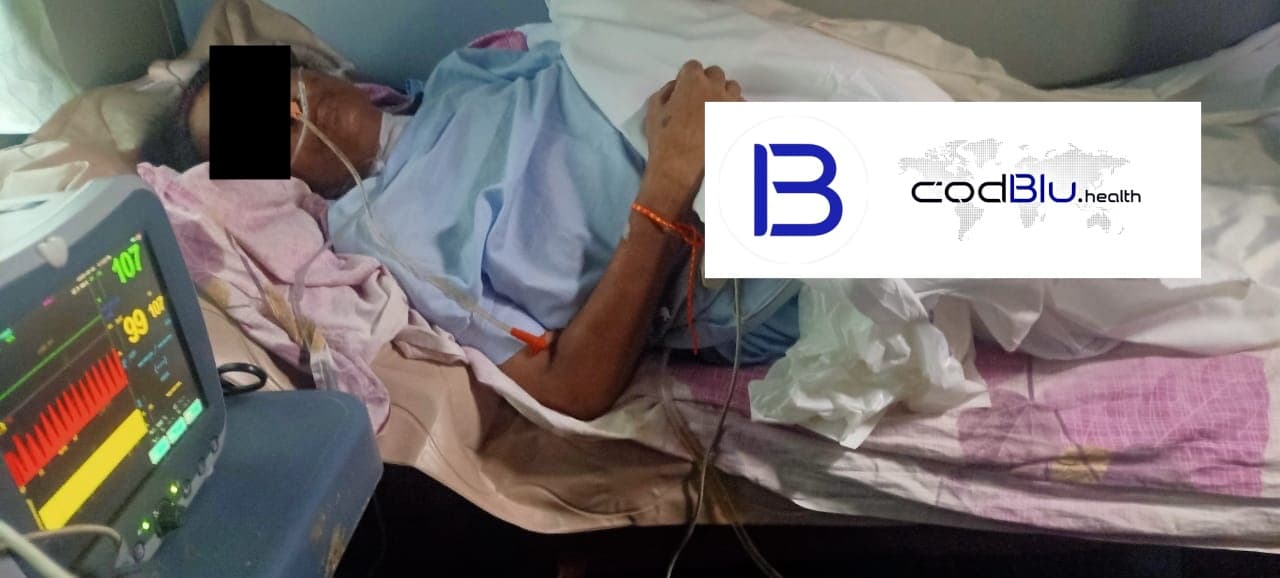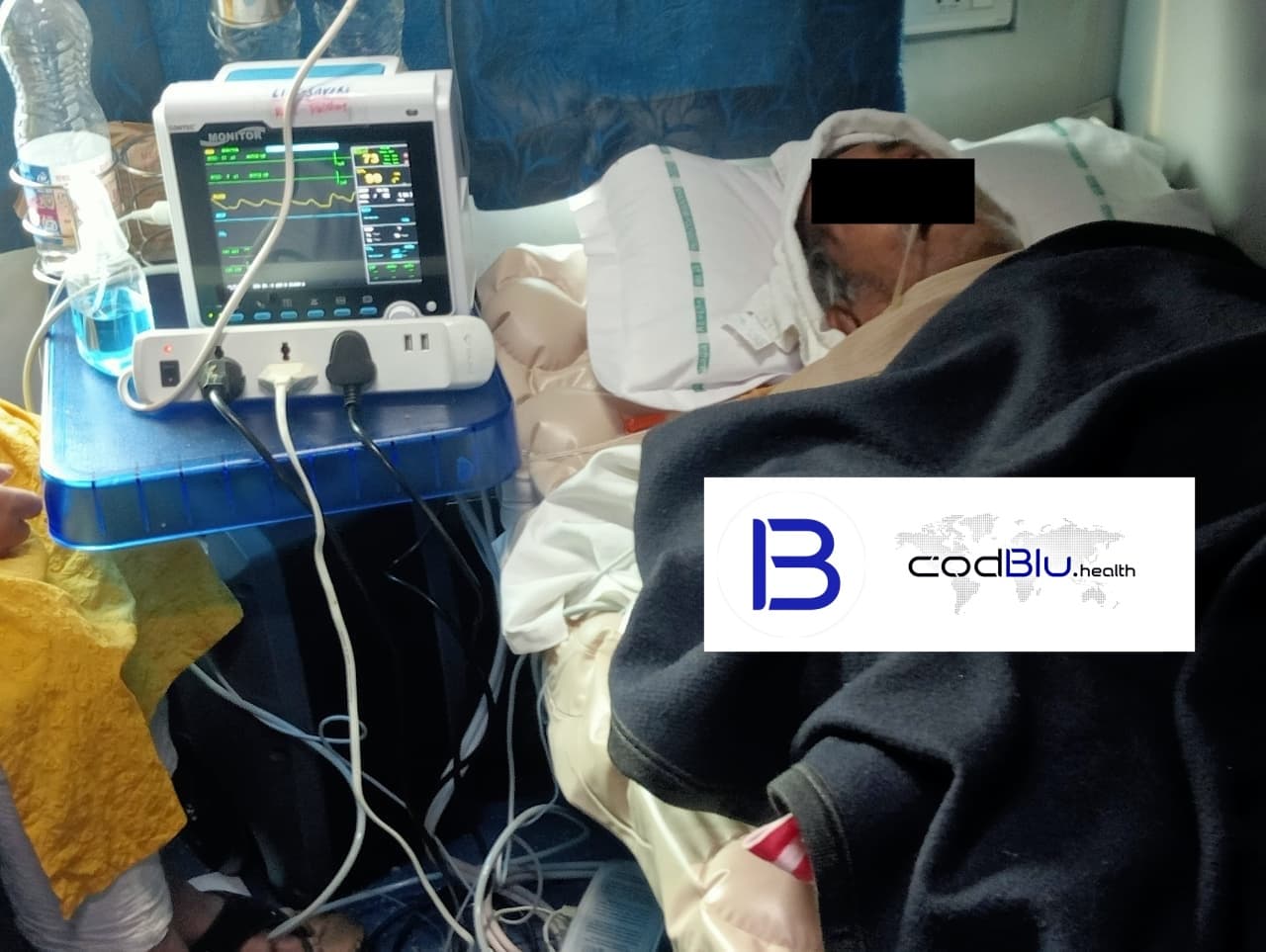


Shija Hospitals, Imphal – Max Hospital, Saket, Delhi | Air Ambulance Transfer with Continuous BiPAP and Noradrenaline Support
Published on: October 2, 2026
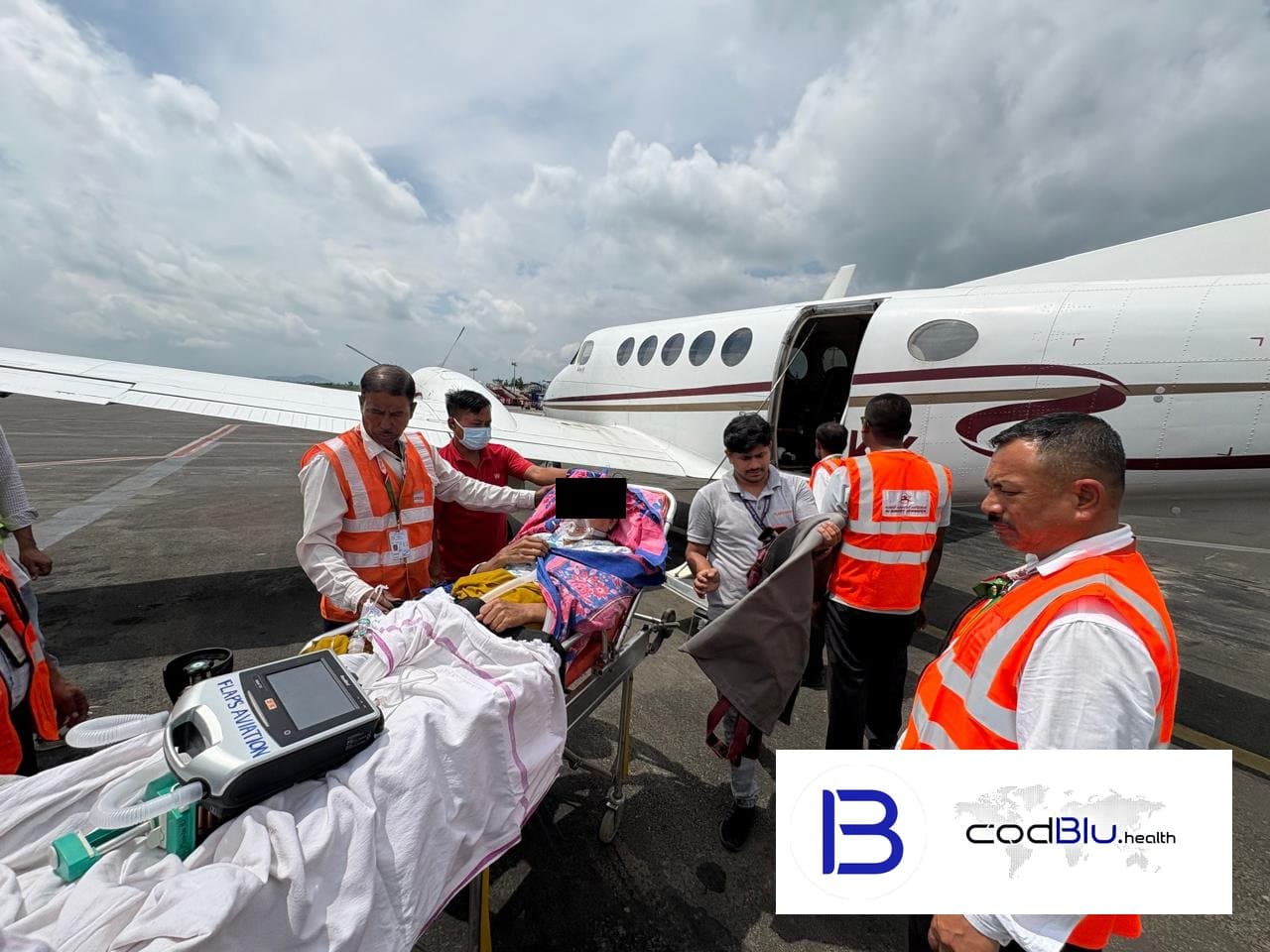
Pneumonia and Pleural Effusion with Ongoing Support Requirements
CodBlu Healthcare completed an air ambulance transfer from Imphal to Delhi for a patient with pneumonia and pleural effusion, requiring continuous BiPAP and noradrenaline infusion support.
The patient was admitted at Shija Hospitals in Imphal and was a known case of CLE. Alongside this underlying diagnosis, the patient had pneumonia and pleural effusion and required continuous respiratory assistance.
BiPAP, or bilevel positive airway pressure, provides non-invasive ventilatory support through a mask. Its use should be distinguished from invasive mechanical ventilation through an endotracheal tube. In this case, the respiratory support described was continuous BiPAP; invasive ventilation was not reported.
The patient was also receiving a noradrenaline infusion for blood-pressure support. Together, these treatment requirements made the journey a critical care transport task requiring medical supervision rather than routine passenger travel.
CodBlu Healthcare arranged the transfer to Max Hospital, Saket, Delhi, with one ICU doctor and one paramedic accompanying the patient.
Selecting Transport Around Respiratory and Circulatory Needs
The central consideration in this Imphal-to-Delhi medical relocation was the patient’s dependence on ongoing treatment. Transport planning needed to account for both breathing support and the continuous infusion.
An air ambulance was used for the intercity journey. For patients requiring this level of assistance, the suitability of transport depends on their current condition, the support available during movement and the ability to respond to deterioration.
Continuous BiPAP and vasopressor use require an individual medical assessment before travel. Neither treatment, on its own, establishes whether a patient can or cannot use a scheduled commercial flight. That decision also depends on clinical stability, airline medical clearance and the arrangements available.
For this patient, the confirmed transport mode was a medically accompanied flight. The case illustrates why an air ambulance service in Delhi receiving a patient from another state must consider the clinical journey from the referring hospital through to the destination.
Add CodBlu Healthcare as a Preferred Source

Maintaining BiPAP Support During Movement
Pneumonia affects the lungs, while pleural effusion involves fluid collecting in the space around them. Depending on their extent and the patient’s underlying condition, these problems can increase breathing difficulty and complicate respiratory management.
For a patient dependent on BiPAP, important transfer considerations include mask fit, air leakage, tolerance of the interface and the effectiveness of assisted breathing. Moving between a hospital bed, stretcher and aircraft can create opportunities for equipment displacement or interruption.
Oxygen planning is also essential. The required supply depends on the prescribed oxygen concentration, the equipment being used and the complete journey, including ground movement and possible delays. The oxygen flow rate, FiO₂ and BiPAP pressure settings for this case were not supplied, so no numerical requirements are stated here.
Clinical guidance supports trained supervision and appropriate monitoring during non-invasive ventilation. These principles are relevant to air medical transport, where access to additional hospital resources is limited during flight.
Noradrenaline Support and the Accompanying Medical Team
Noradrenaline, also called norepinephrine, is used to support blood pressure in selected patients with acute hypotension. Its administration requires close blood-pressure assessment and careful control of the infusion.
During transport, general priorities include maintaining secure intravenous access, checking the infusion delivery system and avoiding unintended interruption. The infusion dose, vascular access type and any dose adjustments during this journey were not provided.
The accompanying ICU doctor and paramedic provided medical assistance throughout the transfer. Their presence was particularly relevant because respiratory and circulatory support needed to be considered together.
In a medical flight involving these therapies, clinical supervision includes assessing the patient as well as the equipment delivering treatment. Changes in breathing, consciousness or blood pressure may require prompt review.
Monitoring Priorities During the Journey
For a patient with this combination of illness and support requirements, monitoring priorities include oxygen saturation, respiratory rate, breathing effort, heart rhythm, blood pressure and level of consciousness.
These are general clinical priorities for a monitored transfer, rather than a claim that particular readings or monitoring devices were documented in this case. No numerical observations or specific in-transit interventions were supplied.
Potential risks include worsening respiratory distress, reduced effectiveness of BiPAP, mask displacement, interruption of the infusion and haemodynamic deterioration. Recognising these possibilities helps explain why qualified accompaniment matters during long-distance patient movement.
Successful Transfer to Max Saket
The patient was successfully shifted to Max Hospital, Saket, Delhi, as reported by the transporting team.
At the receiving hospital, a useful clinical handover should communicate the diagnoses, respiratory support, current infusion treatment and any changes during transit. Exact arrival observations and subsequent hospital treatment were not supplied and are therefore not described.
This case demonstrates the practical demands of transferring a patient with pneumonia and pleural effusion while continuous BiPAP and noradrenaline support remain necessary. The reported outcome was successful completion of the hospital transfer; it does not establish the patient’s later recovery or discharge outcome.
Need Emergency Ambulance?
CodBlu Healthcare operates 24x7 across India — air, rail & road.
Call 24x7: +91-9310864489