Medanta Hospital, Ranchi to Yashoda Hospitals, Hyderabad | Air Ambulance Transfer for Acute Heart Failure and Pneumonia
Published on: October 29, 2026

Continuing Treatment While Moving Between Cities
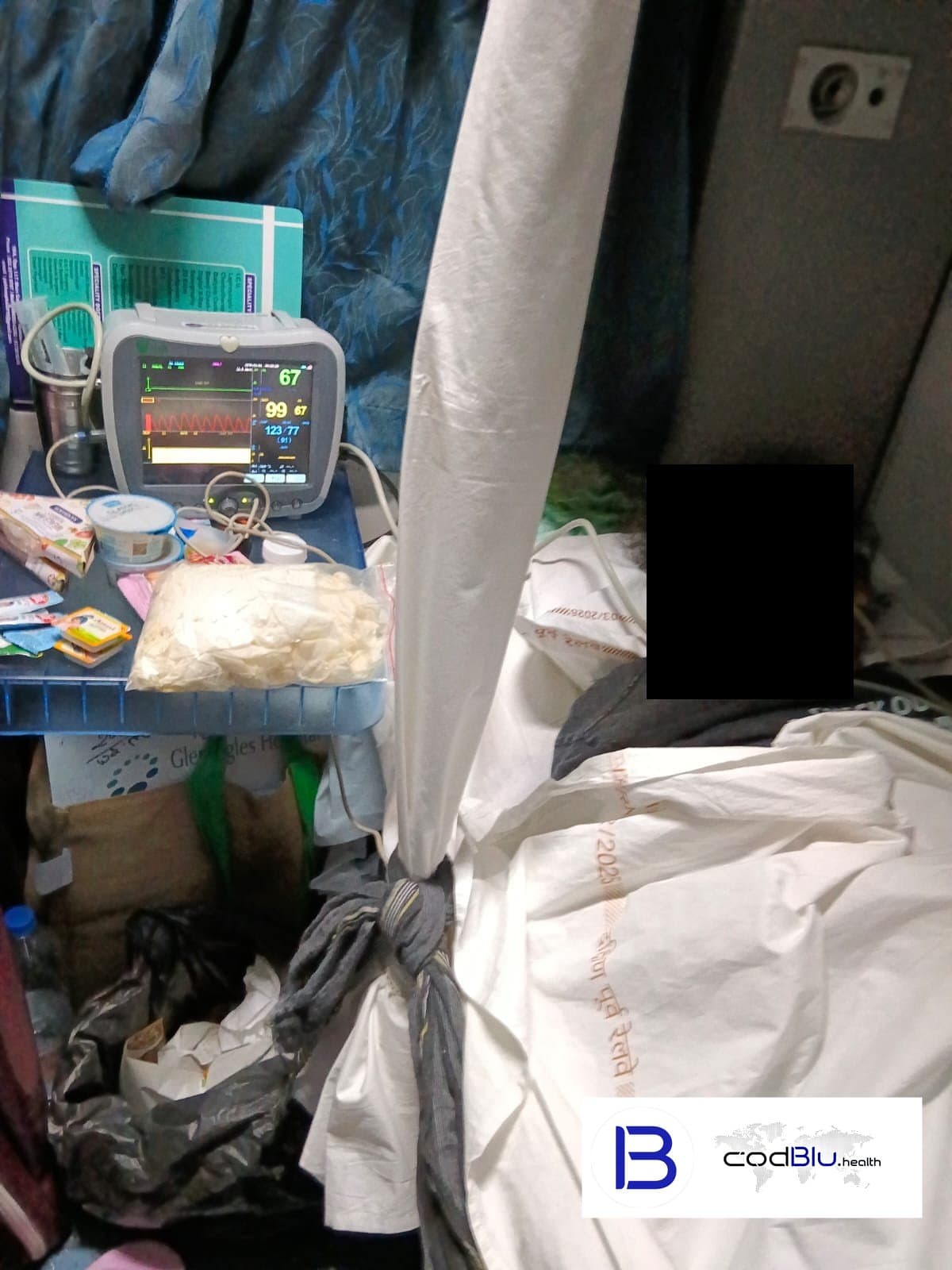
CodBlu Healthcare successfully completed an air ambulance transfer from Ranchi to Hyderabad for a 74-year-old woman with acute heart failure and pneumonia. She required oxygen at 3 litres per minute and low inotropic support while travelling for continuing care at Yashoda Hospitals.
For this patient, the transfer involved two connected clinical concerns: compromised cardiac function and a lung infection. Acute heart failure and pneumonia were present together, making both respiratory and circulatory support relevant to the journey.
She was receiving supplemental oxygen at 3 litres per minute alongside low inotropic support. These treatments remained central to understanding her transport needs, even though continuous mechanical ventilation was not part of the reported support.
The Ranchi-to-Hyderabad journey was successfully completed. The immediate objective was to bring her to the receiving hospital for further management while supporting her ongoing medical requirements during relocation.
When Heart and Lung Problems Occur Together
Acute heart failure can cause pulmonary congestion and breathlessness. Pneumonia can affect oxygen exchange through infection and inflammation within the lungs. When these conditions coexist, changes in breathing may reflect more than one underlying problem.
This makes assessment of the overall clinical picture important. Oxygen saturation, respiratory effort, heart rate, blood pressure and responsiveness need to be interpreted alongside the patient’s recent treatment and progress.
For an older patient, the ability to tolerate movement also deserves attention. Position changes, loading and unloading, discomfort and interruptions to treatment can add physiological stress.
These are general considerations for a cardiac patient transfer, rather than additional complications attributed to this woman. Her confirmed conditions were acute heart failure and pneumonia.
Add CodBlu Healthcare as a Preferred Source

Oxygen Support at 3 Litres per Minute
The patient’s reported oxygen requirement was 3 litres per minute.
An oxygen flow rate describes how oxygen is being supplied. It does not establish the patient’s oxygen saturation, the precise oxygen concentration reaching the lungs or the severity of respiratory compromise.
Those distinctions matter when assessing suitability for a medical flight. The team must consider how the patient is responding to oxygen, whether requirements have recently increased and what support would be needed if breathing worsened.
Oxygen planning should cover the complete transfer: departure from the hospital, ground movement, airport waiting, flight and onward transport. Supplies need to account for the expected duration and reasonable contingencies.
For a patient with heart failure and pneumonia, maintaining access to oxygen during equipment changes is an important part of continuity of care.
Low Inotropic Support Requires Reliable Delivery
The patient was also receiving low inotropic support. Although the requirement was described as low, it still represented an ongoing need for circulatory treatment.
The medicine, dose and clinical response determine the monitoring required. A low requirement alone should not be interpreted as proof that a patient is stable or that treatment can be interrupted during movement.
Where support is administered through a continuous infusion, relevant safeguards include secure vascular access, correctly programmed pumps, sufficient medication and dependable battery power.
NICE guidance treats inotropic and vasopressor therapy in acute heart failure as selective treatment requiring an appropriately monitored care setting. These medicines are not routinely indicated for every patient with heart failure. [1]
During an air ambulance transfer involving circulatory support, blood pressure, cardiac rhythm and clinical signs of perfusion remain relevant alongside respiratory observations.
Planning Across the Ranchi-to-Hyderabad Journey
A Ranchi to Hyderabad air ambulance transfer includes several transitions between care environments. The flight is one stage within the wider hospital-to-hospital journey.
For a patient receiving oxygen and inotropic support, preparation should address how treatment will continue when moving between the hospital bed, ground vehicle, stretcher and aircraft.
Positioning also needs to reflect comfort and breathing tolerance. A patient with heart failure may find some positions more difficult than others, so handling should follow the treating team’s instructions and current assessment.
The receiving destination in this case was Yashoda Hospitals, Hyderabad. Coordination with the receiving team helps connect transport care with the next stage of hospital management.
CodBlu’s information on air ambulance services in Ranchi explains departure-side considerations. Its Hyderabad air ambulance page provides further information about medically supported transfers to and from the destination city.
Successful Transfer for Continuing Care
The 74-year-old woman was successfully transferred to Yashoda Hospitals in Hyderabad.
For a case involving acute heart failure and pneumonia, handover should communicate the recent clinical course, oxygen requirement, circulatory support, medicines and relevant investigations. This allows the receiving clinicians to assess the patient with a clear understanding of the treatment already underway.
The confirmed outcome is successful completion of the transfer. Recovery from heart failure and pneumonia depends on subsequent assessment and treatment.
Questions About This Case
What medical support did the patient require?
She required supplemental oxygen at 3 litres per minute and low inotropic support in the setting of acute heart failure with pneumonia.
Can a patient with heart failure and pneumonia travel by air ambulance?
Selected patients can undergo medically supported air transfer following individual assessment. Suitability depends on respiratory and circulatory status, treatment trends and whether care can be maintained throughout the journey.
Does a low oxygen requirement mean minimal transport risk?
No. Oxygen flow is only one part of assessment. Ongoing circulatory support, breathing effort, recent deterioration and the underlying conditions also influence transport planning.
Clinical References
[1] National Institute for Health and Care Excellence (NICE). Acute heart failure: diagnosis and management (CG187).
Need Emergency Ambulance?
CodBlu Healthcare operates 24x7 across India — air, rail & road.
Call 24x7: +91-9310864489