


Air Ambulance Services in Bangalore
CodBlu Healthcare provides 24/7 medical coordination for Bangalore, officially Bengaluru. Call +91 93108 64489 to discuss a patient transfer. Kempegowda International Airport (BLR), near Devanahalli, serves scheduled medical travel and charter planning. The airport’s northern location makes road access from southern and eastern hospitals a key consideration. Options include an ICU-equipped charter, an approved airline stretcher or a seated medical escort; rail may suit selected patients who can tolerate longer travel. Clinical readiness, receiving care and operational availability must be confirmed before movement.
Start With What the Transfer Will Achieve
The first question is whether your relative needs treatment elsewhere and can tolerate the journey. A flight booking comes after that discussion.
Bengaluru already has substantial specialist care. Sometimes the appropriate next step is admission to another hospital within the city. In other cases, the treating consultant may recommend transfer to a specific team elsewhere, or a recovering patient may need help returning home.
The transport doctor reviews the current illness, breathing support, circulation, medicines and recent changes in condition. This review also considers how the patient may respond to movement and the aircraft cabin environment. Some patients need further stabilisation before travelling.
For a hospital transfer, establish which consultant will accept the patient and which bed or unit is ready. The family should understand the expected benefit of moving and the risks discussed by the treating and transport teams.
Bengaluru Hospital Transfers: Identify the Unit and Campus
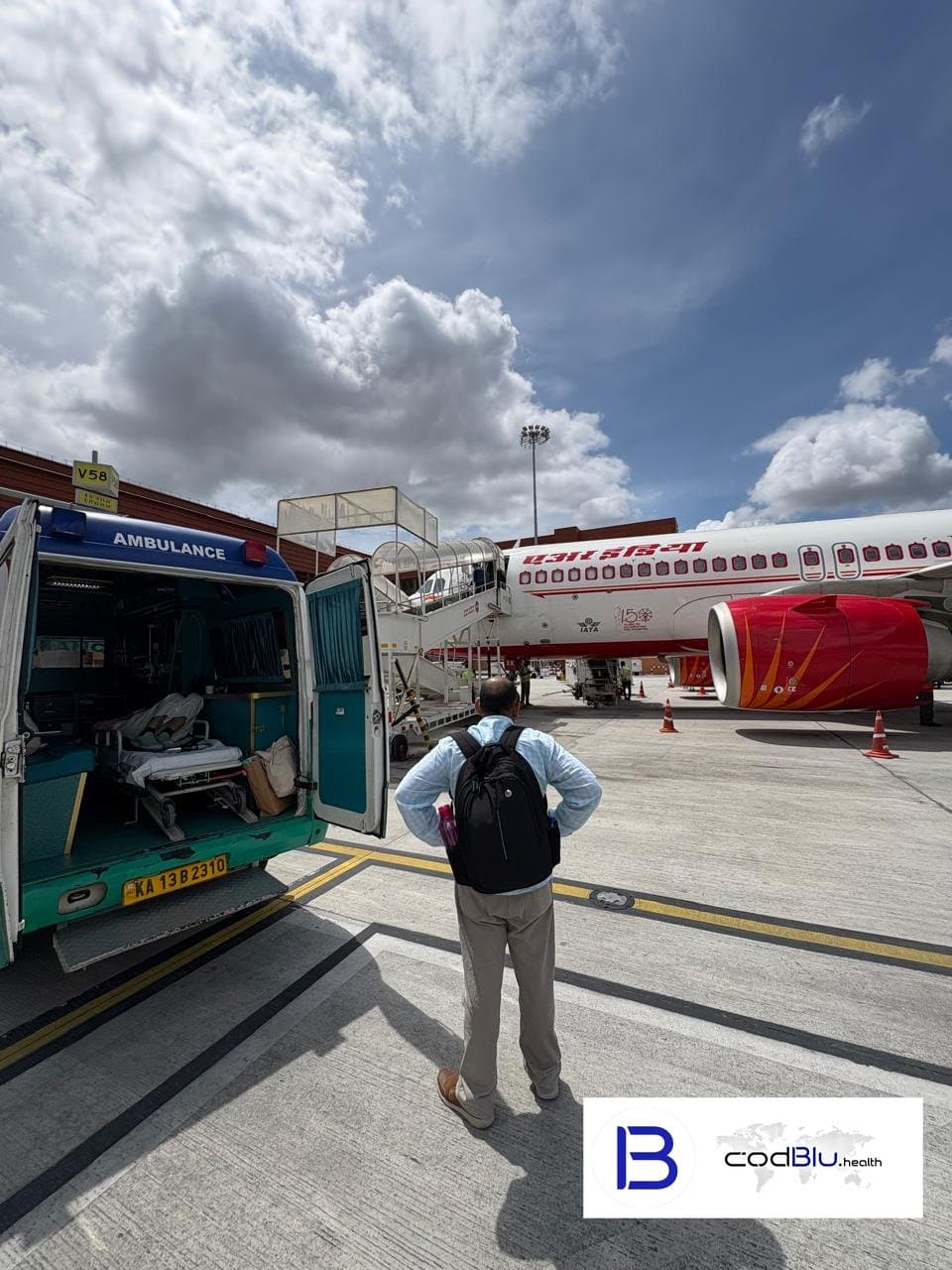
For patients arriving for treatment, the destination is a particular hospital unit. For patients leaving, the pickup is a particular ward or ICU. Giving only the hospital group’s name can lead to the wrong transport plan.
Neuroscience and Cardiac Referral Locations
NIMHANS, on Hosur Road, provides specialised neuroscience services. A patient referred for neurological or neurosurgical care needs acceptance by the relevant team; naming the institution does not confirm an admission.
Sri Jayadeva Institute of Cardiovascular Sciences and Research, on Bannerghatta Road, is a cardiac referral institution. Confirm the intended campus when discussing transfer, because the organisation has more than one location.
At Narayana Health City in Bommasandra, the Narayana Institute of Cardiac Sciences and Mazumdar Shaw Medical Center are separate named facilities. This southern location requires a different airport approach from a hospital in Hebbal.
Multispeciality Hospitals Across the City
Manipal Hospital Old Airport Road, Manipal Hospital Hebbal and Manipal Hospital Whitefield are distinct campuses. The Old Airport Road hospital’s name should not be confused with the location of the current international airport.
Apollo Hospitals, Bannerghatta Road, and Fortis Hospital, Bannerghatta Road, are relevant multispeciality locations in the southern city. The ambulance team needs the exact entrance, ward and bedside contact rather than a general map pin.
For children, Rainbow Children’s Hospital, Marathahalli, has neonatal and paediatric intensive care services. Admission suitability and the receiving team’s readiness still need individual confirmation.
These locations help explain Bengaluru’s transfer geography. The receiving hospital is selected according to the patient’s treatment needs and confirmed acceptance.
Listed for planning only; no affiliation implied.
Add CodBlu Healthcare as a Preferred Source

The Road to the Aircraft Can Shape the Whole Decision
Kempegowda International Airport is approximately 35–40 km north of central Bengaluru, depending on the reference point. That city-centre figure is not a distance or driving-time estimate for every hospital.
A pickup from Bommasandra or Electronic City starts south of much of the urban area. A pickup from Whitefield or Marathahalli begins in the east. Hebbal and Yelahanka sit on northern approaches. The route must be checked from the actual bedside location, with allowance for traffic, diversions and access arrangements.
Bengaluru’s elevated setting also forms part of aviation planning. The airport is roughly 915 metres above sea level; the operator assesses aircraft performance using the actual weather and load. For families, the more immediate practical concerns are road access, airport waiting and continuity of medical support.
Heavy rain can cause local waterlogging and disrupt road access. Thunderstorms or poor visibility may affect flights. A transfer plan should therefore allow for extra oxygen, battery capacity and medicines if movement takes longer than expected. This is a planning precaution, not a prediction of a delay on a particular day.
Patients Starting Outside Bengaluru
For a patient in Mysuru or Mandya, compare transfer directly to the receiving hospital with travel to BLR for an onward flight. Reaching an airport is not automatically the right first destination.
From Tumakuru, Kolar or Chikkaballapur, the pickup hospital and road approach affect whether the patient needs to enter the city at all. A patient near Hosur, across the Tamil Nadu border, may be better served by a direct road journey to an accepted Bengaluru hospital.
More distant district enquiries need a separate assessment of the first road leg and available airports. Bringing every patient through Bengaluru by default can add avoidable travel.
When Road Transfer Deserves Consideration
| Transfer situation | What to compare before choosing air |
|---|---|
| Between Bengaluru hospitals | A medically supported road transfer usually avoids unnecessary airport movement. |
| Hosur to a hospital in southern Bengaluru | Compare direct hospital access with the added journey to and from an airport. |
| Mysuru or Mandya to Bengaluru | Review the patient’s ability to tolerate the road journey and the location of the receiving unit. |
| Bengaluru to Chennai | Compare the complete road journey with airport travel, boarding, the short flight and destination transfer. |
The relevant comparison is the time and care required from one hospital to the next. A short flight alone does not establish a faster or more appropriate transfer.
Dedicated Aircraft for Intensive Care During Transport
For patients needing intensive support while leaving a Bengaluru ICU, a charter air ambulance allows the team to assess a dedicated medical configuration. It can also be considered when the urgency of an accepted transfer makes scheduled travel impractical.
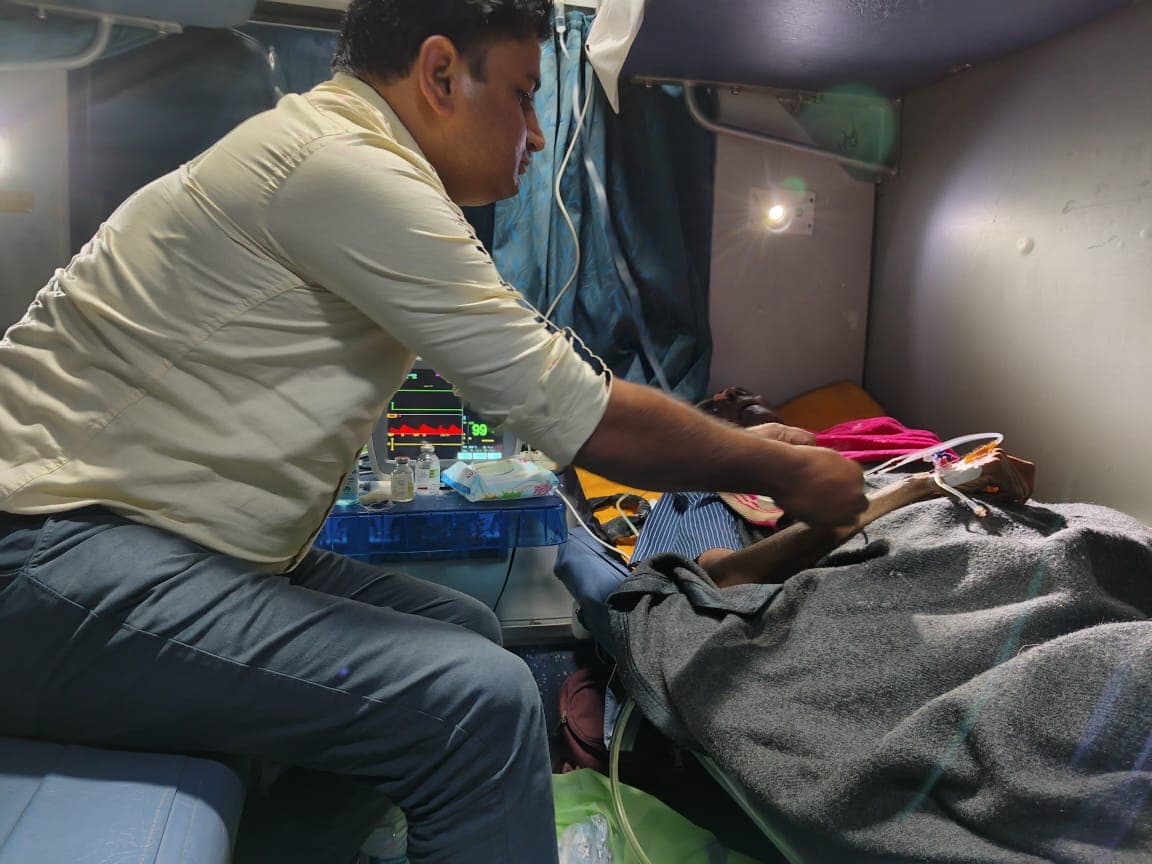
The proposed aircraft must accommodate the patient, medical crew and required equipment. Depending on the case, this can include a transport ventilator, oxygen, physiological monitoring, infusion pumps, suction and emergency equipment. Crew selection follows the clinical needs, with critical care expertise where required.
A charter can avoid a scheduled airline connection and reduce intermediate handling. However, aircraft range, fuel stops, weather and permissions may still require an intermediate landing. The proposed itinerary should be explained before confirmation.
Ventilator Patients: Prepare for the Airport Journey Too
A ventilator-dependent patient needs a plan that starts at the ICU bedside. In Bengaluru, the road leg and any airside waiting can be substantial parts of that plan.
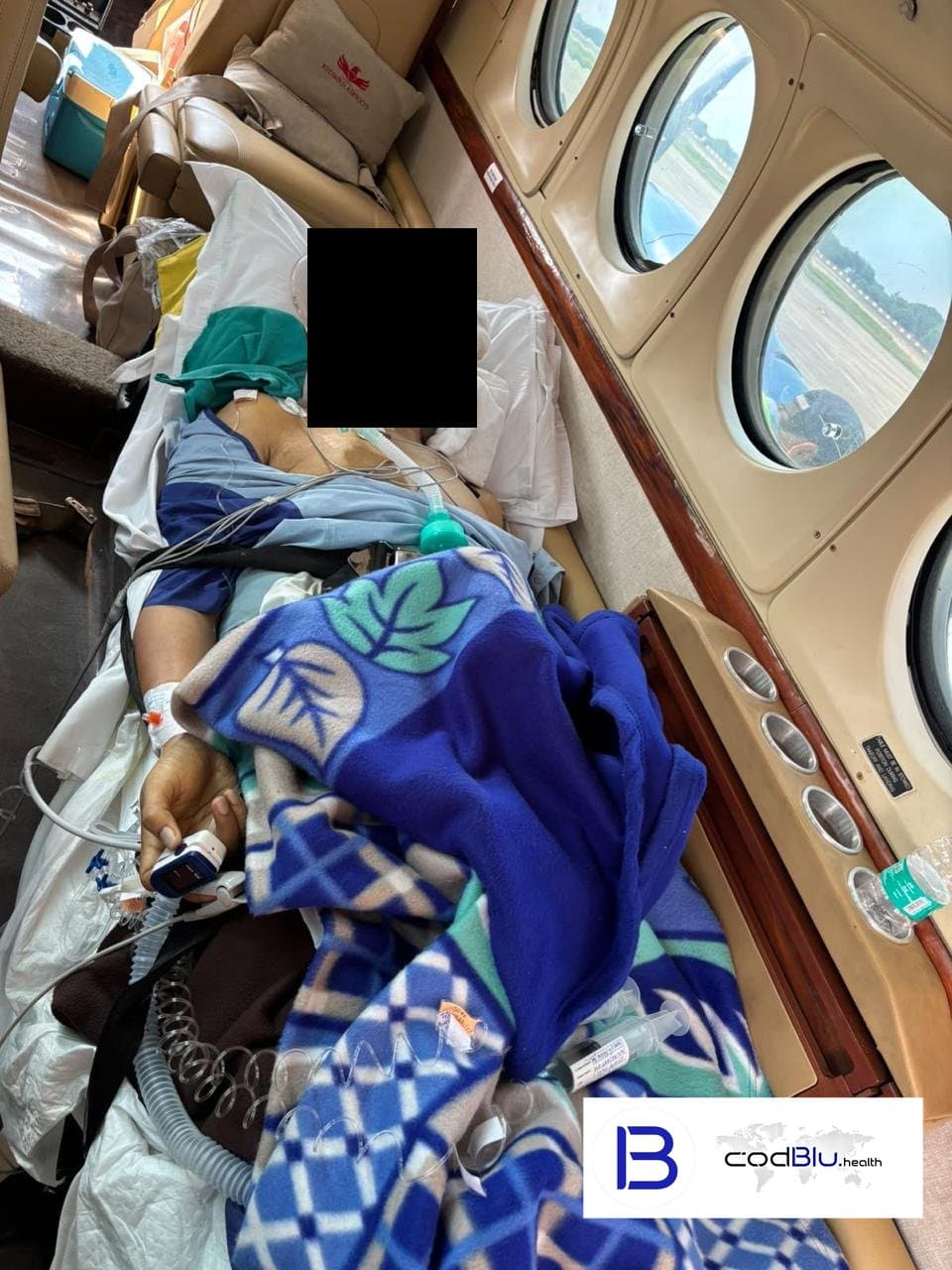
The team reviews the airway, ventilator settings, oxygen consumption, essential infusions and monitoring requirements. Equipment must have suitable power arrangements and reserves for the expected journey, including contingency time. Airway access, suction and emergency support must remain available while the patient is moved between the hospital, ambulance and aircraft.
An aircraft described as having an ICU setup is not enough on its own. Its medical configuration must be checked against this patient’s requirements.
Newborn and Children’s Transport Needs a Separate Plan
A premature newborn travelling from a district hospital needs specialist care from the first movement. The initial ambulance journey into Bengaluru or to BLR can be as important as the flight.
For neonatal and paediatric transport, the team assesses the child’s diagnosis, age, weight and current respiratory or circulatory support.
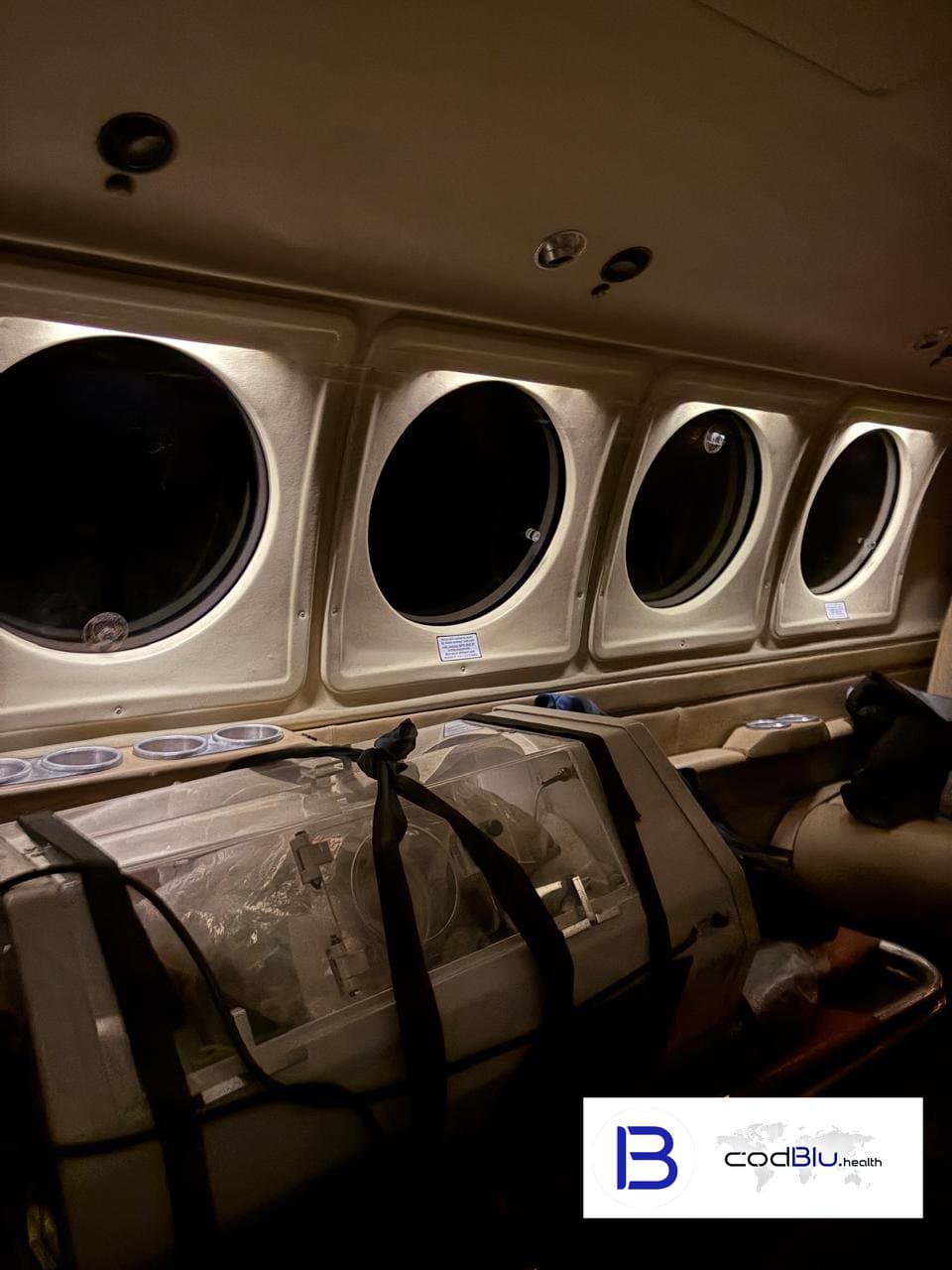
For newborns, temperature protection may require a transport incubator. Respiratory planning addresses oxygen and, where needed, neonatal ventilation or CPAP. The configuration may also include syringe pumps, cardiorespiratory monitoring, suction and medicines for neonatal emergencies.
The equipment and transport platform must be compatible, and the accompanying professional must have the expertise needed for the baby’s condition. For older children, airway equipment, monitoring and emergency supplies are selected for their size and clinical needs.
Confirm whether the destination requires a NICU, PICU or another specialist unit before arranging movement. An adult ICU bed does not replace the appropriate children’s facility.
Using Kempegowda International Airport for Medical Travel
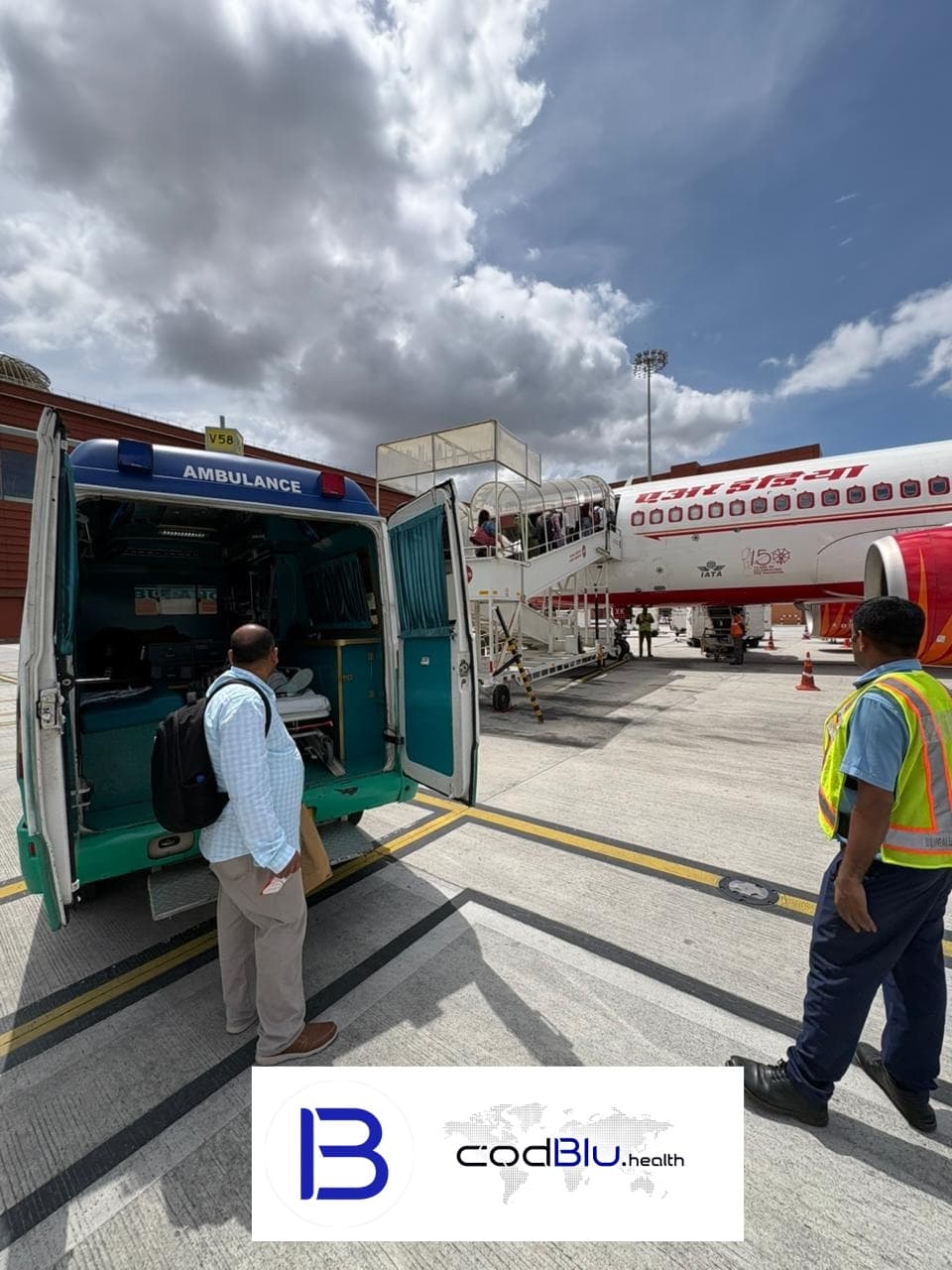
Kempegowda International Airport, Bengaluru, has the IATA code BLR. It is near Devanahalli and supports domestic and international scheduled travel, with charter movements requiring their own operational arrangements.
For a scheduled medical transfer, confirm the airline, flight, departure terminal and approved assistance. For a charter, confirm the handling arrangements, patient access, loading method and ambulance meeting point with the operator. The access process can differ from ordinary passenger check-in.
Current weather, aviation notices, airport permissions and aircraft availability must be checked for the mission. Round-the-clock coordination does not mean an aircraft can depart immediately.
Commercial Air Ambulance: Stretcher or Seated Medical Escort
A scheduled service can be assessed once the patient’s condition allows travel within its medical and operational limits. This can reduce expenditure because the flight is shared with other passengers rather than chartered for one patient. The patient must first qualify clinically and meet the airline’s acceptance requirements.
Travelling Seated With a Doctor or Nurse
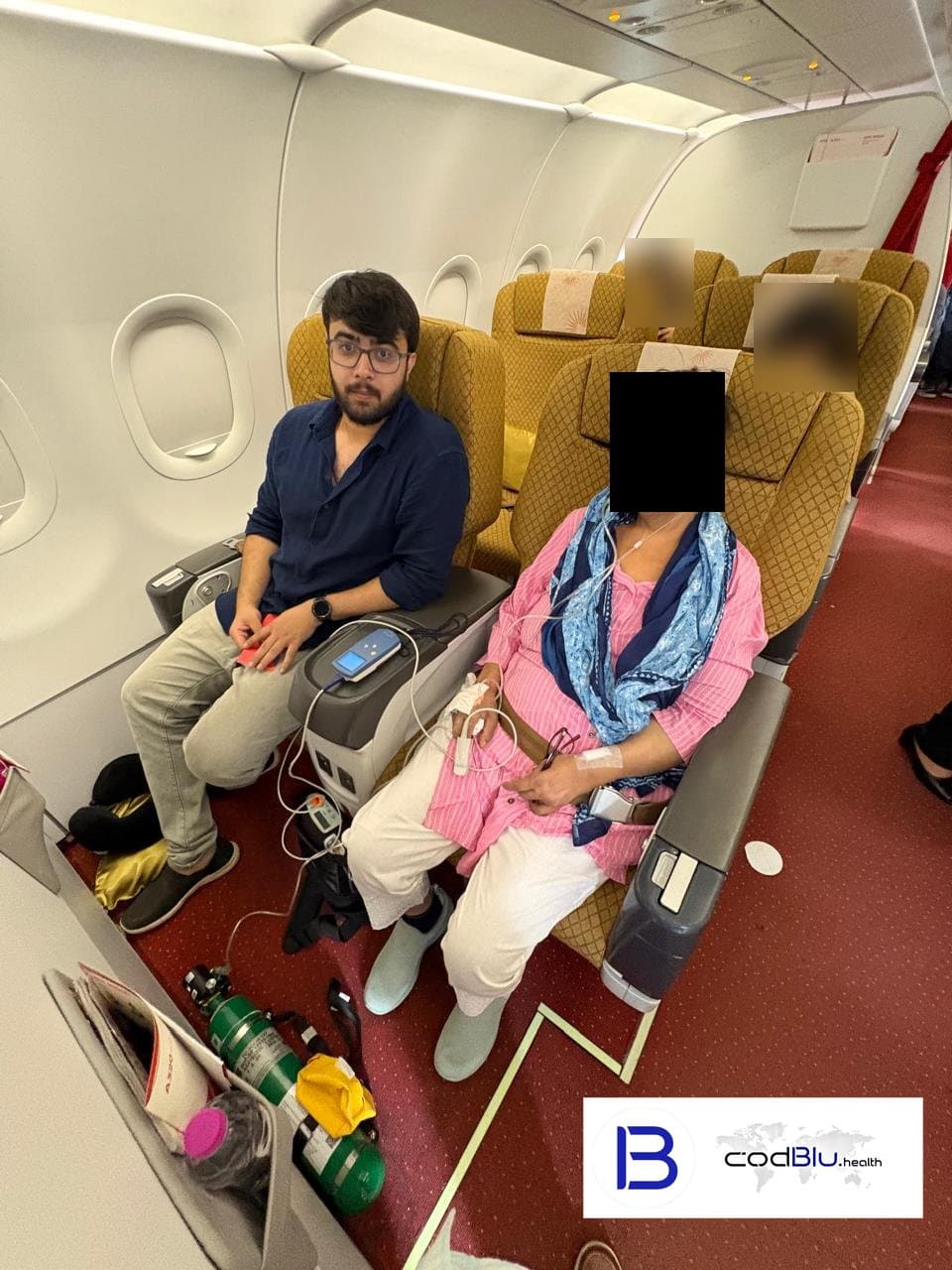
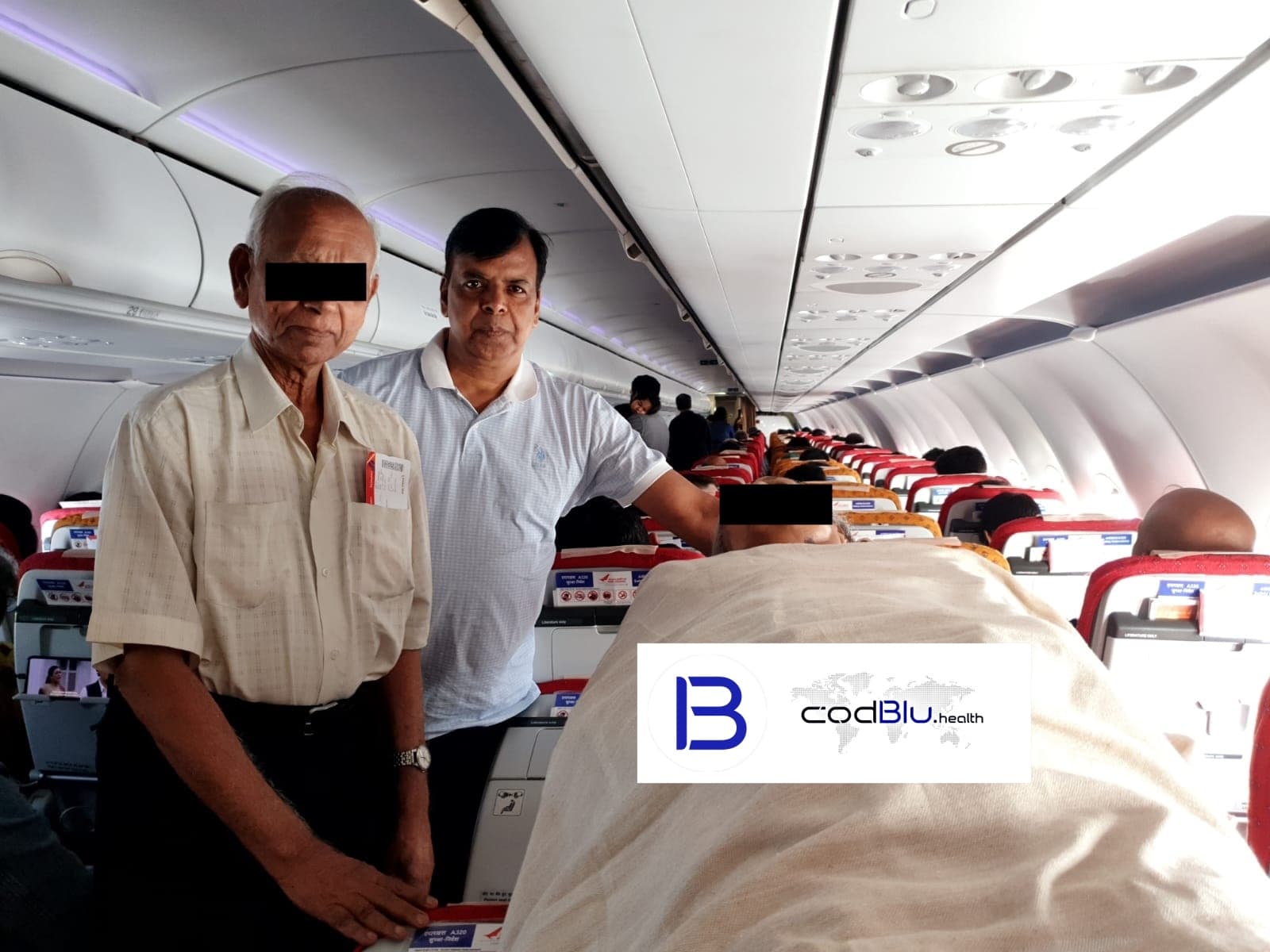
A medical escort can be considered when the patient can safely remain seated for the required stages of travel and their care can be delivered within airline rules. The escort may be a doctor or nurse, depending on the assessment.
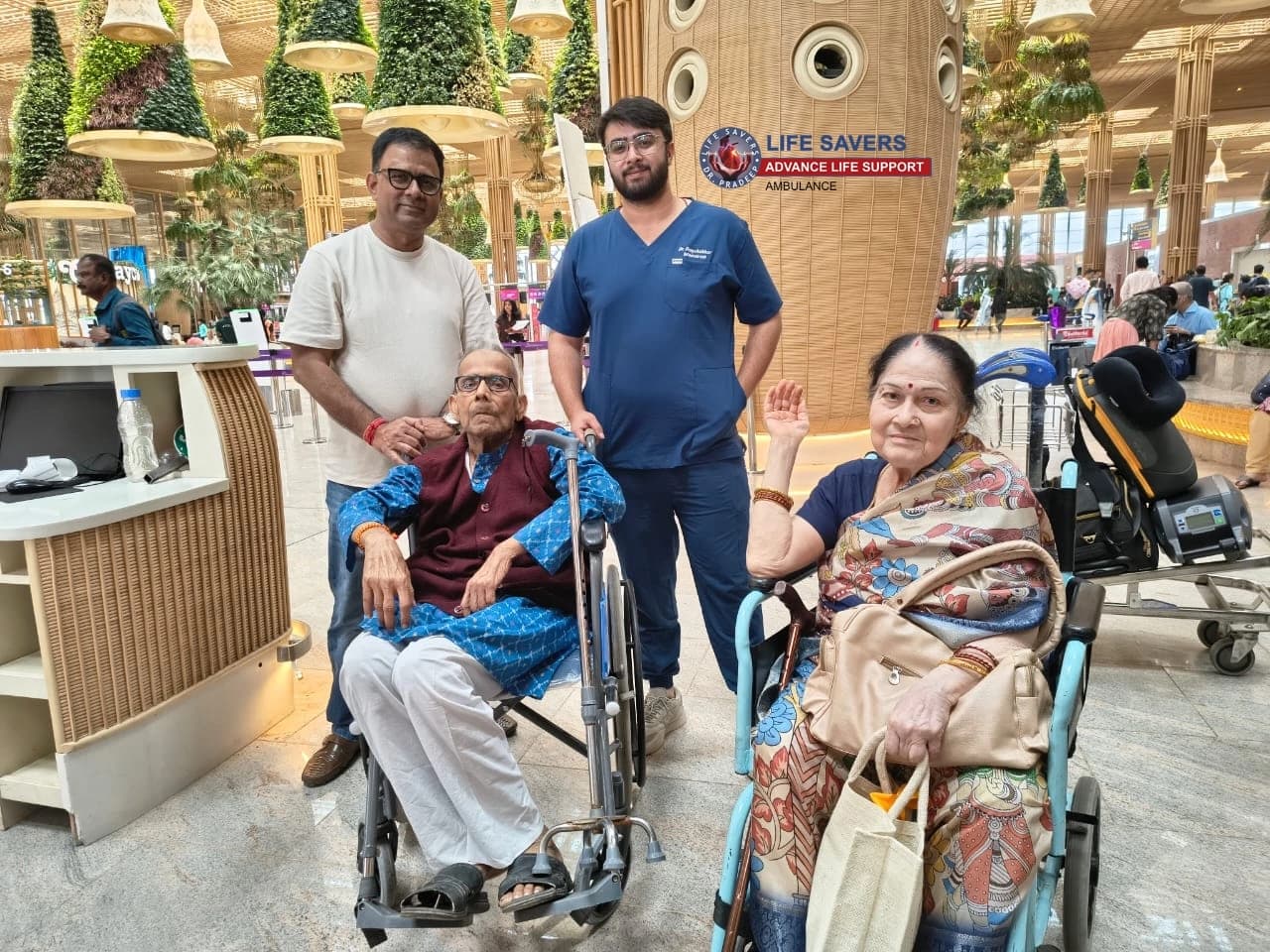
Wheelchair assistance can help with airport movement, but it does not provide nursing or critical care. The plan must also address boarding, medication, permitted equipment and assistance after arrival.
Airline Stretcher for a Patient Who Must Lie Down
An approved commercial stretcher transfer uses a scheduled aircraft with a stretcher arrangement accepted by the airline. It requires advance coordination, medical documentation and a suitable flight and aircraft.
The treating doctor may need to complete a MEDIF or provide other fit-to-fly information. The airline’s medical team makes its own acceptance decision. A booked seat or an available direct flight does not confirm stretcher approval.
IndiGo’s published policy currently permits stretcher requests on A320 and A321 aircraft and does not offer this service on connecting flights. It also does not permit oxygen cylinders on board. An approved portable oxygen concentrator is a separate arrangement and must meet both airline requirements and the patient’s clinical needs.
Commercial travel should not be presented as interchangeable with a dedicated ICU aircraft. Patients needing intensive respiratory support or frequent interventions require specific assessment of what the proposed flight can actually support.
What Is the Cost of an Air Ambulance From Bangalore?
The following charter estimates use Bengaluru as the departure point. The final quotation is confirmed after reviewing the patient’s needs and the proposed aircraft.
Indicative Private Charter Planning Range
| Route | Indicative charter cost |
|---|---|
| Bangalore to Chennai | ₹4–7 lakh |
| Bangalore to Hyderabad | ₹4–7 lakh |
| Bangalore to Mumbai | ₹8–10 lakh |
| Bangalore to Pune | ₹8–10 lakh |
| Bangalore to Delhi | ₹10–14 lakh |
| Bangalore to Kolkata | ₹10–14 lakh |
CodBlu estimate, October 2026.
These estimates include typical aircraft positioning. An aircraft already in Bengaluru may lower the quote; one coming from far away may raise it.
These are planning estimates, not fixed tariffs. Aircraft availability and suitability still need confirmation. Aircraft category, operating and fuel costs, medical staffing, respiratory support and journey complexity affect the final price.
Airport-related charges also differ. The quotation must account for applicable landing, handling, parking, navigation and departure-related charges at the airports used, according to the aircraft and operation. A fixed extra amount should not be assumed for every destination.
Commercial Medical Travel Budget
| Arrangement | Indicative planning cost |
|---|---|
| Selected domestic commercial stretcher arrangement | ₹3.5–5 lakh |
| Selected domestic seated medical escort with wheelchair assistance | ₹40,000–60,000 |
CodBlu estimate, October 2026.
These figures apply to selected domestic medical travel arrangements and are not universal airline tariffs. The seated figure represents a medical travel arrangement, not a charge for a wheelchair alone.
IndiGo calculates stretcher charges using the prevailing fare for the seats blocked and applicable handling charges. Airline pricing and acceptance therefore need fresh confirmation for the proposed flight.
Before payment, obtain written details of what the quotation includes: patient and attendant tickets where applicable, medical escort or crew, equipment, permitted oxygen support, ground transfers, airport charges, taxes and any waiting or cancellation terms. Aircraft positioning applies to charter operations; commercial arrangements follow the selected airline’s pricing and acceptance requirements.
Six Routes With Different Transfer Considerations
The times below are approximate non-stop scheduled-flight benchmarks from airline route information. They are not charter flight-time quotations, mobilisation times or total hospital-to-hospital transfer times. The actual flight and medical arrangement must be confirmed for the travel date.
Bangalore to Chennai Air Ambulance
A scheduled non-stop flight typically takes about 1 hour to 1 hour 10 minutes. This route may be considered for an accepted specialist referral or return journey, with commercial escort possible for suitable patients.
Compare road and air using both hospital addresses, because travel to BLR and onward movement in Chennai can outweigh the short flying time; charter remains an option when the required care and urgency justify it.
Bangalore to Hyderabad Air Ambulance
The scheduled-flight benchmark is approximately 1 hour 10 minutes to 1 hour 20 minutes. The decision depends on a confirmed treatment plan or return-care arrangement, rather than assuming all patients need another city’s hospital.
Commercial medical travel may suit selected stable patients, while charter planning must include the ambulance journey from Hyderabad airport to the receiving unit.
Bangalore to Mumbai Air Ambulance
Published airline benchmarks are around 1 hour 40 minutes to 2 hours for non-stop travel. A referral to a particular specialist team or a supported journey home can make this route relevant.
Confirm the receiving hospital’s location and ambulance plan in Mumbai; a dedicated charter can accommodate more intensive care, while suitable patients may use an approved scheduled arrangement.
Bangalore to Pune Air Ambulance
A non-stop scheduled flight is approximately 1 hour 30 minutes to 1 hour 35 minutes. This is useful context for patients returning to Pune or moving to an accepted receiving consultant.
For charter or commercial medical travel, confirm destination airport access and hospital pickup arrangements rather than treating the short flight as the whole transfer.
Bangalore to Delhi Air Ambulance
Direct scheduled services have a benchmark of roughly 2 hours 35 minutes to 3 hours. This route may support an accepted referral to a Delhi NCR specialist centre or repatriation nearer family.
The precise destination matters: a Delhi, Gurugram, Noida or Faridabad hospital creates a different final road leg, and intensive support must be planned through that leg when charter is selected.
Bangalore to Kolkata Air Ambulance
The approximate non-stop scheduled benchmark is 2 hours 30 minutes to 3 hours. This route can be relevant for an accepted referral or a patient returning to eastern India after treatment in Bengaluru.
Commercial escort depends on clinical and airline clearance; for a critical patient, a dedicated charter may provide a more suitable care environment. If the final destination is outside Kolkata, assess that additional road journey before selecting the flight.
Rail Ambulance: Choose the Train and Station Together
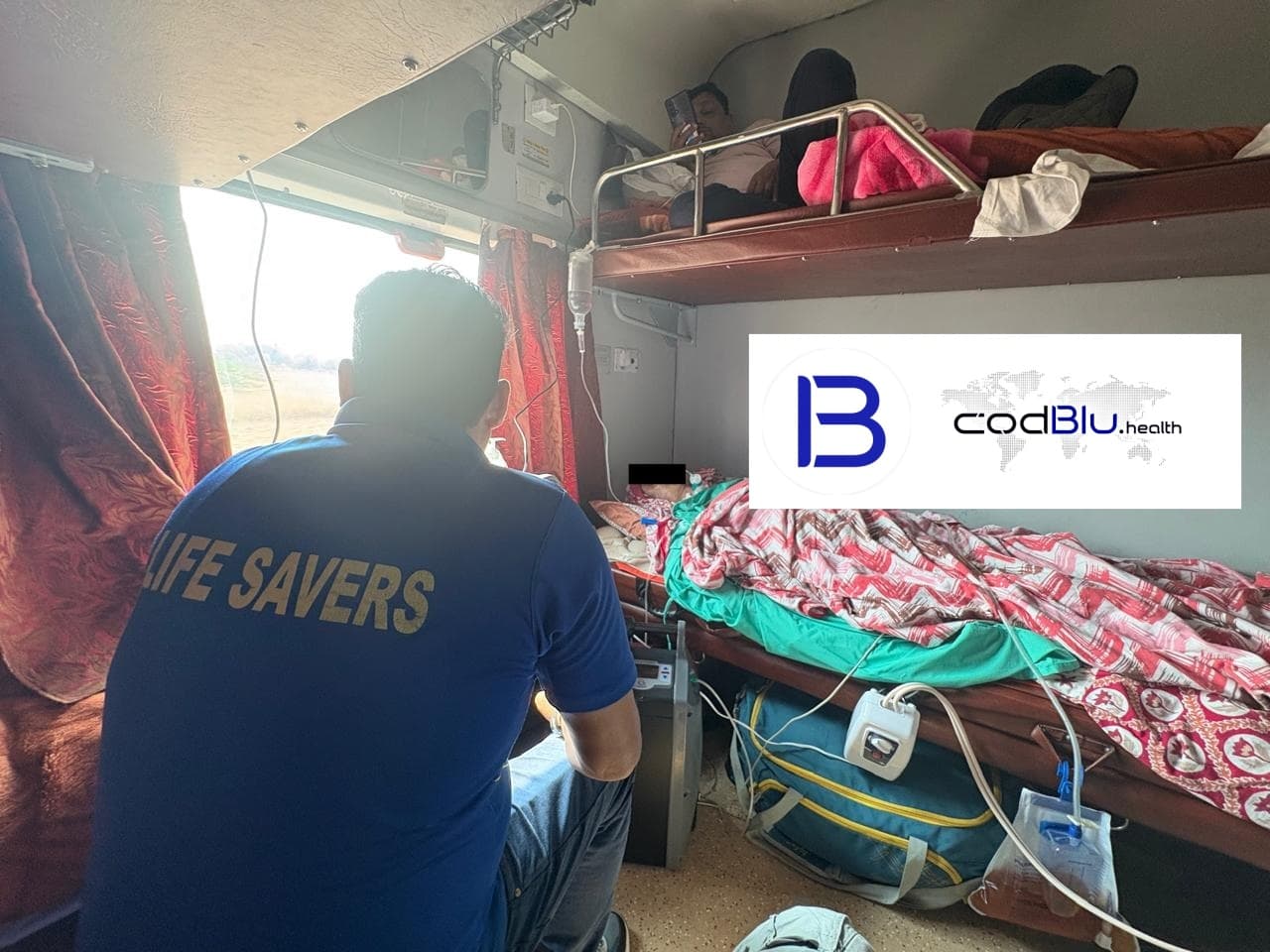
A rail ambulance arrangement may be considered for a patient who can tolerate longer travel with the proposed medical support. It usually means an authorised medical arrangement on a passenger train, not a train that can depart on demand.
Bengaluru departures can involve KSR Bengaluru City, Yesvantpur Junction or Sir M. Visvesvaraya Terminal, depending on the chosen service. Confirm the station before arranging pickup. A train from one terminal cannot be planned as though it leaves from another.
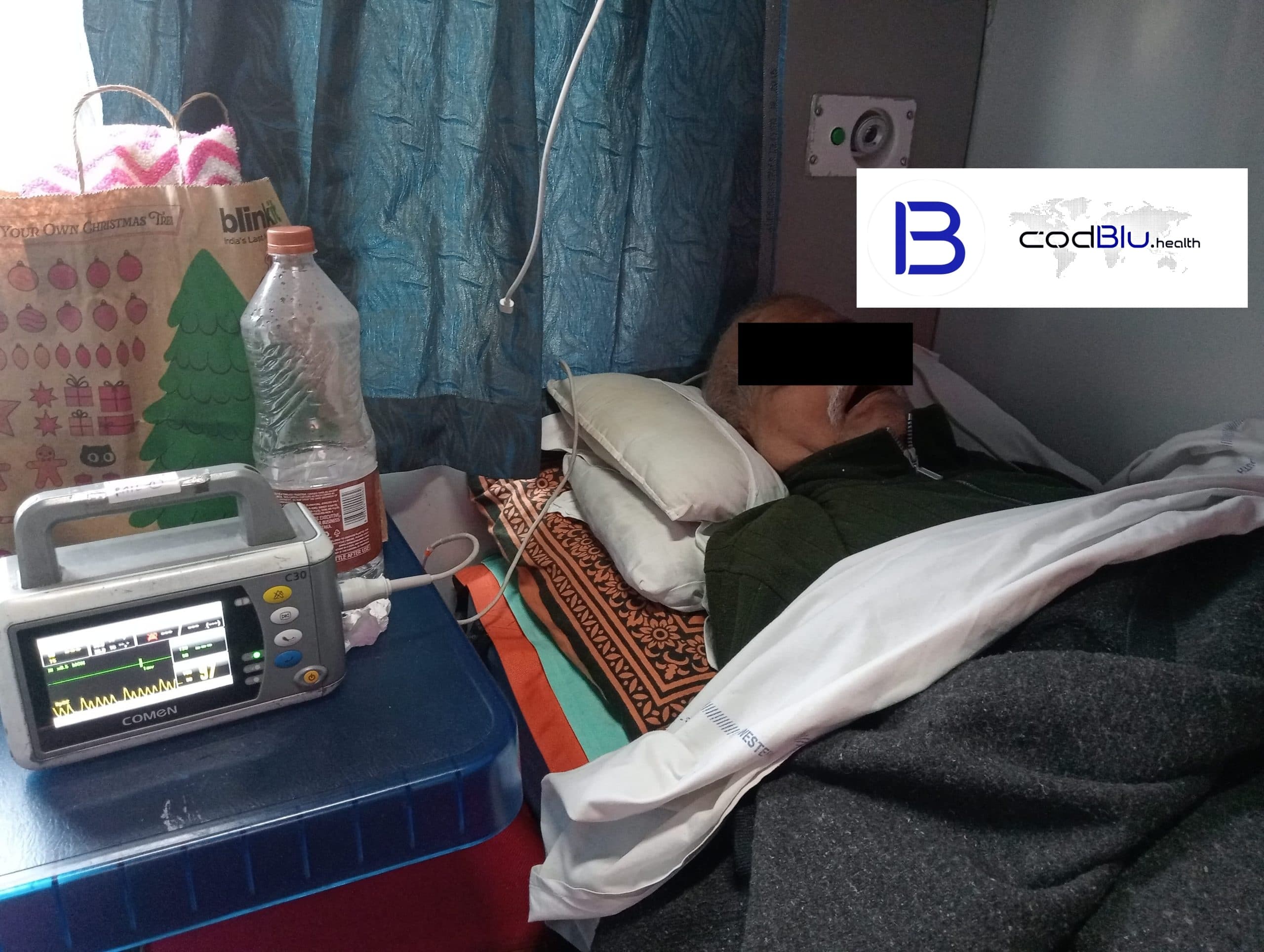
Potential corridors include Chennai, Hyderabad, Mumbai, Delhi and Kolkata, but the actual service, accommodation, boarding access and permissions need confirmation. The assessment must cover equipment power, oxygen where permitted, clinical reserves and how an emergency would be managed during prolonged travel. Rail is not a substitute for an urgent flight solely because it may cost less.
International Medical Repatriation From or Into Bengaluru
Bengaluru’s international airport can support assessment of overseas travel without automatically routing the patient through another Indian city. However, the appropriate airline, destination and medical configuration may still require a connection or a different gateway.
For international medical repatriation, confirm passport and visa requirements, receiving care, insurance authorisation where relevant, and support at every airport. A seated escort, approved airline stretcher and international charter are distinct options.
For a patient returning to Bengaluru, establish the receiving hospital or a suitable home-care plan before departure abroad. Long international journeys need particular attention to endurance, equipment approval and support during any connection.
Bed-to-Bed Transfer: Agree Who Takes Over at Each Handover
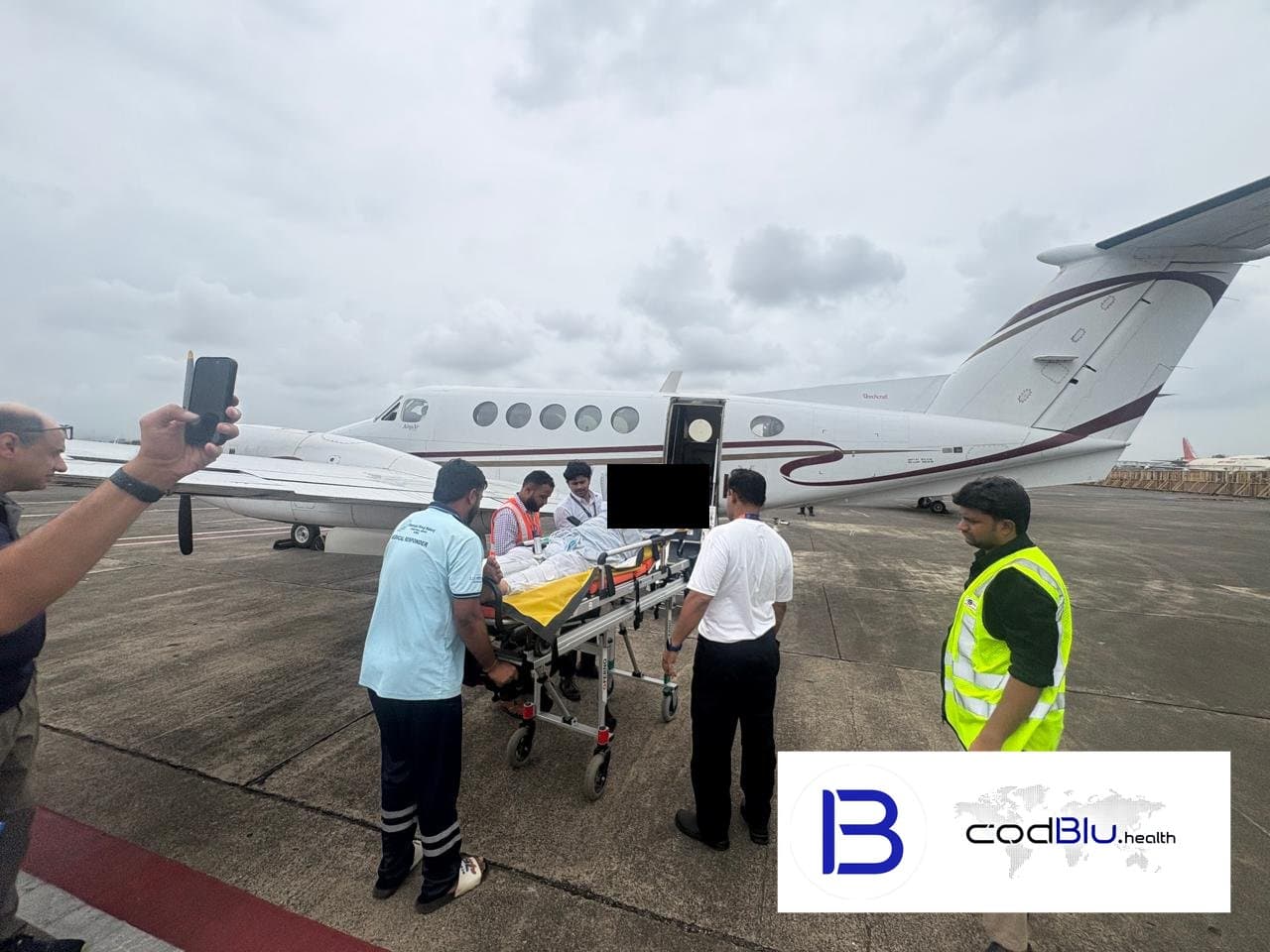
Bed-to-bed coordination connects the current bedside, ground ambulance, medical flight, destination ambulance and receiving care team. The scope should be agreed for the individual mission.
Before movement, establish who is responsible for clinical care during loading, airport waiting and unloading. Share the treatment summary, medicines, lines, devices and any changes in condition at each handover. Hospital discharge and admission arrangements must be coordinated with the hospitals themselves.
For a Bengaluru pickup, the plan should identify the ward, ambulance access point and approved airport meeting location. At the destination, it should name the receiving unit and contact person so the patient is not left waiting for an admission decision after landing.
Frequently Asked Questions About Air Ambulance in Bangalore
CodBlu’s October 2026 estimate is ₹4–7 lakh for Chennai or Hyderabad, with higher estimates for longer routes in the cost table. Typical aircraft positioning is included; the actual aircraft location and care requirements can change the final quotation.
These estimates include typical aircraft positioning. An aircraft already in Bengaluru may lower the quote; one coming from far away may raise it.
Departure time can be confirmed only after clinical readiness and operational arrangements are established. Aircraft or airline acceptance, crew, handling, weather and receiving care all affect the timing.
Selected ventilator-dependent patients can travel in a suitably configured charter after medical assessment. The respiratory support must remain workable during ambulance movement, loading, flying and arrival.
Kempegowda International Airport, code BLR, is the main airport considered here. Confirm the mission’s actual access and handling details with the coordinating team.
No. BLR is north of the city, while hospitals are spread across Bengaluru and Bommasandra. A city-centre distance cannot be used as the pickup estimate for every campus.
Yes. Provide the precise facility, ward and bedside contact. Its southern location makes the road plan particularly important for an onward flight from BLR.
A transfer can be assessed once the relevant NIMHANS team confirms acceptance and the required care arrangements. Transport booking alone does not provide admission.
The hospital’s name identifies its campus, not the departure airport. The airport for the proposed mission must be confirmed separately.
Neonatal transport can be assessed according to the baby’s condition and available specialist resources. The receiving NICU and support for the initial road journey must be established as part of the plan.
The child’s weight, age and illness determine the equipment and medical expertise required. Adult transport equipment may not be suitable for a small child.
A patient whose condition is sufficiently stable for the proposed scheduled journey may qualify after assessment. Seating tolerance, assistance needs and airline rules also matter.
CodBlu’s October 2026 estimate is ₹3.5–5 lakh for selected domestic stretcher arrangements. The actual airline charges, medical support and inclusions must be confirmed for the proposed flight.
That range is CodBlu’s October 2026 estimate for selected seated medical escort arrangements. It is not a wheelchair assistance tariff, and the written quote must specify the travel and medical services included.
No, under IndiGo’s currently published stretcher policy. A suitable direct A320 or A321 service and airline medical acceptance are required.
No. IndiGo does not permit oxygen cylinders on board. Any proposed concentrator requires airline approval and a clinical check that it can meet the patient’s needs.
No. Compare care requirements and the complete journey from the pickup hospital to the destination. Airport access can be significant on a route with a short flight.
Rail transport can be assessed for suitable patients, subject to an appropriate train, accommodation and permitted medical arrangements. The departure station must be confirmed before pickup.
Yes. Share the exact hospital location so the team can assess a direct hospital journey or an onward flight. A Bengaluru airport transfer is not necessary for every regional referral.
Yes. Road waterlogging and aviation weather can affect movement. The team needs contingency resources and an updated route assessment rather than a fixed travel-time promise.
The agreed scope may cover both ground ambulances, the flight and medical care between hospitals. Ask for the included legs, clinical responsibilities, charges and exclusions in writing.
Yes, a supported return journey can be assessed when the treating team considers it appropriate. Confirm the care available at home or at the receiving hospital before choosing transport.
Arrange an Assessment With CodBlu Healthcare
Call +91 93108 64489 for 24/7 medical coordination. The team can guide you on submitting the patient’s medical reports for assessment.
To discuss an air ambulance transfer from Bangalore, share the current hospital and campus, ward or ICU, patient’s age and diagnosis, recent medical summary, oxygen requirement, ventilator settings if applicable, essential infusions and proposed destination. Include the receiving hospital and consultant if already confirmed.
For a patient outside the city, give the town or district and exact pickup location. For a newborn or child, include age, weight and current support. This information allows the medical and operational teams to assess the journey and prepare an appropriate quotation.