
How is Critical Care ICU ambulance different from a Regular Road Ambulance_
Published on: March 22, 2026
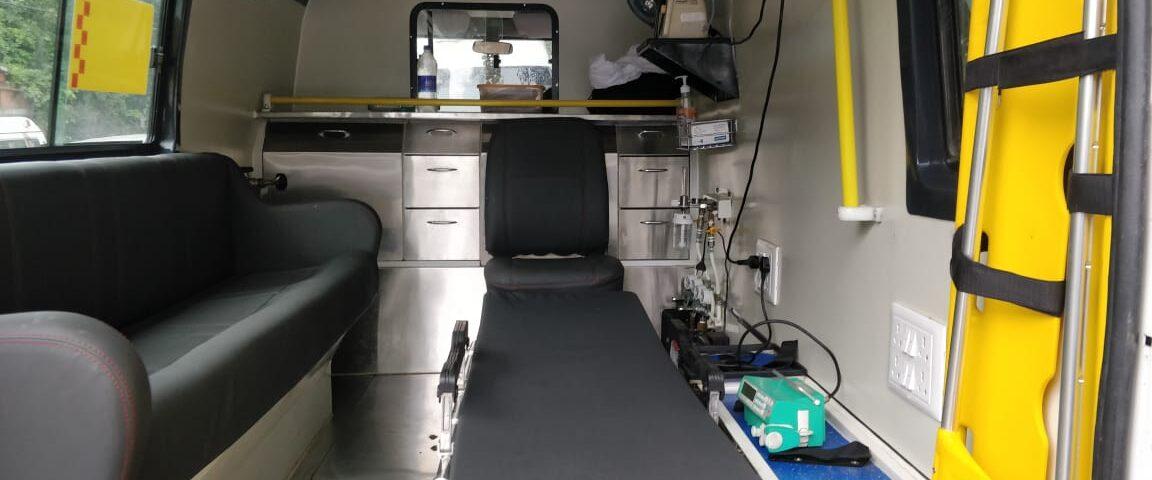
from a Regular Road Ambulance
When looking for an ambulance, you might notice that medical evacuation providers usually
have two types of vehicles: a regular ambulance and an advanced ICU ambulance. Both serve
the purpose of transporting patients safely, but the level of care and equipment they provide is
vastly different.
Common Ground
Both regular and ICU ambulances provide pre-hospital support, helping maintain the patient’s
condition until they reach a healthcare facility.
Add CodBlu Healthcare as a Preferred Source

Regular Ambulance (Basic Life Support)
A regular ambulance is designed for non-critical patients and is staffed by two emergency
technicians. These personnel undergo only a few months to a year of training and do not have
formal medical degrees, which means they cannot administer medication or perform invasive
procedures.
What they can do:
- Perform Heimlich Maneuver
- Cardiopulmonary resuscitation (CPR)
- Use an automated external defibrillator (AED)
Regular ambulances are ideal for:
- Transporting stable patients from hospital to home
- Transferring non-critical patients, such as psychiatric patients
- Situations where no advanced medical intervention is needed en route
ICU Ambulance (Critical Care, Advanced Life Support)
An ICU ambulance is literally an Intensive Care Unit on wheels. It is designed to provide
advanced life support (ALS) for patients with severe or life-threatening conditions.
Staffing:
- Two emergency paramedics trained to handle critical medical situations
- Often accompanied by a doctor and a nurse for higher-level care
Capabilities:
- Administer medications, injections, and other medical procedures
- Monitor and stabilize deteriorating health conditions during transport
- Operate advanced medical equipment
Key Equipment Found in ICU Ambulances:
- Airway support devices
- Cardiac monitors and defibrillators
- Re-breathing circuits
- Suction kits
- Spinal collars and spine boards
- Inflatable splints and wheelchairs
- Comprehensive medical kits and drugs
- Sphygmometer and pulse oximeter
- Scoop stretchers
When to Choose an ICU Ambulance:
Whenever a patient requires immediate medical intervention, intensive monitoring, or advanced
support during transit, an ICU ambulance is the preferable option. It ensures the patient remains
stable and receives life-saving care from trained professionals until they reach the hospital.
In short, while a regular ambulance is suitable for stable patients, a critical care ICU ambulance
is essential for anyone in a life-threatening situation.
Need Emergency Ambulance?
CodBlu Healthcare operates 24x7 across India — air, rail & road.
Call 24x7: +91-9310864489