How Things Happen in Train Ambulance_
Published on: March 22, 2026
Transport
Train ambulance services play a crucial role in long-distance medical transfers where air
transport is not feasible. Many people are unaware of how medical care is managed inside a
running train. This explanation helps understand how patients are safely transported in a
train ambulance setup, even though regular passenger coaches are used.
Case Overview
Unlike air ambulances or road ambulances, there is no separate or specially designed
medical train or coach available for patient transfer. Train ambulance services operate within
regular passenger trains, using available berths inside a normal coach. Despite these
limitations, patients are transported safely with proper medical planning and continuous
supervision.
Add CodBlu Healthcare as a Preferred Source

Patient Placement Inside the Train
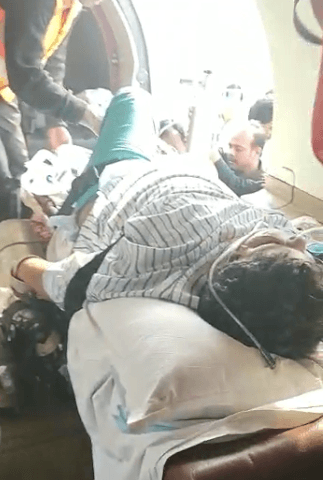
As shown in the video, stretchers cannot be fitted inside standard train coaches due to
space constraints. Instead:
- The patient is carefully shifted and adjusted on the available berth
- Berths are prepared to ensure patient comfort and safety
- Movement of the patient is minimized to prevent deterioration
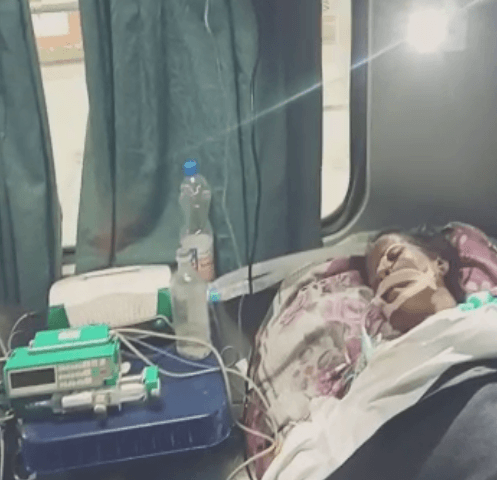
The berth effectively becomes a temporary ICU bed for the duration of the journey.
Medical Equipment Setup
Even within a normal coach, CodBlu Train Ambulance Services ensures that all essential
medical equipment is arranged near the patient, including:
- Oxygen cylinders with backup supply
- Cardiac and vital parameter monitoring
- Infusion pumps for medicines and fluids
- Emergency airway and resuscitation equipment
All equipment is secured properly to function safely during train movement.
Medical Supervision During the Journey
A trained doctor and medical staff remain with the patient throughout the journey. Their
responsibilities include:
- Continuous monitoring of vital signs
- Administration of medications as prescribed
- Managing oxygen support and ventilation if required
- Responding immediately to any clinical changes
Despite the limitations of space, ICU-level care is maintained from departure to arrival.
Train ambulance transport requires careful coordination:
- Pre-journey planning of power backup and oxygen needs
- Continuous monitoring during long travel hours
- Coordination with stations for smooth boarding and deboarding
- Advance communication with the receiving hospital
These steps ensure that patient safety is not compromised.
Clinical Perspective
Train ambulance services demonstrate that advanced medical care is possible even in
constrained environments when managed by experienced professionals. With proper
planning, trained doctors, and essential equipment, critically ill patients can be safely
transported over long distances by rail.
Through such services CodBlu Healthcare continues its role as true Life
Savers, delivering continuity of care beyond hospital walls and ensuring patients reach
advanced medical facilities safely even in challenging transport settings.
Need Emergency Ambulance?
CodBlu Healthcare operates 24x7 across India — air, rail & road.
Call 24x7: +91-9310864489