


Air Ambulance Services in Leh
In Leh, oxygen planning starts before the flight because the patient is already at high altitude. Call +91 93108 64489 for CodBlu Healthcare’s 24/7 medical coordination through Kushok Bakula Rimpochee Airport (IXL). Clinical assessment guides the choice between an ICU charter and a scheduled flight with a medical escort for suitable stable patients. Transfers from Nubra or Changthang also require planning for mountain roads and continuous medical support. To book an air ambulance in Leh, provide the exact pickup location, medical summary, oxygen requirement and destination; aircraft suitability, weather and airport permissions must then be confirmed.
Leh is not simply another city with an airport.
The airport itself sits at more than 10,800 feet above sea level, while communities across Leh district are spread through mountainous valleys and remote high-altitude regions. A patient may need to travel from Nubra, Changthang, Pangong, Khaltsi or another distant location before even reaching Leh.
For this reason, air ambulance planning in Ladakh should begin with the patient's physiology and exact location, not only with aircraft availability.
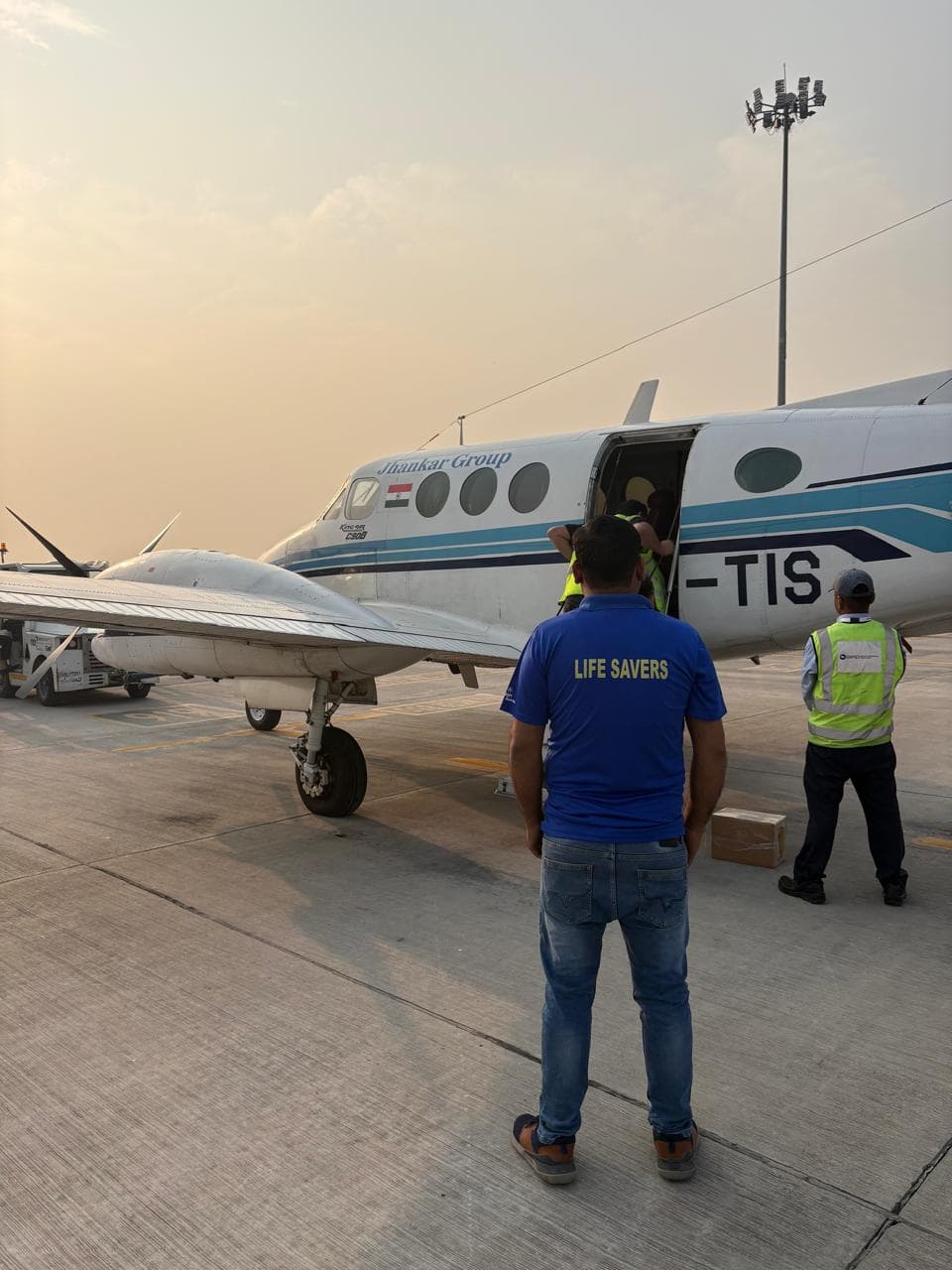
At 10,000 Feet, Oxygen Planning Starts Before the Aircraft Arrives
High altitude is the most important feature distinguishing patient transport in Leh from most Indian cities.
At higher elevations, atmospheric pressure is lower and less oxygen is available with each breath. This is usually well tolerated by healthy acclimatised people, but the situation can be very different for a patient with:
- Existing low oxygen saturation
- Interstitial or other chronic lung disease
- Pneumonia
- Cardiac disease
- Pulmonary hypertension
- Severe anaemia
- Recent respiratory deterioration
- Mechanical ventilation
- High oxygen requirements
The patient's oxygen saturation, respiratory condition and oxygen requirement should therefore be assessed before movement.
For a critically ill patient, the medical plan may need to account for oxygen during:
Adequate reserve oxygen is particularly important because the patient may remain at high altitude during the ground portion of the journey.
When Air Evacuation From Leh May Be Medically Appropriate
Air transport may become particularly valuable when a patient needs specialised treatment outside Ladakh and prolonged surface travel would create unnecessary medical risk or delay.
Examples may include:
- Ventilator dependent ICU patients
- Patients requiring continuous oxygen
- Serious neurological conditions
- Cardiac emergencies requiring onward specialised care
- Major trauma
- Patients requiring continuous infusions or monitoring
- Neonatal and paediatric transfers
- Patients requiring tertiary care unavailable locally
- Medically stable patients who still require professional assistance during travel
Air transport is not automatically the right option for every patient.
The medical team should first determine whether the patient can tolerate movement and what level of support is required throughout the transfer.
Why CodBlu Healthcare's Planning Approach Matters More in Leh
A patient transfer from Ladakh can involve several very different environments within one journey.
CodBlu Healthcare can coordinate the medical and logistical components together, including:
- Medical review before transport
- Oxygen and ventilator planning
- Medical team selection
- Remote-location or hospital pickup
- ICU road ambulance
- Kushok Bakula Rimpochee Airport coordination
- Charter aircraft or scheduled medical transfer
- Destination ground ambulance
- Receiving hospital coordination
- Bed to bed clinical handover
For a patient starting outside Leh city, road accessibility and travel time to the airport must also be considered before flight planning is finalised.
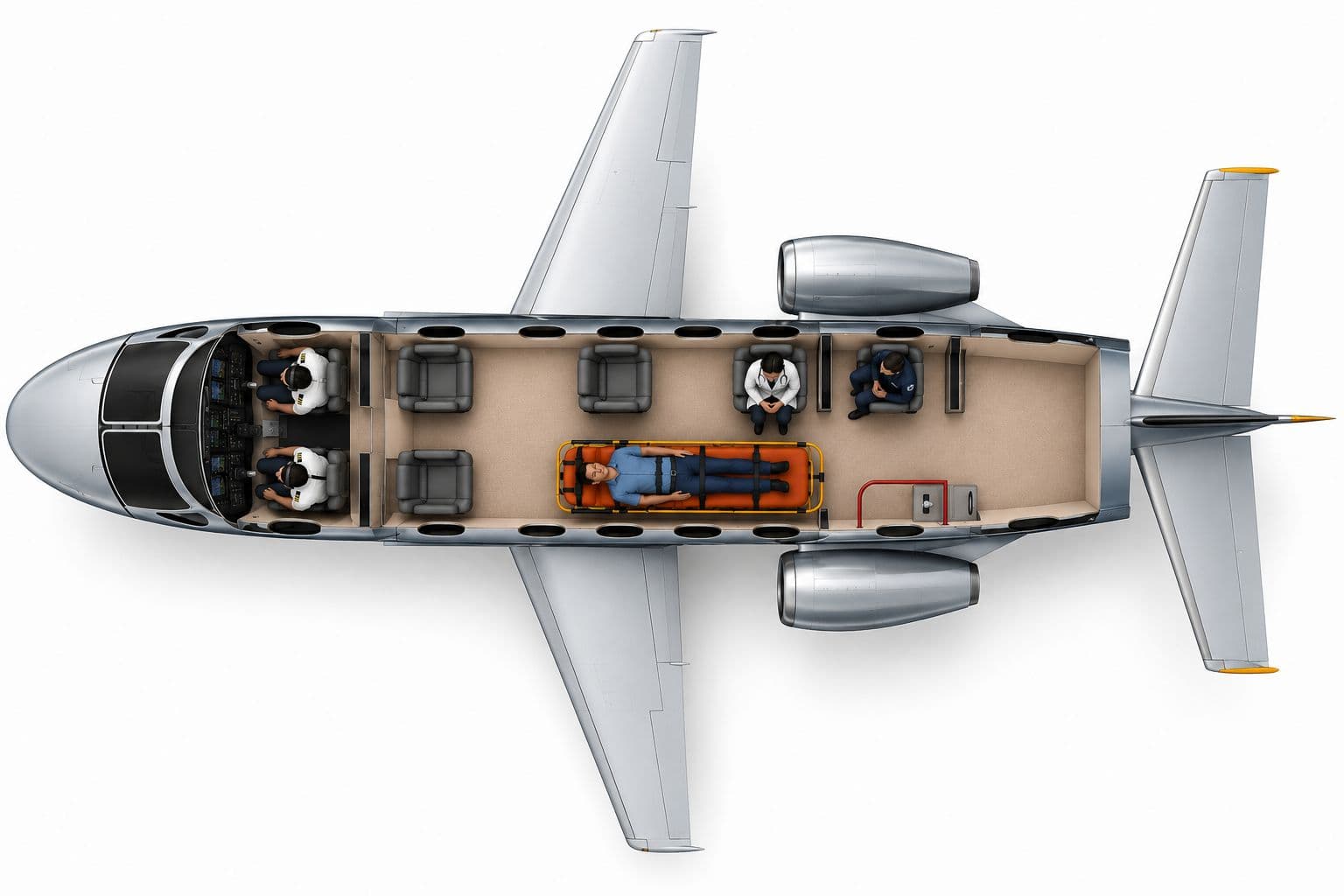
Patients From Nubra May Have a Long Transfer Before Reaching Leh
Nubra Valley is approximately 120 km from Leh and is separated from the city by high mountain terrain.
The region includes places such as:
- Diskit
- Hunder
- Panamik
- Sumur
- Turtuk
- Other settlements across Nubra
For a patient at Sub-District Hospital Diskit or another healthcare facility in Nubra, the first stage of an onward air ambulance may involve a substantial road journey to Leh.
For critically ill patients, planning may include:
- ICU ambulance suitability
- Current road and pass conditions
- Oxygen requirement at altitude
- Ventilator battery backup
- Medicines and infusion requirements
- Patient temperature management
- Monitoring throughout the road journey
- Timing of airport arrival
The aircraft should be coordinated around the patient's realistic road journey rather than asking the ambulance to meet an inflexible flight time.
Add CodBlu Healthcare as a Preferred Source

Changthang, Pangong and Remote Eastern Ladakh Require a Different Strategy
Some patient transfers begin much farther from Leh.
Areas around Pangong Lake, Nyoma, Chumathang and the Changthang region involve remote roads, high elevations and long distances from the main referral hospital in Leh.
Official Leh district information places Tso Moriri around 240 km from Leh by the commonly used road route.
In such cases, the transfer may need to be divided into stages.
A possible journey could involve:
Not every remote patient should be moved directly towards the airport.
Some patients may require assessment or stabilisation in Leh before an onward long-distance transfer.
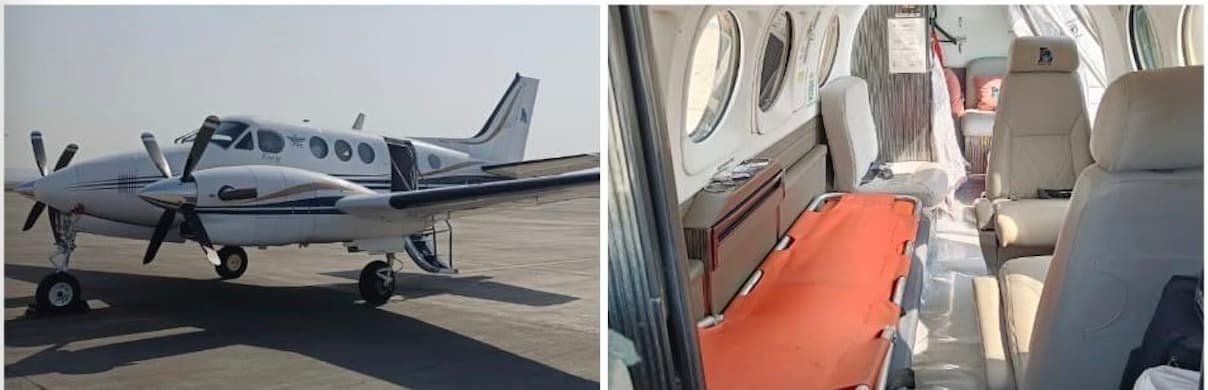
Kushok Bakula Rimpochee Airport Is a High-Altitude Airfield
Medical flights serving Leh operate through Kushok Bakula Rimpochee Airport.
Airport Code: IXL
Official aeronautical information places Leh Airport at approximately 10,839 feet above mean sea level and close to Leh city.
It is also a joint-use airfield supporting defence and civil operations.
High-altitude airports require specific aviation planning. Aircraft availability alone does not confirm that a medical mission can operate.
Charter feasibility may depend on:
- Aircraft type
- Aircraft performance at Leh's elevation
- Patient and equipment load
- Fuel requirements
- Weather
- Airport operating conditions
- Aircraft positioning
- Medical crew availability
- Destination airport
- Applicable aviation permissions
For this reason, CodBlu Healthcare should first assess the patient and then confirm an operationally suitable aircraft for the mission.
Charter Air Ambulance From Leh for ICU Patients
A dedicated charter aircraft may be considered when a patient's medical condition requires a level of support that cannot be practically provided on a scheduled passenger flight.
Selected patients may require:
- Mechanical ventilation
- Continuous oxygen
- Multiparameter monitoring
- Infusion medicines
- Airway management
- Frequent medical intervention
- A dedicated medical team
Depending on the patient's condition, equipment may include a transport ventilator, medical oxygen, monitor, defibrillator, suction, infusion pumps, airway equipment and emergency medicines.
The medical team may include a critical care doctor, anaesthesiologist, emergency physician, critical care nurse or paramedic according to the case.
Not every patient needs every piece of equipment or every specialist.
The setup should match the patient's actual medical risks.
Stable Patients May Be Able to Use Scheduled Flights From Leh
Leh has scheduled passenger flights connecting the region with major Indian aviation hubs.
For selected medically stable patients, a commercial flight with a medical escort may be preferable to chartering an entire aircraft.
Depending on airline approval and the patient's requirements, arrangements may include:
- Doctor or nurse escort
- Wheelchair assistance
- Approved medical oxygen
- Other airline-permitted medical support
- Ground ambulance before and after the flight
Commercial medical travel requires advance coordination.
Airline approval, equipment restrictions and the patient's ability to sit or travel safely within a passenger aircraft must be assessed before booking.
Leh to Srinagar or Manali by Road Is Highly Seasonal
Leh has two major traditional surface routes connecting it with the rest of India.
The Srinagar-Leh Highway passes through Kargil and connects Ladakh towards the Kashmir Valley.
The Manali-Leh Highway crosses high Himalayan terrain towards Himachal Pradesh.
Official Leh district information notes that these routes have seasonal operating periods and may not remain continuously accessible through winter.
For medical transport, this has an important consequence:
During the Road Season
A medically stable patient may sometimes have a road transport option, depending on distance, urgency and current road conditions.
During Winter or Road Disruption
Long-distance surface transfer may become impractical or unavailable, increasing the importance of aviation for patients who need treatment outside Ladakh.
Current road status must always be checked rather than assuming a highway is open because of the time of year.
Direct Rail Ambulance From Leh Is Not a Practical Option
Unlike Delhi, Guwahati or Siliguri, Leh does not have a railway station.
Official district information identifies Jammu Tawi as the nearest major railway access for several parts of Leh district.
A patient would therefore need a substantial road or air journey before rail transport could even begin.
For this reason, rail ambulance is generally not a direct alternative to air ambulance from Leh.
For long-distance medically dependent patients, comparing air transport with an extremely long road-to-rail journey is particularly important before making a decision.
SNM Hospital and the Referral Network Across Leh District
Sonam Norboo Memorial Hospital, Leh is an important district-level hospital and referral point for the region.
Leh district's public health network also includes facilities serving remote areas, including Sub-District Hospital Diskit in Nubra and health centres across locations such as Khaltsi and Nyoma.
A patient may therefore follow a regional referral pathway such as:
Some patients may instead be clinically suitable for direct transfer towards the airport after assessment by their treating team.
The decision depends on the patient's stability and the medical support available during movement.
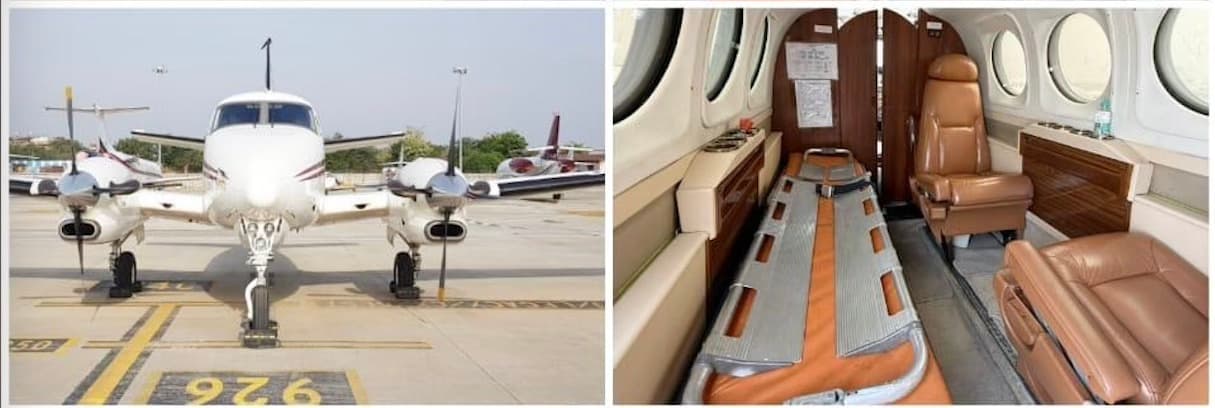
Altitude Illness and Medical Evacuation From Leh
Leh also receives travellers who develop health problems after rapid ascent to high altitude.
Altitude illness can range from relatively mild symptoms to serious conditions requiring urgent medical treatment.
A patient with significant breathing difficulty, neurological symptoms, severely reduced oxygen saturation or suspected high-altitude pulmonary or cerebral complications should be medically assessed urgently.
Medical evacuation decisions should be made by the treating team.
Depending on the patient's condition, management may include oxygen, appropriate medical treatment and transfer to a lower altitude or higher-level medical facility.
A patient with suspected serious altitude illness should not simply be placed on a passenger flight without medical assessment.
Common Onward Medical Destinations From Leh
Leh to Delhi Air Ambulance
Delhi is one of the most practical major referral destinations from Leh because of aviation connectivity and access to tertiary and super-speciality hospitals.
Critically ill patients may require a charter aircraft, while suitable stable patients may travel on a scheduled flight with medical assistance.
Leh to Chandigarh Medical Transfer
Chandigarh may be considered for selected North Indian referrals.
The suitability of a scheduled flight or dedicated aircraft depends on connectivity, patient condition and the level of medical support required.
Leh to Srinagar Medical Transfer
Srinagar can be reached from Leh by road during suitable conditions and by scheduled aviation when flights are available.
For a patient requiring transfer, the decision between air and road should consider road accessibility, urgency and medical stability.
Leh to Mumbai, Chennai, Hyderabad or Bengaluru
Transfers to more distant metropolitan treatment centres may require a direct or connecting commercial journey for stable patients.
Critically ill patients may require dedicated charter planning depending on aircraft capability, patient condition and route requirements.
For these long routes, the most important consideration is the complete medical journey rather than distance alone.
Neonatal and Paediatric Transfers at High Altitude
Newborn babies and children may require specialised medical transport from Leh to another treatment centre.
Depending on the case, support may include:
- Transport incubator
- Neonatal or paediatric ventilator
- Medical oxygen
- Continuous monitoring
- Infusion pumps
- Temperature management
- Neonatal or paediatric medical professionals
Because Leh is already at high altitude, oxygenation and respiratory status require particular attention before and during movement.
The ground journey, airport phase and aircraft journey should be planned as one continuous medical transfer.
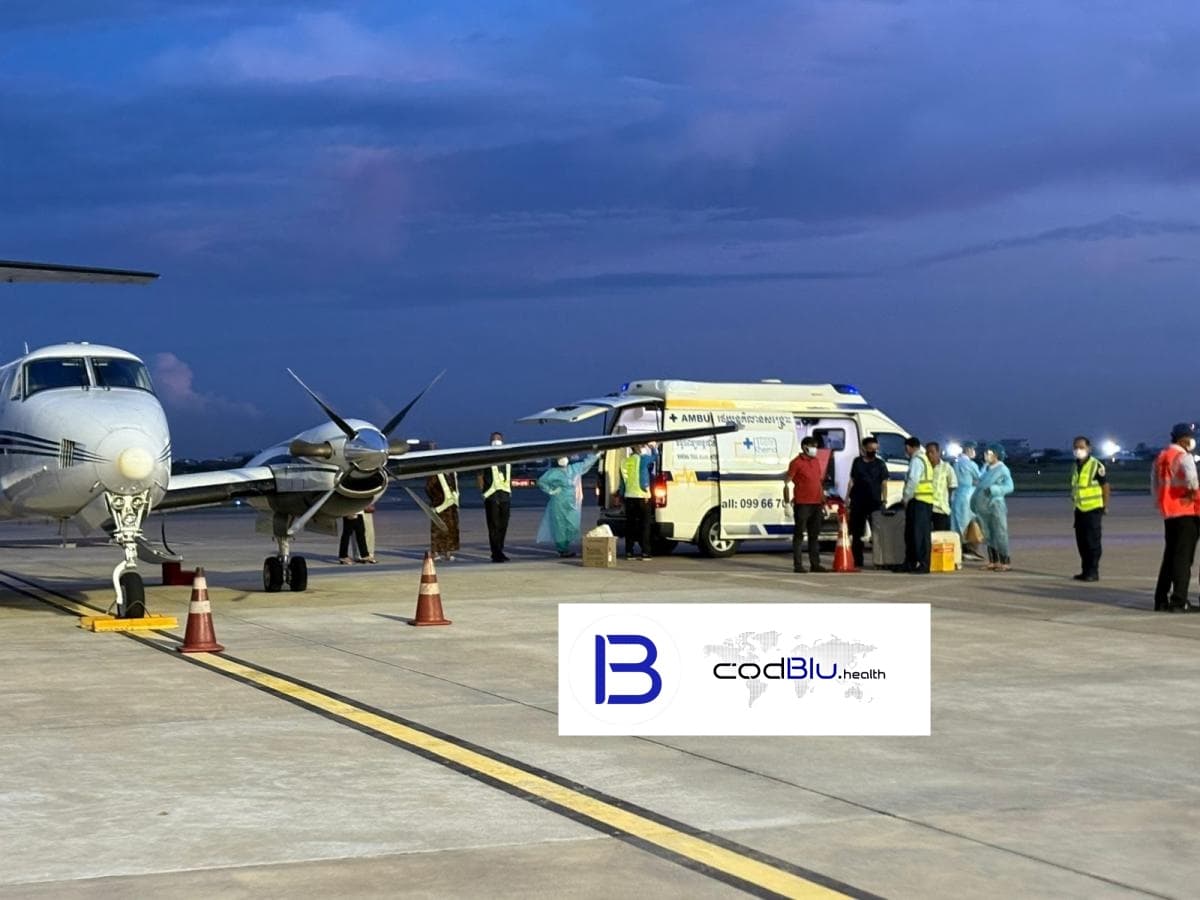
Air Ambulance Cost From Leh
There is no fixed air ambulance price for Leh.
The cost of a transfer may depend on:
- Destination
- Aircraft type
- Aircraft availability
- Aircraft positioning
- High-altitude operating suitability
- Patient condition
- Ventilator requirement
- Oxygen requirement
- Medical team
- Medical equipment
- Remote-location ground ambulance
- Airport arrangements
- Domestic or international routing
Aircraft positioning can be particularly relevant because a suitable medical aircraft may need to fly into Leh before beginning the patient sector.
A medically stable patient travelling on a scheduled flight with a medical escort may cost significantly less than a dedicated ICU charter aircraft.
The most expensive option is not automatically the best option.
The transport method should match the patient's medical condition, urgency, location and required level of support.
Starting an Air Ambulance Transfer From Leh
For Ladakh cases, four details should be shared first.
Specify whether the patient is in Leh city, Nubra, Khaltsi, Nyoma, Pangong region or another location.
Share the diagnosis, oxygen saturation, blood pressure, oxygen requirement and level of consciousness where available.
If the patient is ventilated or using oxygen, share the current oxygen flow or ventilator settings.
Share the destination city and receiving hospital if already selected. Recent medical reports, investigations and medication details can then be reviewed.
The team then determines whether the patient is suitable for transport, whether stabilisation is required first, how the patient will reach Leh Airport, whether charter or commercial transfer is appropriate, what medical team and equipment are needed, and how the destination ambulance and hospital handover should be coordinated.
Frequently Asked Questions (FAQs)
Yes. Medical coordination can begin 24/7. Actual flight timing depends on patient stability, suitable aircraft availability, airport operating conditions, weather, medical crew and destination arrangements.
Leh is a high-altitude Himalayan location with remote surrounding settlements and seasonal road connections. Oxygenation, ground access and aircraft suitability therefore require more consideration than in many lower-altitude cities.
Selected ventilator dependent patients can travel when medically suitable. Oxygen requirements, ventilator settings, monitoring, medicines and the patient's stability should be reviewed before movement.
Yes. Lower atmospheric pressure at high altitude can be relevant for patients with respiratory disease or pre-existing hypoxemia. Their oxygen requirement should be medically assessed before transportation.
Yes, subject to medical suitability and road accessibility. The patient may require an ICU road ambulance from Nubra to Leh before continuing through the airport.
The onward flight would normally require reaching Leh Airport first. Because these areas can involve long remote road journeys, the patient may need medically supervised ground transport and, in some cases, assessment or stabilisation in Leh before flying.
For most critically ill patients, the distance and mountainous routes make this a very different proposition from an intercity road transfer in the plains. Road accessibility is also seasonal. Air transportation may therefore be more practical for selected long-distance cases.
It may be possible when the highway is open and the patient can tolerate the journey. Current road conditions, weather, journey duration and medical requirements must be reviewed first.
There is currently no direct railway station in Leh. Reaching a railhead would first require a long road or air journey, so rail ambulance is usually not a direct alternative for a patient starting in Leh.
Serious altitude illness can require urgent medical treatment and evacuation. The patient should first be clinically assessed, and transfer should be planned according to their oxygenation, symptoms and overall stability.
Yes, when medically suitable and accepted by the airline. A doctor, nurse or other medical escort may accompany the patient according to the case.
Share the patient's exact location, medical condition, oxygen or ventilator requirement and destination. These details allow the medical and aviation requirements to be assessed before preparing an estimate.
Need an Air Ambulance in Leh?
To begin an air ambulance booking in Leh, share the patient's exact location in Ladakh, current medical condition, oxygen or ventilator requirement and destination city or hospital. CodBlu Healthcare can then assess the complete transfer, including remote road access where necessary, medical stabilisation, Kushok Bakula Rimpochee Airport, the appropriate aircraft or scheduled flight, destination ambulance and receiving hospital handover.